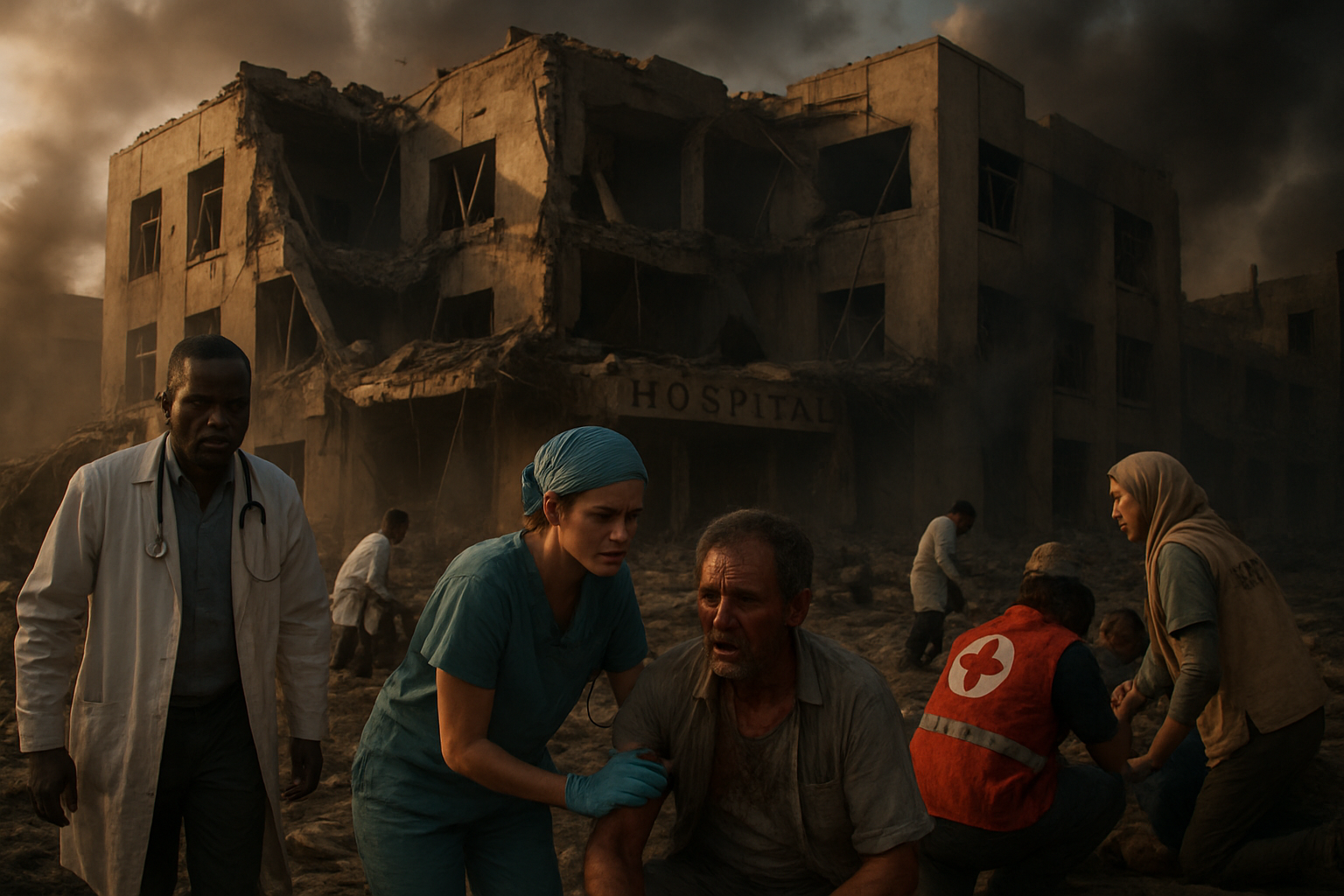
A devastating attack on a healthcare facility in Sudan's East Darfur state has killed 64 people and wounded 89 others, including 13 children among the dead, the World Health Organization reported on Saturday, marking another tragic escalation in the systematic targeting of civilian infrastructure during the country's brutal civil war.
WHO Director-General Tedros Adhanom Ghebreyesus confirmed the casualties on social media, describing the attack on the teaching hospital in Al Deain, the capital of East Darfur state, as rendering the medical facility "non-functional." The strike represents the latest in a pattern of deliberate attacks on healthcare infrastructure that has crippled Sudan's medical system during 20 months of devastating conflict.
The UN's humanitarian office in Sudan expressed being "appalled by the attack on a hospital in East Darfur yesterday, reportedly killing dozens, including children, and injuring more." The incident occurred as Sudan continues to experience one of the world's most severe humanitarian catastrophes, with systematic violations of international humanitarian law becoming increasingly commonplace.
Systematic Targeting of Healthcare Infrastructure
The Al Deain hospital attack follows a documented pattern of systematic targeting of medical facilities throughout Sudan's civil war, which began in April 2023 as a power struggle between the Sudanese Armed Forces (SAF) and the Rapid Support Forces (RSF). Previous incidents have included multiple attacks on hospitals, clinics, and medical personnel across the country.
In February 2026, RSF paramilitary forces attacked a military hospital in southern Sudan, killing 22 people including the hospital director and three medical staff members. The targeting of healthcare infrastructure represents a grave escalation in the conflict, with medical facilities facing systematic attacks, forced closures, and severe resource shortages that have effectively crippled Sudan's healthcare system.
Emergency Lawyers, a Sudanese rights group that documents violations of international law, has been tracking these attacks as part of broader efforts to document war crimes and crimes against humanity committed during the conflict. The systematic nature of healthcare targeting suggests a deliberate strategy to destroy civilian infrastructure and undermine the capacity for medical care.
Humanitarian Crisis of Unprecedented Scale
The hospital attack occurs against the backdrop of Sudan's catastrophic humanitarian emergency, with 17.8 million people requiring urgent assistance and millions internally displaced. The UN-backed Integrated Food Security Phase Classification (IPC) has declared famine conditions in multiple areas of North Darfur, including Um Baru, which shows a catastrophic 53% acute malnutrition rate in children under five—nearly double the 30% famine threshold.
The healthcare system's collapse has been particularly devastating. Only a handful of hospitals across the country remain operational with adequate supplies, and the WHO has been forced to provide emergency medical oxygen to just 23 hospitals nationwide. Hundreds of health centers have been forced to close due to the conflict, leaving vast populations without access to basic medical care.
"The attack on this healthcare facility is not just a tragedy for those killed and wounded, but represents a devastating blow to an already collapsing healthcare system serving millions of vulnerable people."
— UN Humanitarian Official
Historical Context of Sudan's Conflict
The current crisis stems from an April 2023 power struggle between military leaders over the integration of the RSF into regular armed forces and the timeline for civilian rule. The Rapid Support Forces, which emerged from the Janjaweed militias responsible for the original Darfur genocide two decades ago, have been systematically targeting civilian infrastructure as part of their military strategy.
The conflict has created historical continuity with past atrocities in Darfur, where the same forces that committed genocide in the early 2000s now continue systematic attacks against civilian populations. UN experts have documented that RSF actions in some areas show "hallmarks of genocide" against non-Arab communities, particularly during offensives like the October 2024 assault on El Fasher that killed over 6,000 people in three days.
The targeting of East Darfur, where Friday's hospital attack occurred, is particularly significant as this region has been a focal point of the broader Darfur crisis. The RSF has sought to consolidate control over Darfur region, which represents approximately one-third of Sudan's territory, through a campaign of systematic violence against civilian targets.
International Response and Legal Implications
The international community has struggled to respond effectively to Sudan's crisis, with the African Union suspending Sudan's membership, creating diplomatic isolation. Recent UN Security Council sanctions on RSF commanders, including Abdul Rahim Dagalo, represent attempts at accountability, but the violence continues to escalate despite international pressure.
The systematic targeting of healthcare facilities violates fundamental principles of international humanitarian law, particularly the Geneva Conventions, which provide specific protections for medical facilities and personnel. The deliberate targeting of hospitals constitutes a war crime under international law and may form part of broader crimes against humanity given the systematic nature of such attacks.
Médecins Sans Frontières (MSF) has documented treating 167 patients from drone strike injuries in just two weeks across Sudan, highlighting the scale of attacks on civilian infrastructure. The organization has repeatedly called for protection of medical facilities and personnel, emphasizing that hospitals must remain neutral spaces even during armed conflict.
Regional and Global Implications
Sudan's humanitarian catastrophe has created significant regional implications, including massive refugee flows to neighboring Chad and South Sudan, which are already struggling with their own challenges. The collapse of Sudan—once considered the breadbasket of Northeast Africa—has disrupted trade routes throughout the Horn of Africa and threatens food security across the region.
The crisis represents a critical test of the international community's commitment to the Responsibility to Protect principle and the enforcement of international humanitarian law. With competing global emergencies including conflicts in Ukraine and Gaza, Sudan has struggled to maintain international attention despite the severity of the crisis affecting millions of civilians.
The systematic nature of attacks on civilian infrastructure, including hospitals, schools, and religious sites, has created what experts describe as a deliberate strategy to destroy Sudan's institutional capacity and civilian morale through mass atrocities.
Urgent Need for International Action
The Al Deain hospital attack underscores the urgent need for coordinated international intervention to protect civilians and ensure accountability for systematic violations of international humanitarian law. The targeting of medical facilities not only kills and injures civilians directly but also undermines the capacity to treat casualties from other attacks, creating a multiplier effect for civilian suffering.
Current international efforts have been hampered by access restrictions, funding shortfalls, and competing global emergencies. However, the systematic nature of attacks on civilian infrastructure and the scale of humanitarian need require sustained international attention and innovative approaches to providing assistance and protection.
The documentation of these attacks provides crucial evidence for future accountability mechanisms through national, regional, and international courts. The pattern of systematic targeting of protected civilian sites, including hospitals, schools, and religious facilities, suggests deliberate strategies that may constitute genocide, war crimes, and crimes against humanity under international law.
As Sudan's crisis enters its third year, the international community faces mounting pressure to develop effective mechanisms for civilian protection and accountability that can address not only the immediate humanitarian emergency but also the longer-term need for justice and reconciliation. The Al Deain hospital attack serves as a tragic reminder of the human cost of failed international prevention and the urgent need for coordinated action to protect vulnerable populations from systematic atrocities.