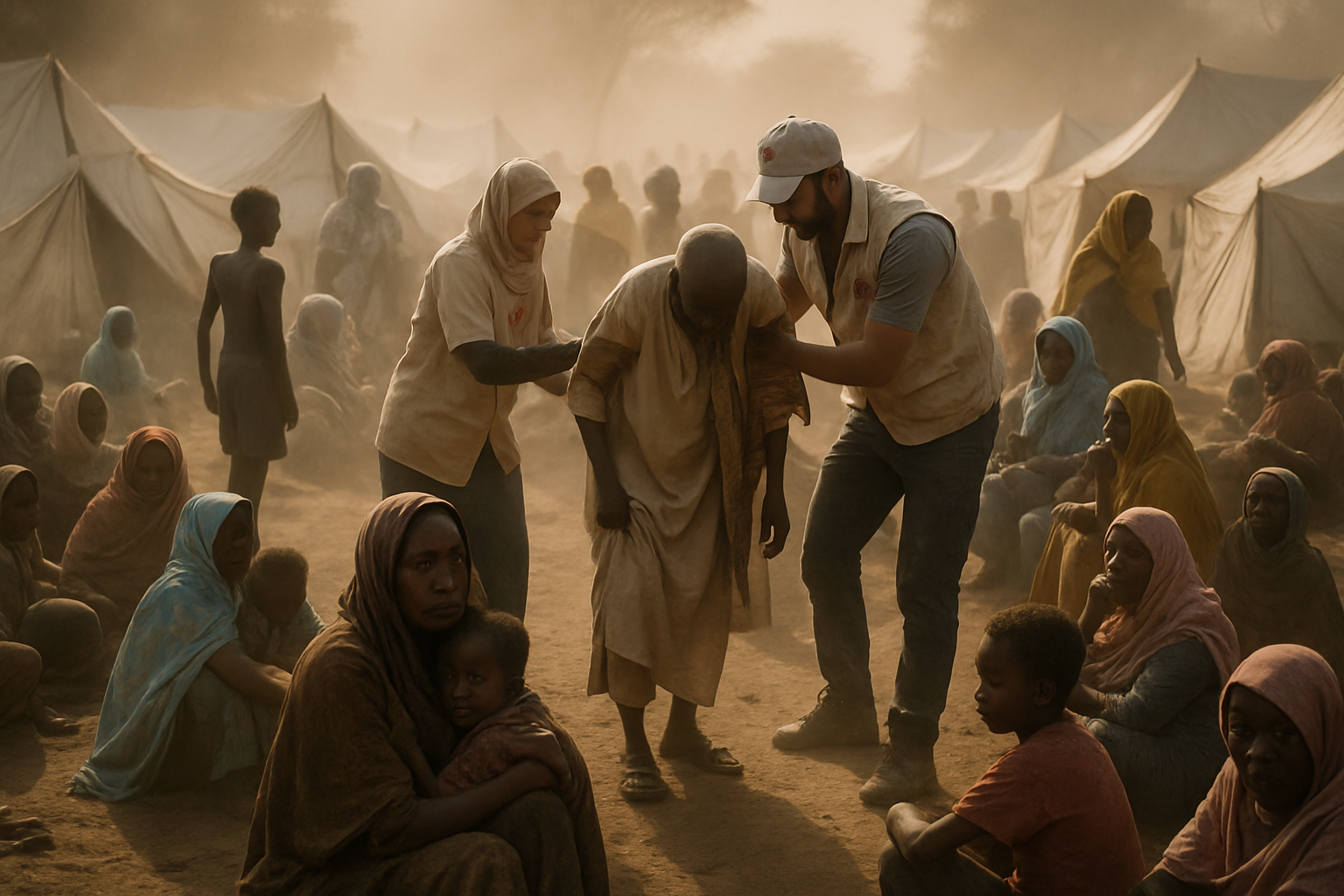
Sudan's devastating humanitarian crisis reached new depths this week as a drone strike on a mosque killed three children during Quran lessons in North Kordofan state, while a separate ferry disaster in River Nile state claimed at least 21 lives, underscoring the mounting civilian toll of the country's 20-month civil war.
The mosque attack in North Kordofan represents a grave escalation in the systematic targeting of civilian infrastructure, with Sudan's Doctors Network attributing the strike to the paramilitary Rapid Support Forces (RSF). The children were studying Quran when the building was directly hit, with 13 others wounded in the assault that has sparked fresh international condemnation.
Civilian Infrastructure Under Systematic Attack
According to medical sources, the mosque bombing follows a pattern of deliberate attacks on civilian facilities that has characterized Sudan's conflict since fighting erupted in April 2023. The strike occurred during religious education activities, highlighting how even sacred spaces and children's learning environments have become targets in the escalating violence between the Sudanese Armed Forces and the RSF.
The attack comes amid reports of intensified fighting across North Kordofan, where both military forces and the RSF have been vying for territorial control. Humanitarian organizations have documented systematic violations of international humanitarian law, including the targeting of hospitals, schools, and religious sites that should be protected under the Geneva Conventions.
Ferry Disaster Compounds Tragedy
In a separate incident that underscores the broader crisis facing Sudan's civilian population, at least 21 people died when a ferry sank in northern Sudan's River Nile state. Rescue operations managed to save six people, while efforts continue to locate approximately a dozen passengers still reported missing.
The ferry disaster highlights the deteriorating state of Sudan's transportation infrastructure and the dangerous conditions civilians face when attempting to flee conflict zones or access essential services. River transport has become increasingly vital as roads become impassable due to fighting, but safety standards have deteriorated amid the ongoing crisis.
Deepening Humanitarian Emergency
These tragic incidents occur against the backdrop of Sudan's escalating humanitarian catastrophe, which has already displaced millions internally and forced hundreds of thousands to flee to neighboring countries. The conflict, which began as a power struggle between military leaders over the integration of the RSF into regular forces and the timeline for civilian rule, has evolved into a devastating civil war with regional implications.
International humanitarian agencies report that the systematic targeting of civilian infrastructure has crippled Sudan's healthcare system, with hospitals facing forced closures due to attacks, staff shortages, and resource depletion. The February 5, 2026 attack on a military hospital in southern Sudan that killed 22 people, including medical staff, exemplifies this troubling pattern.
Famine Spreads Across Darfur
The violence compounds an already dire food security crisis, with UN-backed assessments declaring famine conditions in additional areas of North Darfur, including Um Baru and Kernoi. Um Baru shows a catastrophic 53% acute malnutrition rate among children under five years old, nearly double the 30% threshold that defines famine conditions.
This expansion of famine conditions beyond previously identified areas in western Sudan's Darfur region represents one of the world's most severe humanitarian catastrophes, with systematic violations of international humanitarian law occurring through the deliberate targeting of civilian infrastructure.
International Response and Regional Impact
Egyptian Foreign Minister Badr Abdel Aty acknowledged during African Union discussions that no consensus has been reached regarding the restoration of Sudan's membership in the organization, which was suspended following the military takeover. The diplomatic isolation compounds the humanitarian emergency, limiting international coordination mechanisms for crisis response.
Regional implications of Sudan's crisis extend beyond its borders, creating refugee pressures on neighboring Chad and South Sudan while disrupting trade routes and agricultural production that affects food security throughout the Horn of Africa. The systematic destruction of civilian infrastructure and healthcare facilities has created a regional health emergency requiring coordinated international intervention.
Calls for International Intervention
Humanitarian organizations continue to call for international intervention to protect civilians and ensure humanitarian access to affected populations. The targeting of religious sites, educational facilities, and healthcare infrastructure represents systematic war crimes under international humanitarian law that require accountability mechanisms.
The international community faces mounting pressure to develop innovative approaches to humanitarian assistance that can reach vulnerable populations despite access restrictions, funding shortfalls, and competing global emergencies including conflicts in Ukraine and Gaza.
Path Forward Uncertain
As Sudan approaches the two-year mark of its devastating conflict, the February incidents highlight how civilians continue to bear the brunt of a war that shows no signs of abating. The deliberate targeting of children in educational and religious settings, combined with the dangerous conditions that led to the ferry disaster, demonstrates the comprehensive nature of Sudan's humanitarian emergency.
International efforts to mediate the conflict have been hampered by the complexity of the political situation, with both sides showing little willingness to compromise on fundamental issues of power-sharing and military integration. The humanitarian crisis has become so severe that it now represents one of the world's most urgent emergencies, requiring sustained international attention and resources to prevent further civilian casualties and regional instability.
The tragedy of three children killed while studying Quran, combined with the ferry disaster claiming 21 lives, serves as a stark reminder that Sudan's crisis affects the most vulnerable members of society and requires immediate, coordinated international action to prevent further loss of innocent life.