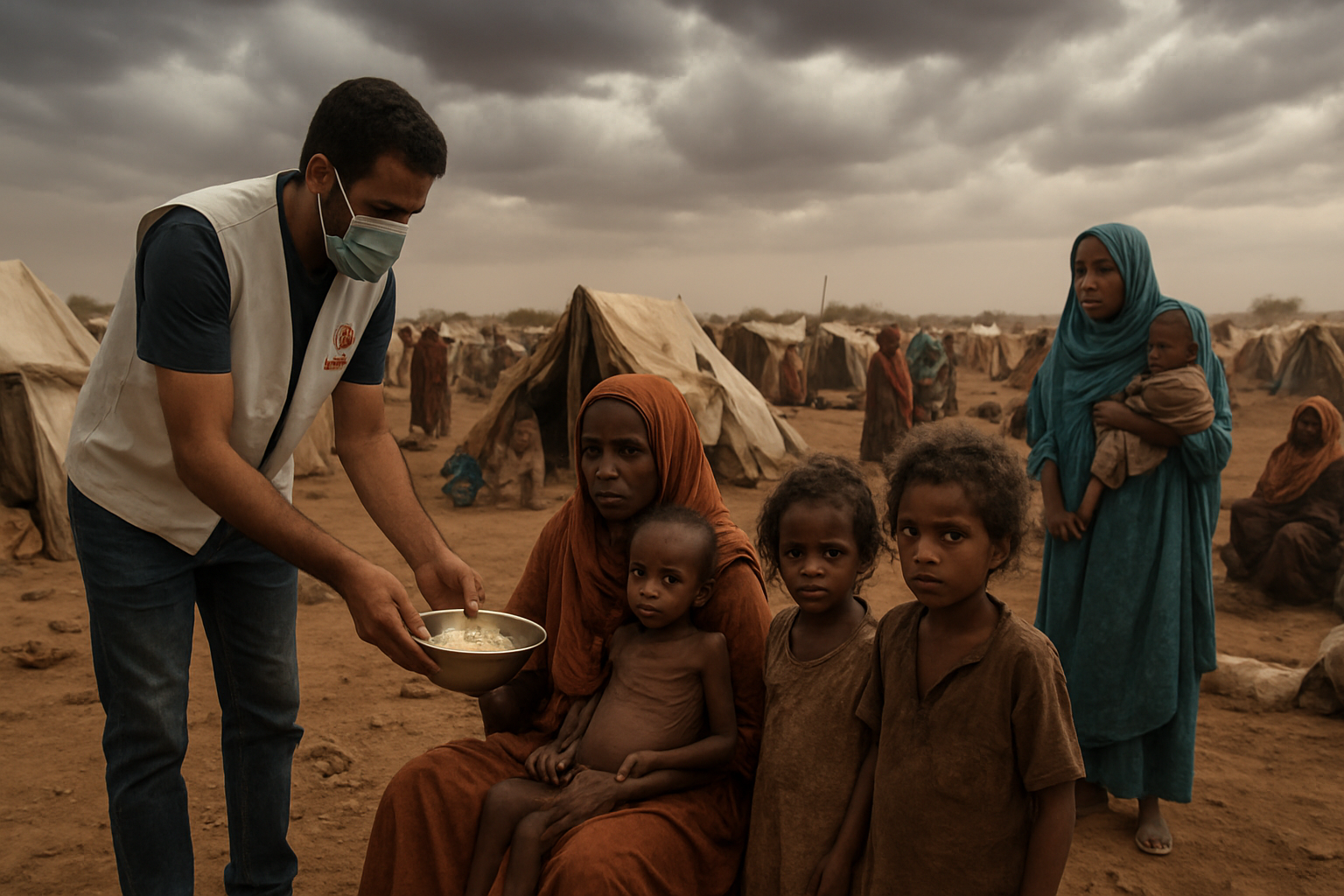
Sudan is experiencing what the United Nations describes as the world's worst humanitarian crisis, with 17.8 million people requiring urgent assistance as civil war devastates the African nation and international experts document what they term "hallmarks of genocide."
In a historic determination released February 20, 2026, UN-backed human rights experts declared that the Rapid Support Forces (RSF) campaign in El Fasher shows clear "hallmarks of genocide" against non-Arab communities. The October 2024 assault on the strategic North Darfur city documented over 6,000 killed during a three-day offensive that experts described as a "wave of violence shocking in scale and brutality."
A Pattern of Systematic Violence
El Fasher's strategic importance cannot be overstated—it represents the last major Darfur stronghold under Sudanese Armed Forces (SAF) control. RSF capture of the city would provide complete control over the Darfur region, encompassing one-third of Sudan's territory. The pattern of violence includes mass executions, systematic looting, and deliberate civilian infrastructure destruction targeting hospitals, schools, and residential areas.
The systematic targeting of ethnic communities based on identity meets the legal threshold for genocide, according to UN experts. This represents a continuation of historical patterns, as the RSF emerged from the Janjaweed militias responsible for the original Darfur genocide two decades ago, creating what observers call "historical continuity" in systematic atrocities.
"The RSF's campaign of destruction shows hallmarks of genocide against non-Arab communities. We are witnessing systematic targeting based on ethnic identity that meets international legal definitions."
— UN Human Rights Experts
Global Humanitarian Emergency
The current humanitarian catastrophe extends far beyond El Fasher. Across Sudan, 17.8 million people require immediate assistance, with millions internally displaced and hundreds of thousands fleeing to neighboring countries, creating a regional refugee emergency that threatens to destabilize Chad and South Sudan.
Famine has been declared in North Darfur areas, including Um Baru, where child malnutrition rates have reached a catastrophic 53%—nearly double the 30% threshold that defines famine conditions. The healthcare system has collapsed, with single surgeons now serving massive populations as medical facilities face systematic attacks and forced closures.
The destruction extends to all critical infrastructure. Transportation networks have been deliberately targeted, agricultural production has collapsed, and the systematic destruction of institutional capacity appears designed to undermine civilian morale through mass atrocities—a calculated strategy of terror.
International Response Hampered
The international community's response has been severely limited by multiple factors. Access restrictions prevent humanitarian organizations from reaching affected populations, while funding shortfalls compound the crisis. The situation is further complicated by competing global emergencies, including ongoing conflicts in Ukraine and Gaza, which have diverted international attention and resources.
The African Union suspended Sudan's membership, creating diplomatic isolation that hampers coordinated regional responses. Recent AU summits have acknowledged limited institutional effectiveness in addressing what officials describe as "genocide, insurgencies, and coups" across the continent.
Saudi Arabia's Permanent Representative to the UN, Ambassador Dr. Abdulaziz Alwasil, condemned criminal attacks by the RSF on the Al-Kuwaik Military Hospital, World Food Programme convoys, and buses carrying displaced civilians using drones. He emphasized that targeting civilians and humanitarian infrastructure constitutes violations of international humanitarian law.
Escalating Attacks on Aid Workers
The crisis has taken a particularly dangerous turn with the systematic targeting of humanitarian personnel. Three aid workers were killed and four wounded in a recent RSF drone attack in Kordofan state, marking a dangerous escalation in attacks on those attempting to provide life-saving assistance.
Médecins Sans Frontières (MSF) treated 167 patients in just two weeks for drone strike injuries across Sudan, documenting severe wounds from systematic attacks by both SAF and RSF on civilian areas, schools, markets, and healthcare facilities. The organization reported treating 18 civilians, including 4 women and 3 children, injured in a February 15 SAF drone strike on the Adikong fuel market.
Regional and Global Implications
The crisis has profound implications beyond Sudan's borders. The refugee emergency is straining resources in Chad and South Sudan, disrupting trade routes throughout the Horn of Africa, and compromising food security across the region. Sudan, once considered the breadbasket of northeast Africa, has become a zone of humanitarian catastrophe.
The genocide determination creates legal and moral obligations that the international community has yet to fulfill. The documentation provides crucial evidence for future accountability mechanisms through national, regional, and international courts, but immediate priorities must focus on stopping the violence and providing humanitarian assistance to millions facing starvation.
A Test of International Commitment
As Sudan marks what the UN Security Council describes as "1,000 days of brutal war," the crisis represents a critical test of the international community's commitment to the Responsibility to Protect principle. The systematic violations of international humanitarian law demand urgent enforcement mechanisms to protect Sudanese civilians.
Civil society briefers have issued stark warnings to the international community: "Unless you act now, you will have more blood on your hands." The crisis has reached what officials describe as a "horrific milestone," with fighting continuing to expand across North Darfur, North Kordofan, South Kordofan, and Blue Nile states.
Women and girls are enduring horrific sexual violence, while total impunity reigns for perpetrators of a long list of atrocities and war crimes that have nearly destroyed Africa's third-largest country. The conflict, which began in April 2023 as a power struggle between military leaders over RSF integration and civilian rule, has evolved into a comprehensive assault on Sudan's institutional foundations.
"The fighting continues to expand, marked by staggering violence and unimaginable suffering. We are witnessing total impunity for perpetrators of atrocities that have nearly destroyed this country."
— Rosemary DiCarlo, UN Under-Secretary-General for Political and Peacebuilding Affairs
Urgent Need for Coordinated Action
The Sudan crisis represents one of the world's most urgent humanitarian emergencies, requiring sustained international attention and coordinated response mechanisms. The genocide determination provides legal framework for intervention, but immediate action is needed to prevent further deterioration of an already catastrophic situation.
Success in addressing this crisis will require unprecedented international coordination, adequate funding for humanitarian operations, diplomatic pressure for ceasefire agreements, and long-term commitment to supporting Sudan's institutional reconstruction. The alternative—continued deterioration—threatens not only the 17.8 million Sudanese requiring assistance but regional stability across the Horn of Africa.
As the international community grapples with multiple global crises, Sudan serves as a stark reminder that early intervention and sustained commitment are essential to preventing humanitarian catastrophes from reaching genocidal proportions. The documentation of systematic atrocities provides both a warning and an opportunity for the global community to fulfill its responsibility to protect vulnerable populations from mass atrocities.