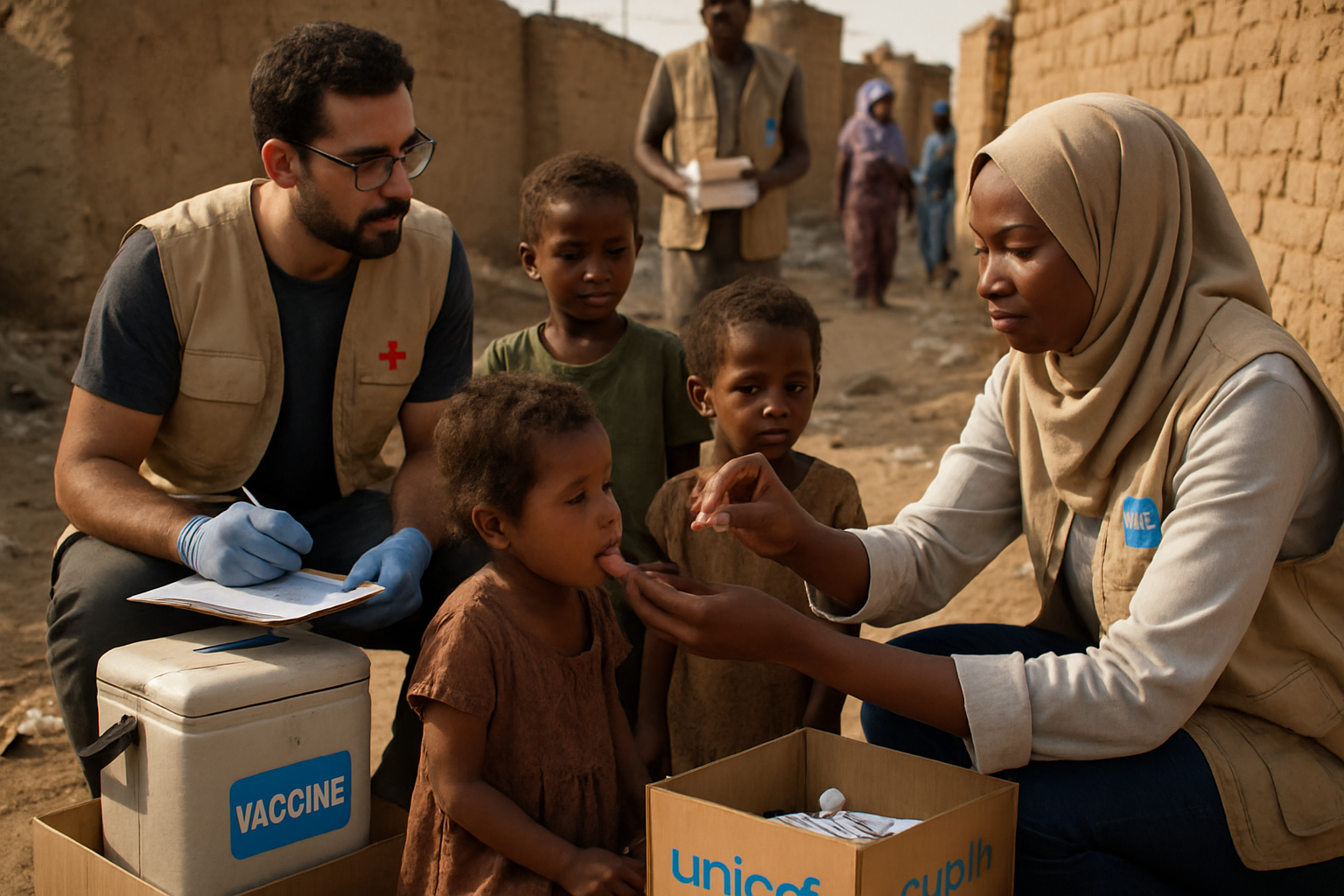
Sudan's humanitarian crisis reached a critical juncture this week as vaccines arrived in South Kordofan for the first time in three years, coinciding with deadly fighting in Dalanj and escalating diplomatic tensions with Ethiopia over alleged cross-border attacks.
Save the Children announced Monday that it has successfully delivered vaccines to South Kordofan state, marking the first time immunization supplies have reached the region since 2020. The breakthrough comes after the Sudanese Armed Forces (SAF) ended a siege of the area on February 3, breaking a blockade that had been enforced by a coalition of Rapid Support Forces (RSF) and the Sudan People's Liberation Movement-North (SPLM-N) under Abdel-Aziz al-Hilu.
Vaccination Campaign Resumes After Three Years
The arrival of vaccines represents a critical lifeline for children in South Kordofan, where healthcare infrastructure has been systematically destroyed during Sudan's 20-month conflict. According to Save the Children, preparations are now underway to launch comprehensive immunization services in the region.
"This is the first delivery of vaccines to South Kordofan in three years," confirmed a spokesperson for the organization. The vaccines will target preventable childhood diseases that have surged due to the collapse of routine healthcare services across the region.
The development follows the SAF's successful military operation that broke the coalition's control over key supply routes to Kadugli, the state capital. The operation has opened humanitarian corridors that had been blocked since the conflict began in April 2023, when fighting erupted between SAF forces under General Abdel Fattah al-Burhan and RSF militia led by General Mohamed Hamdan Dagalo, known as Hemedti.
Deadly Fighting Erupts in Dalanj
Even as vaccines reached South Kordofan, violence continued to claim civilian lives elsewhere in the state. On Monday, drone strikes conducted by the RSF-SPLM alliance targeted Dalanj city, killing several civilians and wounding others in attacks that local authorities condemned as deliberate targeting of non-combatants.
The strikes on Dalanj occurred as intense ground fighting raged between the city and Kadugli, with both sides using heavy weapons in populated areas. The violence has forced thousands of residents to flee their homes, adding to Sudan's already massive displacement crisis.
"The systematic targeting of civilian areas continues to violate international humanitarian law and puts innocent lives at risk."
— UN Human Rights Official
The attacks on Dalanj are part of a broader pattern of civilian targeting that has characterized Sudan's conflict. UN experts have documented over 6,000 deaths during a three-day RSF assault on El-Fasher in October 2024, which they determined showed "hallmarks of genocide" against non-Arab communities in North Darfur.
Sudan Issues Warning to Ethiopia
Adding to regional tensions, Sudan's government issued its first official warning to Ethiopia on Monday, accusing Addis Ababa of allowing its territory to be used for attacks against Sudan and threatening retaliation for what it called "hostile actions."
The Sudanese Foreign Ministry's statement marked an escalation in diplomatic rhetoric, with officials claiming Ethiopia has opened its borders to forces conducting operations "deep inside Sudanese territory." The government warned it reserves "the right to respond to these violations."
This represents the first formal accusation by Khartoum against Addis Ababa since the conflict began, suggesting deteriorating relations between the neighboring countries. Ethiopia has maintained official neutrality in Sudan's civil war, but Sudanese officials now allege direct involvement in cross-border activities.
Humanitarian Catastrophe Deepens
The limited progress in vaccine delivery comes against the backdrop of one of the world's worst humanitarian crises. According to UN estimates, 17.8 million people require urgent assistance across Sudan, with millions internally displaced and hundreds of thousands forced to flee to neighboring countries.
The healthcare system has been systematically targeted throughout the conflict. In February, three aid workers were killed and four wounded in an RSF drone attack in Kordofan state, while Médecins Sans Frontières (MSF) treated 167 patients in just two weeks from drone strike injuries across Sudan.
Famine conditions have been declared in North Darfur, with Um Baru showing a catastrophic 53% acute malnutrition rate among children under five – nearly double the 30% threshold that defines famine. The agricultural system, once the backbone of Sudan's economy, has collapsed under the weight of sustained conflict.

International Response Remains Limited
Despite the severity of the crisis, international response has been severely hampered by access restrictions, funding shortfalls, and competing global emergencies including conflicts in Ukraine and Gaza. The African Union suspended Sudan's membership following the April 2023 coup, creating diplomatic isolation that has complicated humanitarian efforts.
The RSF emerged from the Janjaweed militias responsible for the original Darfur genocide two decades ago, creating historical continuity in systematic atrocities against civilian populations. UN Security Council sanctions imposed in February targeted four senior RSF commanders, including Abdul Rahim Dagalo, the deputy commander and brother of RSF leader Hemedti.
Regional implications of the crisis extend far beyond Sudan's borders. The conflict has created refugee pressures on Chad and South Sudan, disrupted critical trade routes throughout the Horn of Africa, and contributed to agricultural collapse affecting regional food security.
Challenges Ahead
While the arrival of vaccines in South Kordofan represents a significant humanitarian breakthrough, enormous challenges remain. The ongoing violence in Dalanj and other areas continues to threaten civilian populations and humanitarian operations. The warning to Ethiopia suggests potential regional escalation that could further complicate relief efforts.
The vaccine delivery also highlights the fragmented nature of Sudan's crisis, where humanitarian progress in one area coincides with escalating violence in another. Save the Children and other organizations face the challenging task of maintaining supply lines while operating in an active conflict zone where all parties have been accused of targeting humanitarian infrastructure.
The situation represents a critical test of the Responsibility to Protect principle and international humanitarian law enforcement. Documentation of systematic atrocities provides evidence for future accountability mechanisms, but the immediate priority remains stopping the violence and providing assistance to millions facing starvation.
Looking Forward
As Sudan enters its third year of conflict, the arrival of vaccines in South Kordofan offers a glimmer of hope amid overwhelming humanitarian catastrophe. However, sustainable progress requires more than isolated successes – it demands comprehensive international engagement, sustained funding, and most importantly, an end to the systematic targeting of civilians and humanitarian infrastructure.
The transformation of Sudan from northeast Africa's former breadbasket into a humanitarian catastrophe zone serves as a stark reminder of how quickly institutional collapse can occur. The international community faces mounting pressure to develop more effective conflict prevention and humanitarian response mechanisms before the crisis spreads further throughout the Horn of Africa.
For now, the children of South Kordofan who will receive their first vaccines in three years represent both the human cost of prolonged conflict and the resilience of humanitarian organizations working under impossible conditions to save lives.