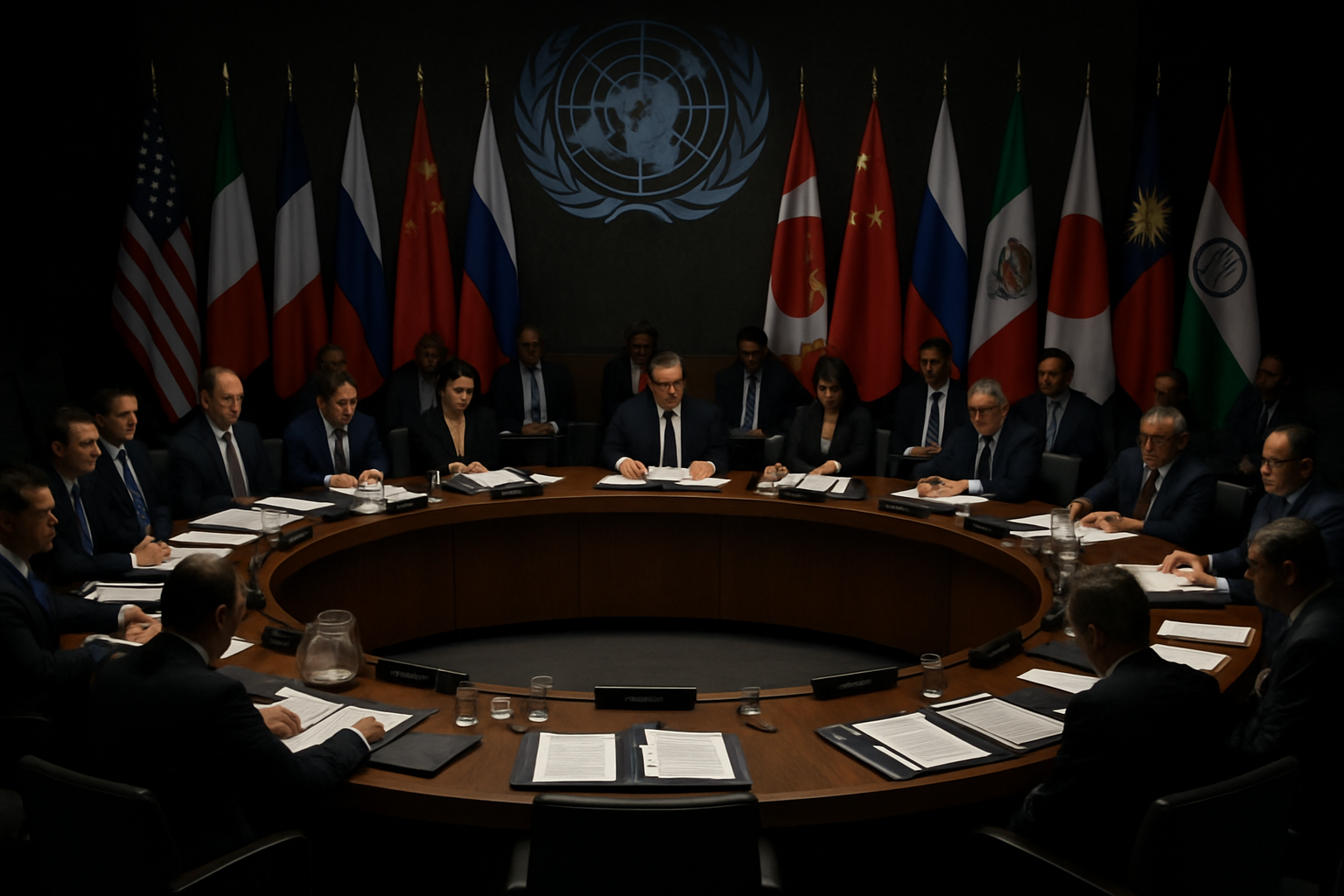
The United Nations Security Council has imposed sanctions on four senior commanders of Sudan's Rapid Support Forces (RSF), including the group's second-in-command Abdul Rahim Dagalo, in response to escalating atrocities amid what UN experts have determined shows "hallmarks of genocide."
The sanctions committee's decision, announced Tuesday, represents the international community's strongest response yet to the systematic violence perpetrated by the RSF during Sudan's devastating 20-month civil war. The measure was proposed jointly by the United States, Britain, and France, targeting key leadership figures responsible for what has become the world's worst humanitarian crisis.
Key RSF Leaders Sanctioned
Abdul Rahim Dagalo, brother of RSF leader General Mohamed Hamdan Dagalo (known as "Hemedti") and the paramilitary force's deputy commander, heads the list of newly sanctioned individuals. The designation reflects his central role in orchestrating military operations that have devastated civilian populations across Sudan.
The announcement was confirmed by Sudan's Deputy Permanent Representative to the UN, Ammar Mahmoud, who emphasized the significance of international action against those responsible for systematic attacks on civilians. The sanctions include asset freezes, travel bans, and arms embargoes targeting the designated individuals.
Genocide Determination Strengthens Case
The sanctions come in the wake of a historic determination by UN-backed human rights experts that the RSF's "campaign of destruction" in El Fasher shows clear "hallmarks of genocide" against non-Arab communities. The October 2024 assault on the North Darfur capital documented over 6,000 killed during a three-day offensive described as a "wave of violence shocking in scale and brutality."
"The systematic targeting of ethnic communities based on identity has met the legal threshold for genocide," stated UN human rights experts in their February 2026 report.
— UN Human Rights Council
El Fasher held strategic importance as the last major stronghold under Sudanese Armed Forces (SAF) control in Darfur. Its capture would give the RSF complete control over the region, representing one-third of Sudan's territory. The documented atrocities include mass executions, systematic looting, and deliberate destruction of civilian infrastructure including hospitals, schools, and residential areas.
Humanitarian Catastrophe Deepens
Current conditions in Sudan represent one of the most severe humanitarian emergencies in modern history. An estimated 17.8 million people require urgent assistance, with millions internally displaced and hundreds of thousands fleeing to neighboring countries, creating a regional refugee crisis affecting Chad and South Sudan.
Famine conditions have been declared in North Darfur areas including Um Baru, where 53% of children under five suffer from acute malnutrition—nearly double the 30% threshold that defines famine. The healthcare system has systematically collapsed through targeted attacks, forced closures, and resource shortages that have crippled medical care nationwide.
Recent incidents underscore the continuing violence against humanitarian workers. Three aid workers were killed and four wounded in an RSF drone attack in Kordofan state, representing a dangerous escalation in targeting of humanitarian personnel. Médecins Sans Frontières (MSF) treated 167 patients in just two weeks from drone strike injuries, documenting the systematic nature of attacks on civilian areas.
Historical Context of Violence
The RSF emerged from the notorious Janjaweed militias responsible for the original Darfur genocide two decades ago, creating a direct historical continuity with previous systematic atrocities. The current conflict began in April 2023 as a power struggle between SAF General Abdel Fattah al-Burhan and RSF leader Mohamed Hamdan Dagalo over integration timelines and civilian rule arrangements.
What distinguishes the current violence is its deliberate strategy of destroying institutional capacity and civilian morale through mass atrocities. UN experts note that the systematic civilian targeting represents a calculated approach to breaking resistance rather than merely collateral damage from military operations.
Limited International Response
Despite the severity of the crisis, international response has been severely hampered by multiple factors. The African Union suspended Sudan's membership, creating diplomatic isolation that complicates coordinated responses. Access restrictions prevent humanitarian operations from reaching those most in need, while funding shortfalls amid competing global emergencies in Ukraine and Gaza have limited available resources.
Regional implications extend far beyond Sudan's borders. The refugee crisis is straining resources in neighboring Chad and South Sudan, while disrupted trade routes and agricultural collapse are affecting food security throughout the Horn of Africa. Sudan, once considered the breadbasket of northeast Africa, has been transformed into a zone of humanitarian catastrophe.
Test of International Accountability
The genocide determination by UN experts creates unprecedented legal and moral obligations for the international community that remain largely unfulfilled. The documentation provides crucial evidence for future accountability mechanisms through national, regional, or international courts, but immediate priorities focus on stopping the violence and providing humanitarian assistance to millions facing starvation.
The sanctions represent a critical test of the international community's commitment to the Responsibility to Protect principle, which obligates intervention when states fail to protect their populations from genocide, war crimes, ethnic cleansing, and crimes against humanity. However, structural limitations within the UN system, including Sudan's historical relationships with Security Council members, have constrained more comprehensive responses.
Looking Forward
As the conflict enters its 21st month, the targeted sanctions against RSF leadership signal growing international impatience with impunity for mass atrocities. However, the effectiveness of these measures will ultimately depend on coordinated implementation and sustained political pressure on all parties to end the systematic violations of international humanitarian law.
The crisis in Sudan serves as a stark reminder of the international community's limited capacity to prevent or respond effectively to genocide in real-time. With millions of lives hanging in the balance, the success or failure of these sanctions—and broader international engagement—will have profound implications for global efforts to uphold human rights and prevent mass atrocities in the 21st century.
For the Sudanese people enduring this catastrophe, Tuesday's sanctions offer a measure of international recognition of their suffering, but the urgent need remains for concrete action to stop the violence, deliver humanitarian aid, and begin the long process of accountability and reconstruction in a nation torn apart by systematic brutality.