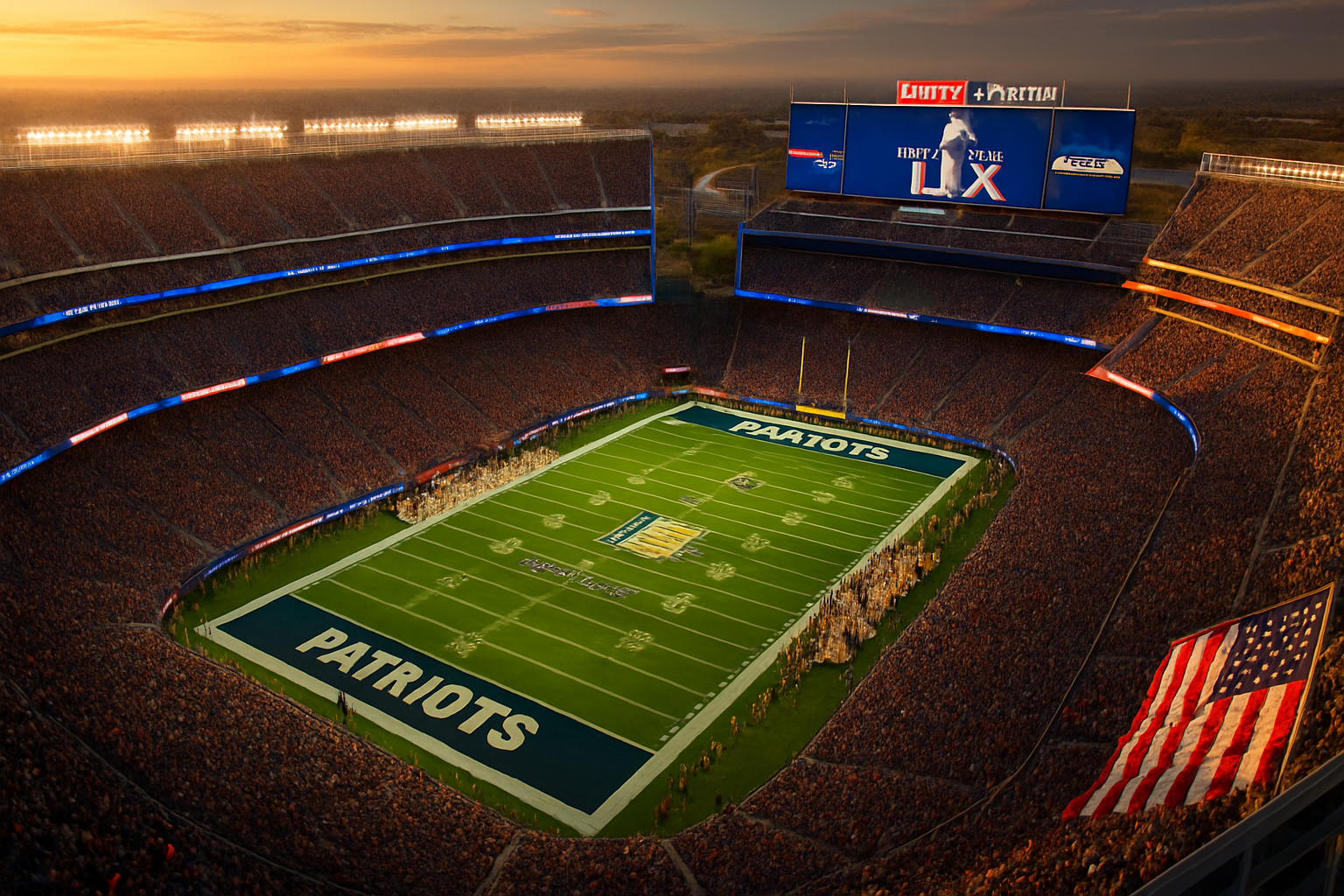
Super Bowl LX has transcended traditional championship boundaries to become a cultural and political flashpoint as the New England Patriots face the Seattle Seahawks at Levi's Stadium in Santa Clara, California, while Puerto Rican superstar Bad Bunny prepares to deliver the first all-Spanish halftime show in NFL history amid heightened political tensions.
The February 8, 2026 championship game represents far more than a sporting contest between two 14-3 teams seeking the Vince Lombardi Trophy. The event has evolved into a complex intersection of sports excellence, cultural celebration, and political controversy that exemplifies the broader divisions within American society during the Trump administration's second term.
Championship Game: Patriots Seek Historic Seventh Title
The on-field storyline centers on a compelling contrast between the Patriots' Drake Maye-led offensive resurgence and the Seahawks' defensive dominance anchored by veteran quarterback Sam Darnold's remarkable redemption narrative. Seattle enters as 4.5-point favorites, riding their heralded defense and the explosive Darnold-to-Jaxon Smith-Njigba connection that has defined their playoff run.
The Patriots counter with an underrated defense that has exceeded expectations throughout the postseason, complemented by a ball-control ground game that seeks to neutralize Seattle's aggressive pass rush. For New England, victory would represent their record-breaking seventh Super Bowl championship, while Seattle aims for their second title since their 2013 triumph.
"This represents a collision of different team-building philosophies rather than a simple rematch. The Patriots' championship experience versus the Seahawks' defensive validation creates compelling narratives about different paths to NFL success."
— NFL Analysis, Multiple Sources
Bad Bunny's Historic Halftime Performance
The halftime show has generated international attention as Bad Bunny prepares to become the first predominantly Spanish-language artist to headline the Super Bowl's most-watched entertainment segment. Following his Grammy Album of the Year victory for "Debí tirar más fotos," the Puerto Rican artist faces an audience expected to exceed 130 million viewers globally.
Bad Bunny's performance philosophy emphasizes cultural celebration over linguistic barriers, with his team promoting the message: "Nadie tiene que aprender español, es mejor si aprenden a bailar" (No one has to learn Spanish, it's better if they learn to dance). The show promises a "gran fiesta" showcasing Puerto Rican cultural identity while featuring Green Day as special guests.
The performance represents a watershed moment for Latino representation in American mainstream entertainment, with the NFL implementing historic accessibility measures including comprehensive sign language interpreters for the first time in halftime show history.
Political Tensions and Immigration Controversy
The cultural celebration occurs against a backdrop of intensified political controversy stemming from Bad Bunny's February 1, 2026 Grammy acceptance speech, where he delivered powerful pro-immigration statements and criticized ICE enforcement policies. President Trump subsequently accused him of "spreading hate" and questioned his Super Bowl appearance.
The timing proves particularly sensitive as the Trump administration has quadrupled deportation operations compared to pre-Trump levels, according to University of California studies. ICE enforcement has expanded to include major public events, with the Mexican consulate issuing warnings to nationals about potential operations during Super Bowl festivities.
NFL Commissioner Roger Goodell has defended Bad Bunny's appearance, characterizing the halftime show as "a stage for unity, not division," while refusing to modify the performance despite political pressure. The controversy has divided opinion along political lines, with two-thirds of Americans believing ICE operations have "gone too far" according to NPR/PBS/Marist polling.
"The argument that sports and politics shouldn't mix is being tested at the highest level of American entertainment, with Bad Bunny's performance representing both artistic celebration and political statement."
— International Media Analysis
Economic and Cultural Impact
The Super Bowl's economic footprint extends far beyond traditional metrics, with the San Francisco Bay Area projecting $630 million in economic impact from the event. Mexico has experienced a 6.2 billion peso surge in avocado consumption driven by the "Super Bowl effect," while Bad Bunny's streaming revenue is expected to reach $1.7 million weekly following the performance despite receiving no direct compensation from the NFL.
The cultural significance transcends economics, as Bad Bunny's "Debí tirar más fotos" has topped Apple Music charts in China, marking a breakthrough for Spanish-language music in the world's largest market. Global viewing parties are organized worldwide, with particular enthusiasm in Bogotá and other Latin American cities.
Enhanced Security and Social Context
Security preparations reflect the charged atmosphere, with heightened protocols implemented due to the intersection of large-scale public gathering and ongoing immigration enforcement concerns. The event occurs during what advocacy groups describe as a "climate of concern" within immigrant communities, as federal agents have expanded operations beyond traditional workplace and residential raids to include major public events.
French media outlet Le Monde reports that the Super Bowl is occurring "in the shadow of ICE," noting that athletes have begun taking public positions regarding immigration enforcement—a development described as requiring "proof of courage" in the current political environment.
International Media Response
Global coverage has emphasized the cultural and political dimensions of the event. Swedish broadcaster SVT described Bad Bunny's performance as "historically sensitive" given his status as "an outspoken opponent of Trump's policies." Cuban media highlighted the significance of Spanish-language representation on America's most-watched television event, while Greek outlets focused on the "triumph and reactions" surrounding the Puerto Rican artist's selection.
European reporting has characterized the event as a test of whether entertainment can bridge political divisions or will further entrench existing societal fractures.
Global Streaming and Accessibility
The NFL's broadcast strategy reflects the event's international significance, with comprehensive coverage planned across multiple platforms in the United States and streaming internationally. For the first time, the halftime show will feature complete sign language interpretation, representing a major accessibility breakthrough that advocates hope will establish new standards for major entertainment events.
Historical Context and Legacy Implications
Super Bowl LX occurs at a unique intersection of American cultural evolution and political polarization. The event represents both the NFL's traditional championship excellence and its adaptation to increasingly diverse global audiences seeking authentic cultural expression rather than assimilated mainstream content.
The game's outcome will determine whether the Patriots achieve unprecedented championship dominance or the Seahawks validate their defensive renaissance. However, the broader cultural impact may prove more enduring, potentially establishing templates for future major events that must balance entertainment value, political sensitivities, and authentic cultural representation.
"This represents more than a single football game or halftime show. It's a watershed moment for Latino representation and a test of whether American institutions can adapt to demographic and cultural changes while maintaining traditional excellence."
— Cultural Analysis, Multiple International Sources
Looking Forward: Cultural Watershed Moment
As kickoff approaches at Levi's Stadium, Super Bowl LX embodies the complexities of contemporary American society. The championship game promises exceptional athletic competition between two outstanding teams, while Bad Bunny's halftime performance represents a cultural milestone that could influence entertainment industry practices for decades.
The event's resolution—both sporting and cultural—will likely resonate far beyond the final score, potentially defining how major American institutions navigate cultural authenticity, political pressure, and global audience expectations in an increasingly interconnected world.
Whether remembered primarily for championship football or cultural breakthrough, Super Bowl LX has already secured its place as one of the most significant cultural events in recent American history, demonstrating the evolving relationship between sports, entertainment, politics, and cultural identity in the 21st century.