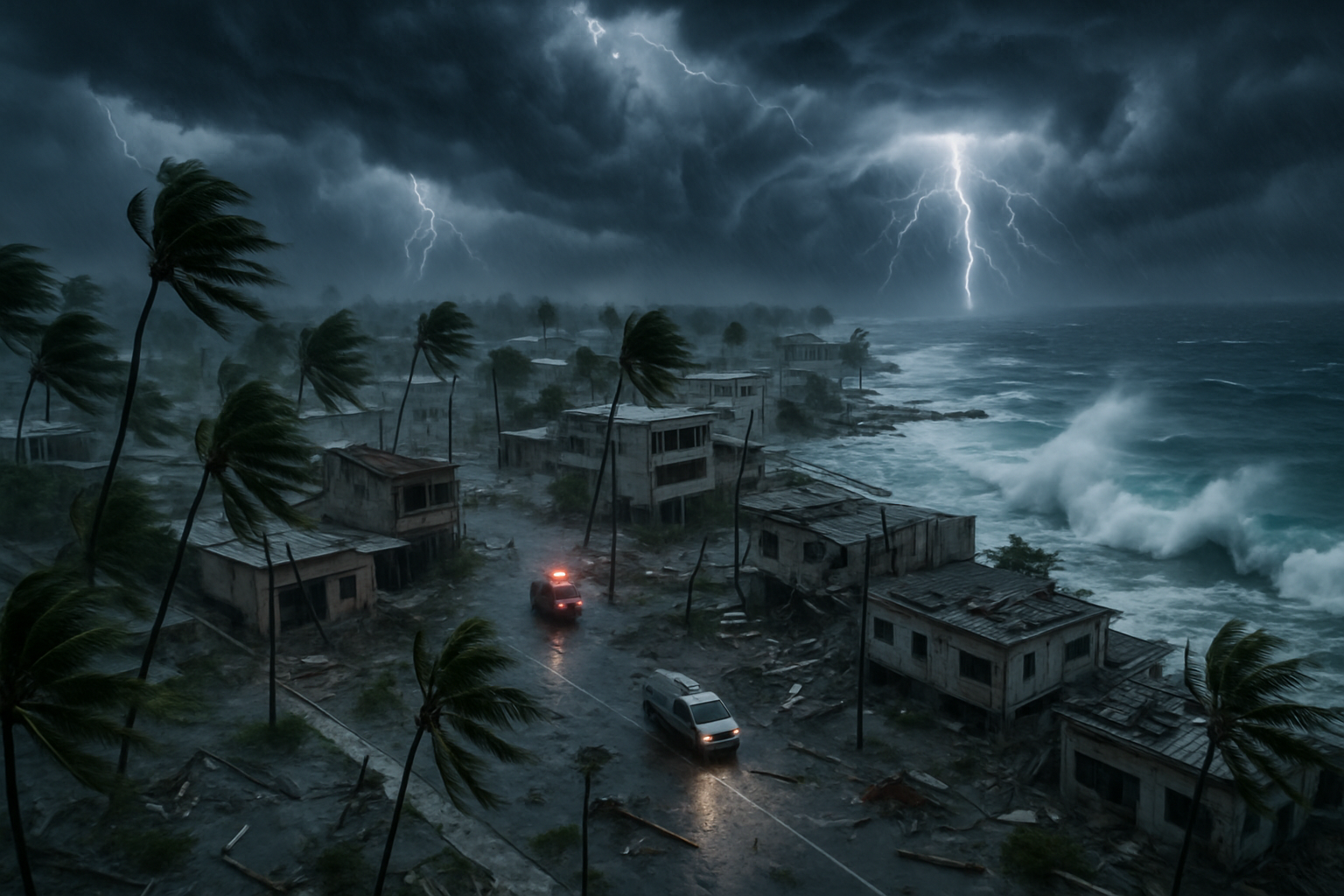
Super Typhoon Sinlaku has left a trail of unprecedented destruction across the Northern Mariana Islands, forcing the complete suspension of commercial flights, closing critical infrastructure, and prompting an expedited federal disaster declaration as the commonwealth grapples with what officials describe as the strongest storm to hit the Pacific territory since October 2025.
The devastating typhoon has severely damaged Saipan's Francisco C. Ada International Airport, leaving the facility operating only for relief and rescue flights during daylight hours. According to the Commonwealth Ports Authority, the airport sustained significant damage to its navigation aids and all six passenger boarding bridges, while operating without commercial power and running water.
Infrastructure Crippled Across the Islands
The Port of Saipan remains completely closed under emergency protocols, effectively cutting off the islands' primary sea gateway. The combination of air and sea transport disruptions has left the Northern Mariana Islands largely isolated, with officials working around the clock to establish emergency supply chains.
"SAIPAN's main air and sea gateways remain largely inaccessible following the onslaught of Super Typhoon Sinlaku, with operations limited or suspended due to infrastructure damage and operational constraints."
— Commonwealth Ports Authority
The widespread destruction extends far beyond transportation hubs. Beach Road, a vital coastal thoroughfare, has been transformed into a debris-strewn landscape where residents and public servants display visible signs of stress and fatigue as they begin the monumental cleanup effort. The stark contrast between the area's typically pristine blue lagoon and the scattered ruins along the shoreline underscores the storm's devastating impact.
Federal Disaster Declaration Fast-Tracked
In an unprecedented move, U.S. Department of Homeland Security Secretary Markwayne Mullin has signed off on Governor David M. Apatang's request for a major disaster declaration, according to Delegate Kimberlyn King-Hinds. The request is now awaiting President Donald Trump's final approval.
Governor Apatang's comprehensive request includes individual assistance, public assistance with direct federal support, and hazard mitigation for the Commonwealth of the Northern Mariana Islands (CNMI). Critically, the governor has requested a 100% federal cost share for debris removal and emergency protective measures, recognizing the territory's limited resources to handle such extensive damage.
Emergency Relief Operations Underway
Federal Emergency Management Agency (FEMA) supplies arrived on Tinian Monday afternoon, providing crucial relief to the island's approximately 2,000 residents. Matthew Masga, tasked by Tinian Mayor Edwin P. Aldan to coordinate distribution, confirmed that the majority of Tinian's population is expected to seek assistance once supplies reach the designated staging area at the Tinian Sports Complex Gymnasium in San Jose.
The relief supplies consist primarily of bottled drinking water and ready-to-eat meals, addressing immediate survival needs as utilities remain disrupted across the islands. The Francisco M. Borja/Tinian International Airport is serving as the primary staging point for relief operations.
Regional Solidarity in Crisis Response
Demonstrating the close ties between Pacific territories, Guam Governor Lou Leon Guerrero arrived on Saipan Monday to offer support to CNMI officials in assisting typhoon victims. This show of regional solidarity highlights the interconnected nature of Pacific island communities during crisis situations.
Despite the widespread devastation, some critical services are beginning to resume. The Emmanuel University College of Nursing (EUCON) achieved a remarkable milestone by reopening on April 20, representing what officials describe as "a remarkable achievement of determination, faith, and community effort in the face of catastrophic circumstances."
Climate Context and Historical Perspective
Super Typhoon Sinlaku strikes during what climate scientists identify as an unprecedented period of sustained global warming. April 2026 marks the 24th consecutive month of global temperatures exceeding 1.5°C above pre-industrial levels—the longest sustained warming period in recorded human history.
This extreme weather event occurs within a broader context of what experts term "compound disasters," where multiple emergency situations unfold simultaneously across vast geographic areas, overwhelming traditional sequential emergency response frameworks. The Northern Mariana Islands' experience with Sinlaku represents a critical test of enhanced emergency preparedness systems developed since previous devastating storms like Typhoon Soudelor (2015) and Super Typhoon Yutu (2018).
Enhanced Preparedness Shows Results
While the destruction from Sinlaku is extensive, emergency management officials note that enhanced community preparedness measures implemented since previous typhoons have proven valuable. These improvements include backup power systems, strengthened communication networks, and enhanced mutual aid mechanisms that have helped coordinate response efforts even when traditional systems were overwhelmed.
Social media platforms have emerged as essential emergency communication tools, enabling coordination between government agencies, relief organizations, and affected residents when conventional communication infrastructure failed.
Long-Term Recovery Challenges Ahead
The recovery timeline for the Northern Mariana Islands represents a fundamental shift in disaster response expectations. What once required weeks of recovery effort now demands months or years—a permanent change reflecting the increasing intensity and frequency of extreme weather events in the Pacific region.
This transformation has elevated "building back better" from an optional enhancement to an essential survival strategy for Pacific island communities. The approach emphasizes climate-resilient infrastructure designed to withstand the increasingly volatile weather patterns that have become the new normal in the region.
Economic and Social Impact
The economic implications of Super Typhoon Sinlaku extend far beyond immediate infrastructure damage. The tourism sector, a critical component of the CNMI economy, faces significant challenges with both air and sea access severely compromised. The disruption occurs during what would typically be a peak period for visitor arrivals.
Mental health considerations have become increasingly important as Pacific island communities face repeated extreme weather trauma. Families who have lost homes and businesses multiple times within the past decade now confront the psychological toll of recurring disasters, driving increased demand for mental health services during an already stressful recovery period.
International Cooperation and Support
The response to Super Typhoon Sinlaku highlights both the strength and limitations of current international cooperation mechanisms. While regional solidarity from Guam and federal support from the United States demonstrate effective partnership models, the scale and frequency of such disasters are testing traditional mutual aid frameworks.
Environmental challenges increasingly transcend political boundaries, as atmospheric and ocean systems carry effects across vast distances regardless of jurisdictional lines. Success in managing such crises requires unprecedented coordination and sustained international cooperation, particularly as climate change continues to intensify extreme weather patterns.
Looking Forward: Adaptation as Survival
Super Typhoon Sinlaku represents more than another severe weather event—it serves as a critical test of humanity's ability to adapt to an era of unprecedented environmental volatility. The Northern Mariana Islands' recovery efforts will provide valuable lessons for other Pacific territories facing similar challenges.
As relief efforts continue and the extent of damage becomes fully apparent, the islands' experience underscores the urgency of comprehensive climate adaptation strategies. The successful integration of cutting-edge technology with traditional community knowledge, combined with enhanced international cooperation frameworks, will prove essential for maintaining the viability of Pacific island communities in an era of accelerating climate change.
With the climate action window rapidly narrowing as ecological systems approach critical thresholds, the response to Super Typhoon Sinlaku may well determine the template for Pacific island resilience in the decades ahead. The choice between reactive crisis management and transformative infrastructure adaptation has never been more consequential for the survival and prosperity of these vulnerable island communities.