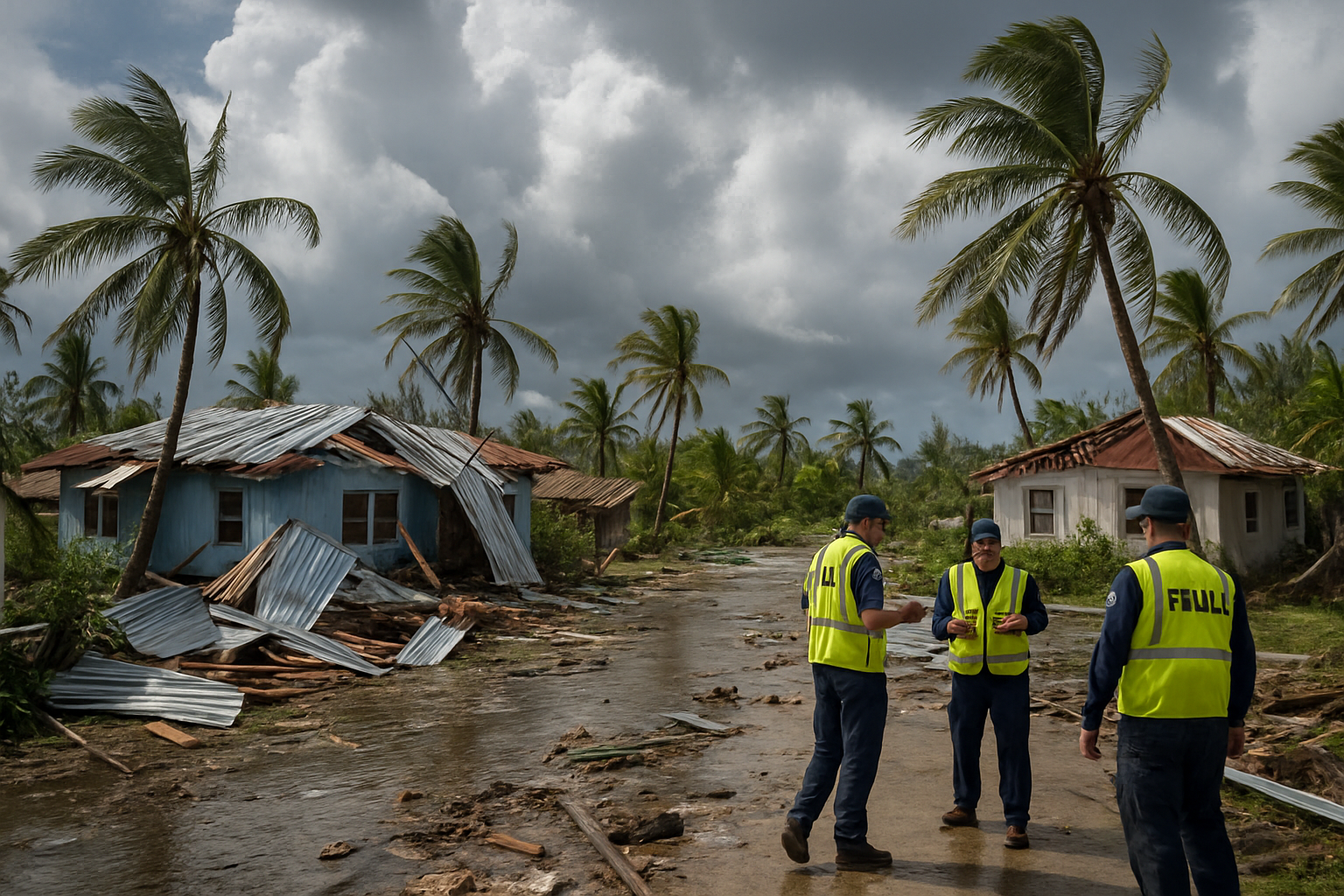
Super Typhoon Sinlaku, the strongest storm since October 2025, has left devastating destruction across Saipan and the Northern Mariana Islands, with Federal Emergency Management Agency officials now on the ground conducting damage assessments and preparing recommendations for President Donald Trump on a major disaster declaration.
The catastrophic typhoon, which ravaged the Commonwealth of the Northern Mariana Islands (CNMI) over three days last week, destroyed houses, flooded villages, caused sinkholes, knocked down power poles, uprooted trees and farm crops, and left the islands without power and water. Chalan Kanoa and Susupe were submerged in four to six feet of floodwater, leaving many residents trapped on their roofs.
Widespread Infrastructure Devastation
The storm's impact has been catastrophic across the territory. Northern Marianas College sustained extensive damage, with Acting President Frankie Eliptico vowing that the institution would begin damage assessments and short- and long-term recovery efforts this week. The college's facilities represent just one example of the widespread educational infrastructure damage across the islands.
According to Rep. John Paul Sablan, the villages of Chalan Kanoa and Susupe sit on wetland areas, which explains why residents there often experience severe flooding. The unprecedented water levels during Sinlaku exceeded all previous storm records in these vulnerable low-lying areas.
"Rain penetrated everywhere, and we saw complete demolition in many areas. This is unlike anything we've experienced since previous major typhoons."
— Local Resident Report
Federal Emergency Response
FEMA officials arrived immediately following the storm to assess the widespread destruction and coordinate federal assistance. The comprehensive damage evaluation will inform President Trump's decision on whether to declare the islands a major disaster area, which would unlock substantial federal funding for recovery efforts.
The federal response comes as the CNMI government moves swiftly to address immediate needs. The Saipan and Northern Islands Legislative Delegation passed House Local Bill 24-55 during an emergency session Saturday, appropriating $500,000 in poker fees collections to help Saipan and the Northern Islands recover from the devastation.
Additionally, the Department of Finance's Division of Revenue and Taxation announced tax relief for individuals and businesses affected by Super Typhoon Sinlaku. Following Governor David M. Apatang's state of emergency declaration and the federal disaster declaration issued on April 11, 2026, the secretary of Finance authorized the postponement of certain income tax deadlines until October 15, 2026.
Economic and Social Impact
The typhoon has severely disrupted daily life across the islands. Fuel price signs were knocked down by the storm, though by Saturday morning, fuel prices had declined as residents lined up for supplies in the aftermath. Major infrastructure challenges persist, with power outages affecting the entire territory and water systems compromised.
The tourism sector, crucial to the CNMI economy, faces significant challenges. Philippine Airlines, which was scheduled to resume direct Manila-Saipan service on March 29, 2026, may experience further disruptions as infrastructure repairs continue.
Community Resilience and Response
Despite the overwhelming destruction, communities have demonstrated remarkable resilience. Enhanced preparedness measures, including backup power systems, improved communication networks, and strengthened mutual aid compared to previous typhoons like Soudelor (2015) and Yutu (2018), have helped save lives even as property damage remains extensive.
Social media has proven essential for emergency communication when traditional systems were overwhelmed. The community response reflects lessons learned from previous major storms and improved emergency protocols developed over recent years.
Climate Context and Future Preparedness
Super Typhoon Sinlaku struck during the 24th consecutive month of global temperatures exceeding 1.5°C above pre-industrial levels—the longest sustained warming period in recorded human history. This unprecedented climate context has created conditions for more intense and destructive storms across the Pacific region.
The World Meteorological Organization identifies a 50-60% El Niño probability for July-September 2026, potentially driving even more extreme weather events. Pacific islands' infrastructure, designed for historical climate patterns, increasingly faces storms that exceed operational parameters.
Emergency experts have identified a paradigm shift toward "compound disasters"—multiple emergency types occurring concurrently rather than sequentially—challenging traditional resource allocation and mutual aid mechanisms. This transformation requires fundamental changes in emergency preparedness and response strategies.
Recovery and Reconstruction Efforts
Recovery timelines have fundamentally shifted from weeks to months or years, representing a permanent change in disaster response expectations. "Building back better" has evolved from an optional enhancement to an essential survival strategy in the permanent climate volatility era.
The recovery effort will require unprecedented coordination between federal, territorial, and local agencies. Traditional seasonal patterns that guided infrastructure design, agricultural planning, and emergency preparedness are no longer reliable frameworks, requiring adaptive management approaches.
Mental health services report increased demand as communities face climate anxiety and repeated trauma from families losing homes and businesses multiple times per decade. The psychological toll of recurring extreme weather events has become a critical component of disaster response planning.
International and Regional Implications
The crisis occurs amid broader Pacific regional challenges, with Papua New Guinea simultaneously dealing with Cyclone Maila affecting Milne Bay and Bougainville provinces. This pattern of simultaneous disasters across the Pacific tests emergency services operating at or beyond capacity limits globally.
Traditional mutual aid mechanisms prove inadequate for multiple concurrent disasters, highlighting the need for enhanced international cooperation frameworks. The Pacific islands bear disproportionate climate impacts despite minimal emissions contributions, raising fundamental questions about climate justice and adaptation financing.
Looking Ahead
April 2026 represents a critical watershed moment between reactive crisis management and transformative infrastructure adaptation. The climate action window continues to narrow as ecological systems approach critical thresholds that could trigger irreversible changes to global food security, climate stability, and human settlements.
Success in the CNMI's recovery will depend on unprecedented cooperation between government agencies, community organizations, and international partners. Environmental protection has become essential infrastructure for planetary sustainability, requiring coordinated action during this decisive climate action decade.
The tools, knowledge, and cooperation frameworks exist for comprehensive environmental protection and disaster resilience. The challenge lies in implementing solutions rapidly enough to maintain planetary habitability during what experts describe as Earth's most environmentally challenging period in recorded history.