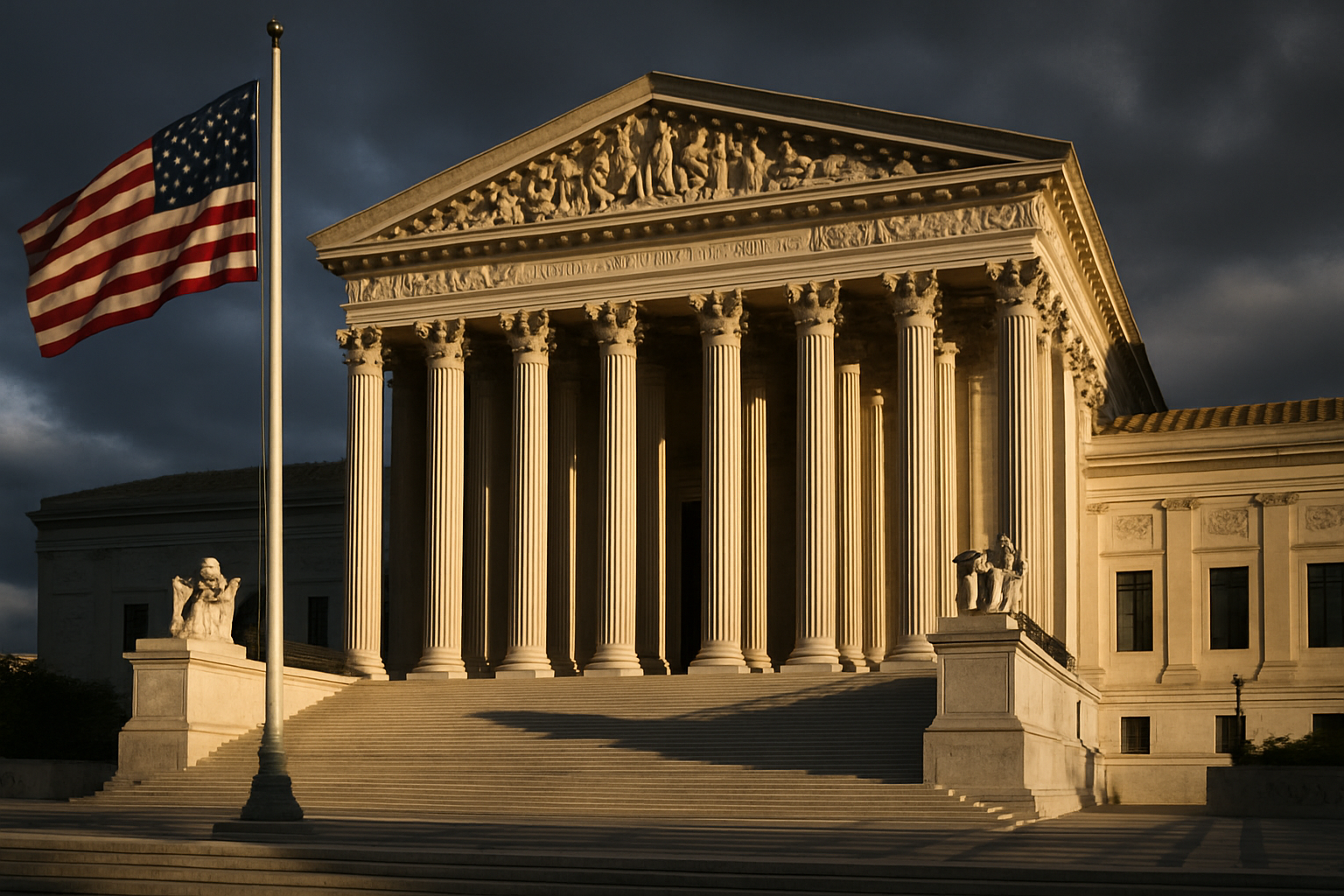
In a landmark 6-3 decision that sends shockwaves through global markets, the US Supreme Court has struck down President Donald Trump's sweeping global tariffs, dealing the most significant legal defeat to his economic agenda since returning to office.
The ruling, authored by conservative Chief Justice John Roberts, upheld lower court decisions that Trump's use of the 1977 International Emergency Economic Powers Act (IEEPA) to impose widespread tariffs exceeded presidential authority. The decision marks the first time the nation's highest court has definitively invalidated a central policy of the Trump administration.
Constitutional Authority Under Scrutiny
The Court ruled that Trump's interpretation of the IEEPA – which he used to justify tariffs affecting billions in global trade – would intrude on congressional powers and violate the "major questions" doctrine. This legal principle, embraced by conservative justices, requires actions by the executive branch of "vast economic and political significance" to be clearly authorized by Congress.
"The president claims extraordinary power to impose tariffs unilaterally of unlimited size, duration and scope," Chief Justice Roberts wrote in the majority opinion. "The law does not authorize the president to impose tariffs."
"They also are a frankly, disgrace. I am absolutely ashamed of certain members of the court."
— Donald Trump, responding to the ruling
Global Market Impact
The ruling immediately affected international markets, with oil prices rising over $1 per barrel and currency volatility spiking across emerging markets. The decision creates uncertainty around billions of dollars in collected tariff revenues, potentially forcing the US government to consider refunding duties paid by importers.
European Union officials expressed cautious optimism, with several member states monitoring developments closely. China, which had been targeted by some of the highest tariffs at 34%, welcomed the ruling as vindication of its position that the measures violated international trade law.
Congressional Opposition Vindicated
The ruling comes as Congress has shown increasing resistance to Trump's trade policies. Earlier this month, the House passed legislation 219-211 to end Canada tariffs, with six Republicans joining nearly all Democrats in the first significant bipartisan rebuke of Trump's trade authority in his second term.
House Speaker Mike Johnson had unsuccessfully attempted to prevent that vote from reaching the floor, highlighting growing Republican anxiety about the unpredictable nature of Trump's trade approach.
International Reactions
The decision drew swift international commentary. Former President Barack Obama condemned what he called a "gift to billionaire polluters," while European officials privately expressed concerns about the precedent of using trade measures for diplomatic pressure against allies.
Canada, which had been facing significant tariff pressure, maintained diplomatic silence on the ruling but is expected to use the decision to strengthen its position in ongoing trade disputes.
Economic Implications
The tariffs had already shown limited effectiveness in achieving their stated goals. Despite extensive Trump tariff policies, the US trade deficit reached $901.5 billion annually, essentially unchanged from previous years, demonstrating the structural nature of trade imbalances.
Small businesses celebrated relief from import cost pressures, though uncertainty remains over the refunding process for billions in collected duties. The ruling effectively removes a key tool Trump had wielded to impose his economic agenda on international partners.
Legal Precedent
Legal experts emphasized the broader constitutional implications of the ruling. The decision strengthens congressional oversight of executive trade authority and limits presidential power to invoke emergency authorities for economic objectives during peacetime.
The 6-3 split, with conservative justices joining the majority, suggests even Trump-appointed justices were unwilling to endorse such an expansive interpretation of executive power in trade policy.
Trump's Response and Alternative Measures
Trump immediately denounced the ruling as "deeply disappointing" and announced he was exploring alternative legal frameworks to maintain trade pressure on international partners. Administration officials confirmed they are considering new executive orders that would invoke different statutory authorities.
"All tariffs remain, we have alternatives," Trump declared on Truth Social, though he provided no specific details about replacement measures.
Looking Ahead
The ruling sets a precedent that will influence future administrations' ability to use emergency powers for trade policy. It also provides encouragement to other nations facing similar economic pressure tactics, potentially strengthening international resistance to unilateral trade measures.
With Trump's scheduled visit to Beijing from March 31 to April 2 now approaching, the ruling removes a significant point of leverage in US-China trade negotiations while potentially opening space for more conventional diplomatic and trade discussions.
The decision represents a critical test of institutional checks and balances in American democracy, demonstrating that even in an era of expanded executive power, constitutional limits remain enforceable through judicial review.