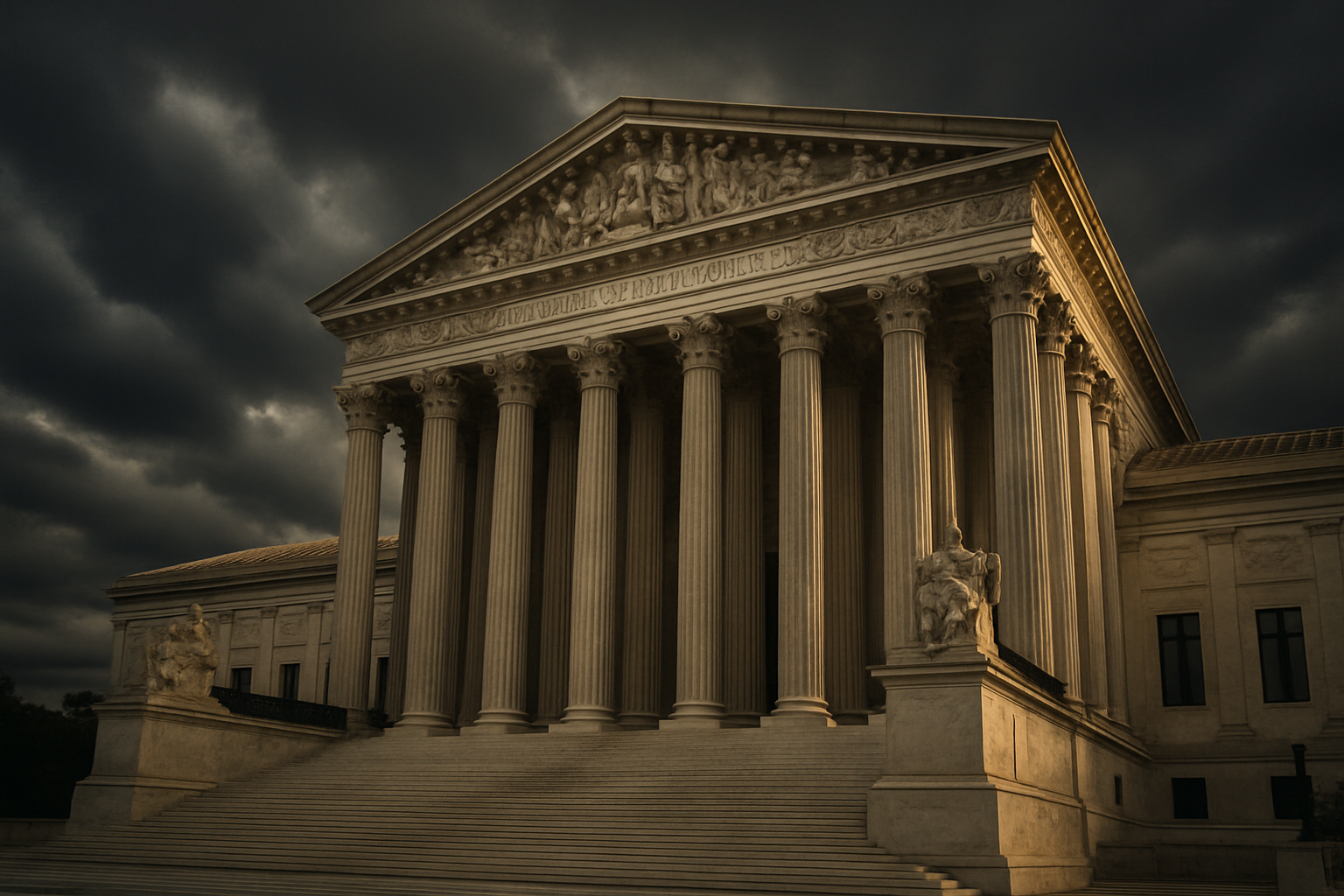
The US Supreme Court delivered a devastating blow to President Donald Trump's trade agenda on Friday, ruling 6-3 that his sweeping global tariffs imposed under emergency powers were illegal, prompting an immediate and defiant response from the White House announcing new 10% tariffs on all countries.
In a 170-page decision authored by Chief Justice John Roberts, the Court applied the "major questions doctrine," ruling that the International Emergency Economic Powers Act (IEEPA) of 1977 "does not authorize the president to impose tariffs." The majority opinion declared that no previous president had interpreted the emergency powers law to justify broad trade restrictions, marking the first major constitutional challenge to Trump's economic agenda in his second term.
Immediate Presidential Defiance
Within hours of the ruling, Trump held a combative White House press conference, calling the decision "incorrect," "terrible," and "deeply disappointing." In an unprecedented attack on the judicial branch, he declared himself "absolutely ashamed" of certain justices and called them "a disgrace to our nation" and "disloyal to our Constitution."
"The Supreme Court's decision today made a president's ability to both regulate trade and impose tariffs more powerful and more crystal clear, rather than less," Trump declared, contradicting the Court's actual ruling.
— President Donald Trump, White House Press Conference
Trump immediately announced that he would sign an executive order imposing a 10% global tariff on all US trading partners for 150 days under different legal authorities, vowing to find alternative mechanisms to maintain his protectionist trade policies. The announcement sent oil prices surging over $1 per barrel and created immediate uncertainty in global financial markets.
Global Economic Impact and Market Response
Wall Street ended the week with significant gains following the Supreme Court decision, with the Nasdaq rising 0.90% to 22,886.07 points and the S&P 500 climbing 0.69% as investors celebrated the potential relief from tariff pressures. Shares of companies involved in international trade and e-commerce saw particular gains as markets anticipated reduced trade friction.
The ruling opens the door to potentially billions of dollars in tariff refunds for US importers who have paid approximately $200 billion in Trump's trade taxes since his return to office. However, Trump indicated that refunds would not come without a prolonged legal battle, predicting the matter would be "tied up in court for years."
International Reactions and Diplomatic Fallout
The decision created immediate diplomatic uncertainty across Europe and allied nations. European Union officials expressed cautious optimism about the Court's ruling while remaining concerned about Trump's announced replacement tariffs. The European Commission, which manages trade policy for the 27-member bloc, called for "clarity" on the White House's next steps and urged "stability" in transatlantic commercial relations.
Mexico's Economy Secretary Marcelo Ebrard called for "prudence" and "sangre fría" (cold blood) in response to Trump's new tariff threats, while confirming plans to travel to Washington next week to "defend Mexico's interests." Canada's Trade Minister Todd McClay welcomed "any reduction in tariffs" but warned of "considerable uncertainty" following Trump's announcement of replacement measures.
China, which had been targeted with 34% tariffs under the struck-down policy, welcomed the Court ruling as vindication of its position that the tariffs violated international trade law. Chinese officials noted the decision could strengthen their position in ongoing bilateral negotiations.
Constitutional Precedent and Legal Framework
The Supreme Court's application of the "major questions doctrine" represents a significant constitutional precedent, requiring clear congressional authorization for executive actions of "vast economic and political significance." Legal experts characterized the decision as a crucial test of institutional checks and balances in an era of expanded executive power.
The ruling came after the House of Representatives had already passed legislation 219-211 to end Trump's Canada tariffs, with six Republican defections joining Democrats in the first significant bipartisan rebuke of Trump's trade policies in his second term. House Speaker Mike Johnson had unsuccessfully attempted to prevent the vote, highlighting growing Republican anxiety about the administration's unpredictable trade approach.
Treasury Secretary Defends New Approach
Treasury Secretary Scott Bessent defended the administration's pivot in a Fox News appearance, arguing that "the Supreme Court took away the president's leverage, but in a way made it more draconian because it agreed he has the right to a full embargo." Bessent suggested the new 10% global tariff would be "more predictable" than the previous system while maintaining pressure on trading partners.
Economic Data Context
The Court's decision comes despite Trump's tariff policies having limited success in achieving their stated goals. The US trade deficit reached $901.5 billion annually by December 2025, essentially unchanged from pre-tariff levels, demonstrating the structural nature of trade imbalances that extend beyond tariff policy adjustments.
However, the US economy has shown resilience in other areas, with January 2026 employment data revealing 130,000 jobs added versus forecasts of 55,000, and unemployment declining to 4.3% from 4.4% in December, providing some validation for the administration's broader economic policies.
Congressional and Business Response
Republicans largely supported the president's defiant stance, with many arguing that trade policy is essential to national security and economic competitiveness. Democrats, however, celebrated the Court's decision while expressing concern about Trump's immediate pivot to new tariff authorities.
Small businesses, which had faced increased costs from tariff policies, welcomed the Court's decision despite uncertainty about the refunding process and the timeline for implementing Trump's replacement tariffs. Industry groups noted that the 10% flat rate might be more predictable than the previous complex system of country-specific rates.
Looking Ahead: Implementation and Challenges
Trump's new 10% global tariff faces its own legal challenges, as trade experts question whether alternative statutory authorities can support such broad trade restrictions. The World Trade Organization rules also limit unilateral tariff actions, potentially creating grounds for international legal challenges.
The president's unprecedented public criticism of Supreme Court justices has raised concerns about institutional norms and the separation of powers. Legal scholars noted that while previous presidents have criticized Court rulings, Trump's "lengthy tirade stood out for its contemptuous tone" and personal attacks on individual justices.
As markets continue to digest both the Court's ruling and Trump's response, the coming weeks will be critical in determining whether the administration can successfully implement its replacement trade policies while navigating the legal and diplomatic challenges created by this historic constitutional confrontation.
The decision represents a watershed moment in the ongoing tension between presidential power and constitutional limitations, with implications extending far beyond trade policy to the fundamental balance of power in American government.