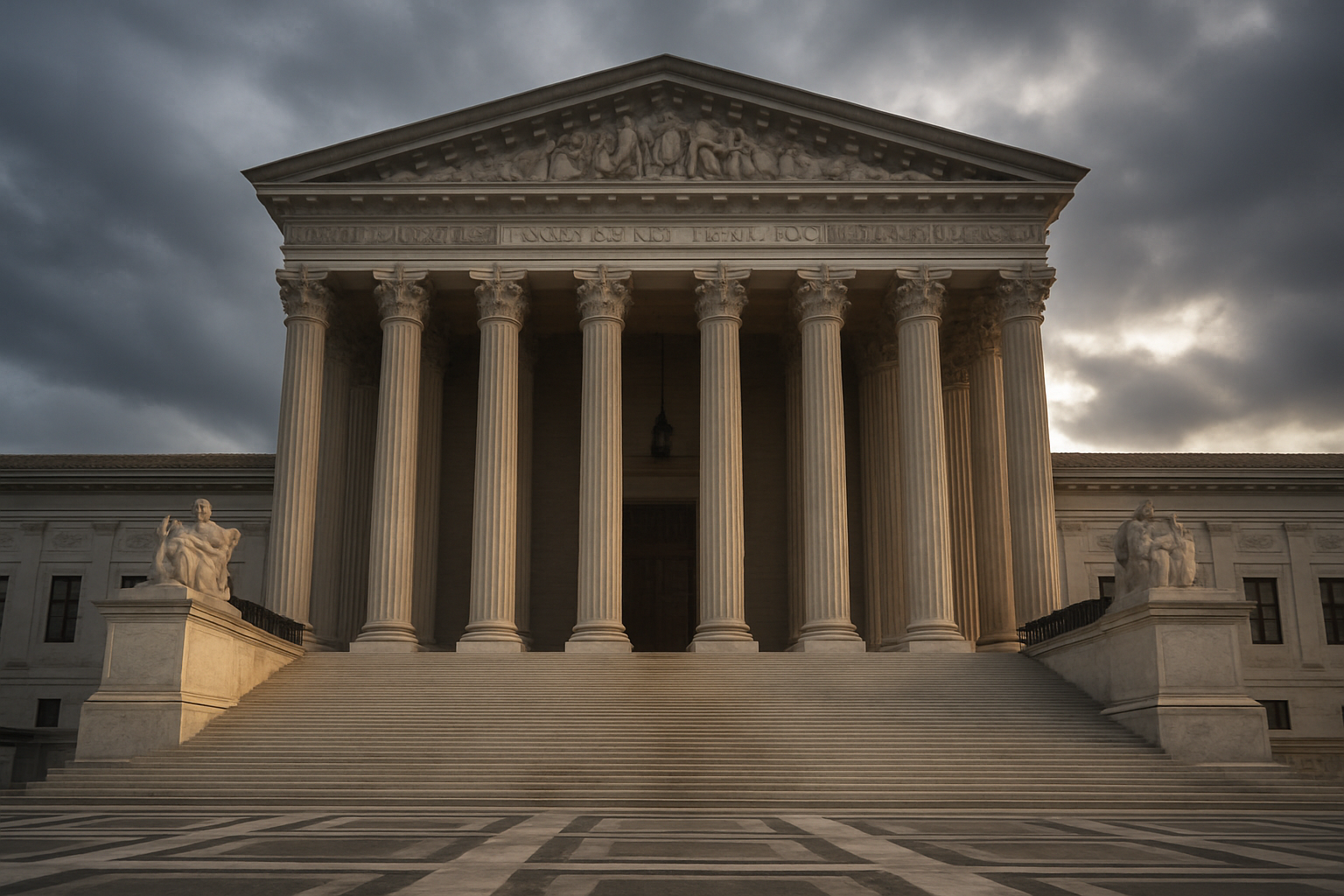
The US Supreme Court delivered a devastating blow to President Donald Trump's trade agenda on Friday, striking down his comprehensive global tariff program in a historic 6-3 ruling that has sent shockwaves through Washington and international markets.
Chief Justice John Roberts authored the majority opinion, applying the "major questions doctrine" to declare that the 1977 International Emergency Economic Powers Act (IEEPA) "does not authorize president to impose tariffs" without clear congressional authorization for actions of "vast economic and political significance."
The landmark decision represents the first major defeat of Trump's economic agenda in his second term and establishes crucial precedent limiting presidential emergency powers for trade policy. The ruling affects billions of dollars in collected tariffs and potentially requires massive refunds to importers.
Immediate Presidential Defiance
Within hours of the ruling, Trump launched an unprecedented attack on the Supreme Court justices he helped shape, calling them "absolutely ashamed," a "disgrace to our nation," and "disloyal to Constitution." The president immediately announced a new 10% global tariff for 150 days using alternative legal authorities, claiming the Court decision made presidential trade powers "more powerful and crystal clear."
"This is an incorrect, terrible, deeply disappointing decision that shows certain members of our Supreme Court are absolutely ashamed of their country."
— President Donald Trump, in immediate response to ruling
Trump's direct defiance of the Supreme Court through immediate alternative tariffs creates an unprecedented constitutional crisis, directly challenging the principles of judicial review and separation of powers that form the foundation of American democracy.
Constitutional Precedent Established
The 6-3 majority, which included some conservative justices refusing to endorse Trump's expansive interpretation of executive trade power, applied the "major questions doctrine" that requires explicit congressional authorization for executive actions with massive economic and political implications.
The 170-page majority opinion represents a comprehensive constitutional analysis that strengthens congressional oversight of executive trade authority and limits presidential emergency powers for economic objectives during peacetime. Legal scholars describe it as one of the most significant checks on executive authority in decades.
French President Emmanuel Macron praised the ruling, stating: "It's not bad to have a Supreme Court and rule of law. It's good to have power and counterbalances to power in democracy." His comments, made at the annual agricultural salon in Paris, reflect international relief at institutional checks functioning despite political pressures.
Global Market Reaction and Economic Impact
Wall Street responded positively to the initial ruling, with the Nasdaq jumping 0.90% to 22,886.07 points and the S&P 500 rising 0.69% to 6,090 points as markets celebrated reduced trade uncertainty. However, gains moderated following Trump's announcement of replacement tariffs.
Oil prices rose more than $1 per barrel as energy markets processed the implications. The ruling potentially triggers billions in tariff refunds for US importers who have paid approximately $200 billion since Trump's return to office, though the president predicted such refunds would be "tied up in court for years."
The decision removes Trump's primary tool for imposing his international economic agenda, particularly affecting his "maximum pressure" campaigns against countries like China, which faced 34% tariffs under the struck-down program.
International Diplomatic Implications
China welcomed the Supreme Court ruling as vindication, with officials noting it strengthens Beijing's negotiating position ahead of Trump's scheduled March 31-April 2 visit to Beijing. The decision comes as US-China trade talks have gained momentum following improved diplomatic relations.
European Union officials expressed cautious optimism while remaining concerned about Trump's immediate announcement of replacement tariffs. Mexico's Economy Secretary called for "prudence" and plans a Washington trip to defend Mexican interests, while Canada's Trade Minister welcomed tariff reduction but warned of "considerable uncertainty."
The ruling affects Trump's broader foreign policy strategy, removing significant leverage weeks before his Beijing summit and potentially opening space for conventional diplomatic approaches to international disputes.
Congressional Vindication
The Supreme Court decision comes just days after the House passed legislation 219-211 to end Canada tariffs, with six Republican defections joining Democrats in the first significant bipartisan rebuke of Trump's trade authority in his second term. House Speaker Mike Johnson had unsuccessfully attempted to prevent the floor vote, highlighting growing Republican anxiety about unpredictable trade approaches.
The constitutional ruling validates congressional concerns about expanded executive authority and may encourage further legislative challenges to Trump's use of emergency powers for economic policy objectives.
New Legal Framework and Challenges Ahead
Trump's replacement 10% global tariff, implemented under Section 122 of the Trade Act of 1974, faces its own legal challenges. The new framework maintains exemptions for minerals, fertilizers, metals, energy equipment, agricultural products, pharmaceuticals, and medical raw materials, and does not apply to USMCA agreements.
Trade experts question the alternative statutory authorities supporting such broad restrictions, noting that World Trade Organization rules limit unilateral actions and create potential grounds for international legal challenges. The 150-day time limit requires congressional approval for extension.
Treasury Secretary Scott Bessent defended the administration's response, arguing the Court "took away leverage but made it more draconian because [it] agreed president has right to full embargo." He claimed the new 10% global tariff would be "more predictable" than the previous system.
Economic Effectiveness Questions
The ruling comes amid growing evidence of tariff policy limitations. Despite extensive tariff implementation, the US trade deficit reached $901.5 billion annually in December 2025, essentially unchanged from pre-tariff levels, demonstrating the structural nature of trade imbalances beyond tariff adjustments.
However, January 2026 employment remained strong with 130,000 jobs added versus 55,000 forecast, and unemployment declined to 4.3%, complicating the economic narrative around trade policy effectiveness.
Historical and Constitutional Significance
The decision represents the most significant legal defeat for Trump's economic agenda since his return to office and establishes a template for future administrations' emergency trade authority limitations. The ruling's implications extend far beyond trade policy to fundamental questions about governmental power balance in the 21st century.
Constitutional scholars note this represents a watershed moment in the ongoing tension between presidential power and constitutional limitations, demonstrating that institutional checks can function effectively even during periods of expanded executive authority and political polarization.
The Supreme Court's willingness to exercise independence on this critical issue, despite having sided with Trump on previous cases, signals the Court's commitment to constitutional principles over political loyalty.
Looking Forward
The coming weeks will be decisive in determining whether Trump's defiance represents a temporary setback or a fundamental constitutional crisis. The success or failure of the president's alternative tariff strategy will influence not only American trade policy but also serve as a template for how democratic institutions respond to challenges to judicial authority.
International observers are closely monitoring American institutional resilience as a crucial factor for global cooperation on trade, climate, and strategic partnerships. The Court's ruling demonstrates that constitutional limits remain enforceable through judicial review, even during an era of expanded executive power.
This historic decision will likely influence global approaches to emergency powers and constitutional democracy for years to come, serving as either a successful model of institutional checks and balances or a cautionary tale about the limits of judicial authority in highly politicized environments.