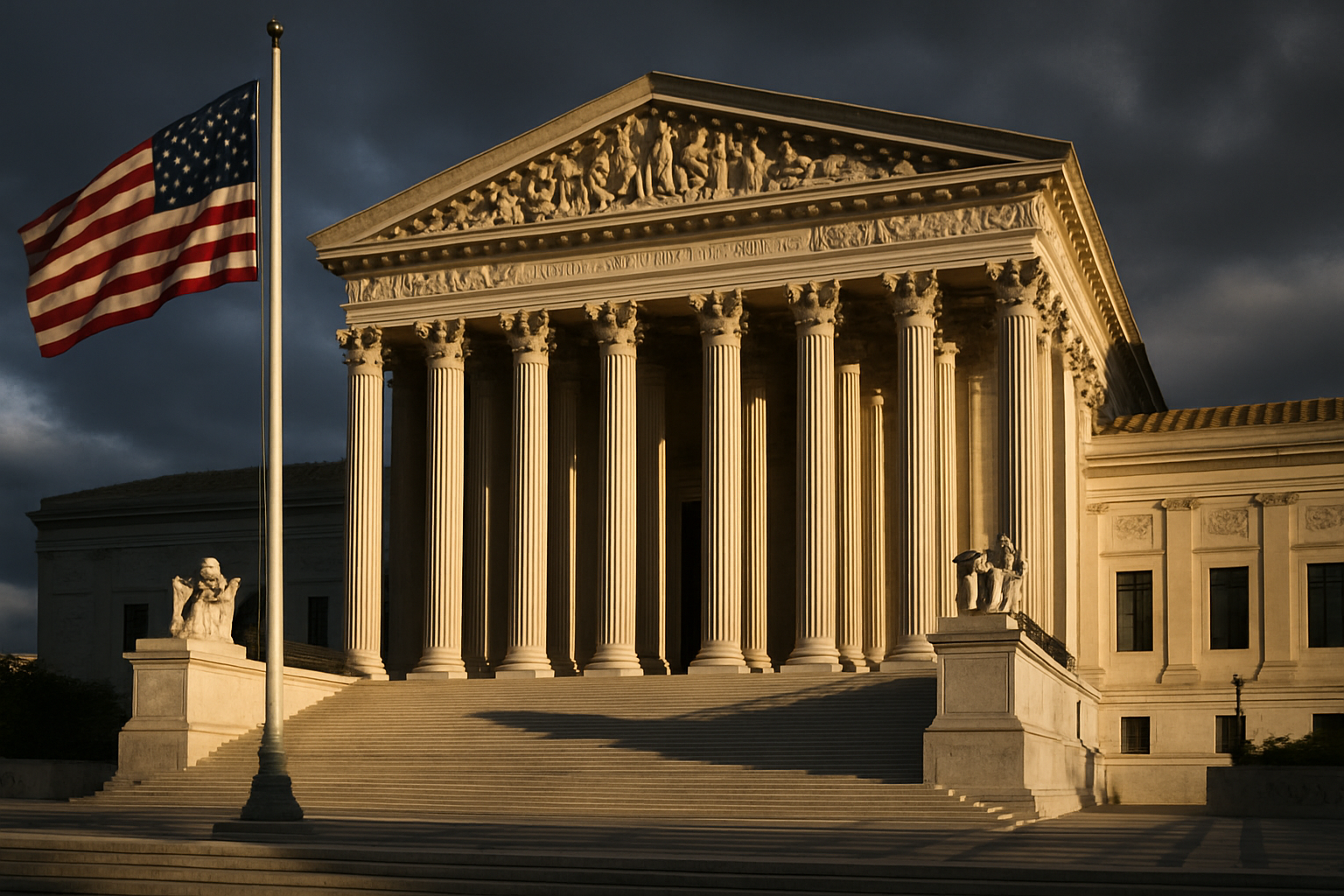
In a seismic constitutional ruling that reshapes presidential trade authority, the U.S. Supreme Court on Friday struck down President Donald Trump's sweeping global tariffs in a 6-3 decision, dealing the most significant legal defeat to his signature economic policy since returning to office.
Chief Justice John Roberts, writing for the majority, applied the "major questions doctrine" to rule that the International Emergency Economic Powers Act (IEEPA) of 1977 "does not authorize the president to impose duties or taxes" without explicit congressional authorization. The decision represents a watershed moment in the balance between executive power and constitutional limitations.
"The statute contains no reference to tariffs and the government could point to no instance where Congress used the word 'regulate' to authorize taxation," Roberts wrote in the 170-page majority opinion, joined by Justices Neil Gorsuch, Amy Coney Barrett, and the three liberal justices.
Trump's Defiant Response and New Tariff Announcement
Within hours of the ruling, President Trump launched an unprecedented attack on the judiciary while announcing immediate countermeasures. In a combative White House press conference, he called the majority justices "absolutely ashamed," a "disgrace to our nation," and "disloyal to Constitution."
More significantly, Trump signed a proclamation imposing a new 10% tariff on all global imports for 150 days, claiming the Court's decision made his trade powers "more powerful and crystal clear." The new tariff, utilizing different legal authorities, includes exemptions for minerals, fertilizers, metals, energy equipment, agricultural products, pharmaceuticals, and medical raw materials.
"This ruling is incorrect, terrible, and deeply disappointing. But it has made the president's position more draconian because now everyone agrees the president has the right to a full embargo."
— Treasury Secretary Scott Bessent
Constitutional Precedent and Legal Implications
The ruling establishes the most significant constitutional limitation on presidential emergency trade powers in modern history. By applying the major questions doctrine—which requires clear congressional authorization for executive actions of "vast economic and political significance"—the Court created a higher bar for future administrations.
Legal experts note this marks the first time the Supreme Court has directly constrained a sitting president's use of emergency powers for economic objectives during peacetime. The decision affects tariffs worth approximately $133 billion collected since Trump's return to office, raising complex questions about potential refunds to importers.
Justice Clarence Thomas, writing in dissent alongside Justices Samuel Alito and Brett Kavanaugh, argued that the majority "unduly restricts presidential flexibility in matters of national economic security," warning of "dangerous precedents that tie the executive's hands in crisis situations."
Global Market Response and Economic Impact
Financial markets responded positively to the initial ruling, with the Nasdaq jumping 0.90% to 22,886.07 and the S&P 500 gaining 0.69% to 6,090 points as investors celebrated reduced trade uncertainty. However, gains moderated following Trump's announcement of replacement tariffs.
The Brazilian real strengthened nearly 1% to R$5.1766—its lowest close since May 2024—as emerging market currencies surged on expectations of reduced global trade tensions. The São Paulo Stock Exchange's Ibovespa index broke above 190,000 for the first time in history, registering its 12th record close of 2026.
Oil prices rose over $1 per barrel immediately following the announcement of Trump's replacement tariffs, demonstrating market sensitivity to ongoing trade policy uncertainty. The dollar weakened against major currencies as investors recalibrated expectations for U.S. trade relationships.
International Diplomatic Reactions
The ruling prompted cautious optimism from U.S. trading partners, though concerns remain about the replacement measures. China, which faced 34% tariffs under Trump's original framework, welcomed the decision as "vindication" and indicated it strengthens Beijing's position in bilateral negotiations.
European Union officials expressed measured relief while emphasizing continued uncertainty. "This decision provides some clarity, but the announcement of new tariffs shows the volatile nature of current trade policy," said a senior EU diplomat speaking on condition of anonymity.
Canada's Trade Minister welcomed the potential for reduced tariffs but warned of "considerable uncertainty" going forward. The ruling comes after the House of Representatives passed legislation 219-211 to end Canada tariffs, with six Republican defections marking the first significant bipartisan rebuke of Trump's trade policies in his second term.
Congressional and Political Implications
The Supreme Court victory vindicates congressional critics who argued Trump exceeded his constitutional authority. House Speaker Mike Johnson, who unsuccessfully tried to prevent the Canada tariff vote, now faces increased pressure from Republican members concerned about the economic impact of trade policies on their districts.
Democratic leaders immediately called for investigations into potential tariff refunds, with Illinois Governor JB Pritzker sending Trump an invoice demanding nearly $9 billion in tariff refunds for state residents. "Your tariff taxes wreaked havoc on farmers, enraged our allies and sent grocery prices through the roof," Pritzker wrote in the formal demand letter.
The ruling also affects Trump's scheduled March 31-April 2 visit to China, removing significant leverage in bilateral negotiations while potentially opening space for conventional diplomatic engagement.
Economic Data and Trade Reality
Despite Trump's extensive use of tariffs as an economic weapon, the U.S. trade deficit reached $901.5 billion annually in December 2025, essentially unchanged from pre-tariff levels. This demonstrates the structural nature of trade imbalances beyond what tariff adjustments can address.
The persistent deficit underscores economists' arguments that tariffs primarily function as taxes on American consumers rather than effective tools for rebalancing international trade relationships. With potentially billions in refunds now under consideration, the fiscal implications for the federal government could be substantial.
The Path Forward and Legal Challenges
Trump's new 10% global tariff faces immediate legal scrutiny, with trade experts questioning the alternative statutory authorities supporting such broad restrictions. World Trade Organization rules may also limit unilateral actions, creating additional grounds for international legal challenges.
The administration appears prepared to pursue multiple legal avenues, with officials citing Sections 122, 232, and 301 of the Trade Act of 1974—legislation more than 50 years old—as potential frameworks for implementing tariff policies.
However, these alternative authorities come with more limitations and greater congressional oversight, fundamentally altering the president's ability to unilaterally reshape global trade relationships. Legal analysts predict a wave of challenges to the new 10% tariff, potentially creating years of litigation uncertainty.
Refund Complications and Administrative Chaos
The question of tariff refunds presents unprecedented administrative challenges. Companies that paid approximately $133 billion in tariffs since Trump's return to office may now be eligible for refunds, though Trump predicted such payments would be "tied up in court for years."
European businesses are already calculating potential refunds, with some German companies reporting they may seek billions in restitution. The logistics of processing such massive refund claims could strain federal administrative capacity and create significant budgetary complications.
Historical Significance and Future Impact
This ruling represents a critical test of institutional checks and balances, demonstrating that constitutional limits remain enforceable through judicial review even during periods of expanded executive power. It establishes the most significant constraint on presidential trade authority since the New Deal era.
The decision's implications extend far beyond trade policy to fundamental questions of governmental power balance in the 21st century. By strengthening the major questions doctrine, the Court has created a template that may limit future presidents' ability to use emergency powers for sweeping domestic and international initiatives.
For Trump, this marks the first major defeat of his economic agenda since returning to office. The ruling forces his administration to work within more traditional constitutional frameworks, potentially requiring greater congressional cooperation for future trade initiatives.
International observers are monitoring the U.S. response closely, as the precedent could influence how other democracies handle the balance between executive authority and legislative oversight in trade matters. The ruling may encourage greater international resistance to unilateral trade measures from major economies.
Looking Ahead
As the dust settles from this historic ruling, several key developments bear watching: the administration's success in defending its new 10% tariff in court, the practical implementation of potential refund mechanisms, and Congress's appetite for asserting greater trade authority oversight.
The decision also sets the stage for a broader constitutional confrontation over presidential emergency powers. With various national emergencies currently in effect, other executive actions using expansive interpretations of emergency authority may face renewed legal challenges.
For global markets, the ruling provides some clarity about the limits of unilateral trade actions, though Trump's immediate replacement measures demonstrate that trade volatility remains a persistent risk. The long-term impact will depend on how successfully the administration can navigate the more constrained legal landscape the Court has now established.
As this constitutional drama continues to unfold, one thing remains certain: February 21, 2026, will be remembered as a watershed moment in American governance, when the Supreme Court definitively established that even in an era of expanded executive power, constitutional limits still hold.