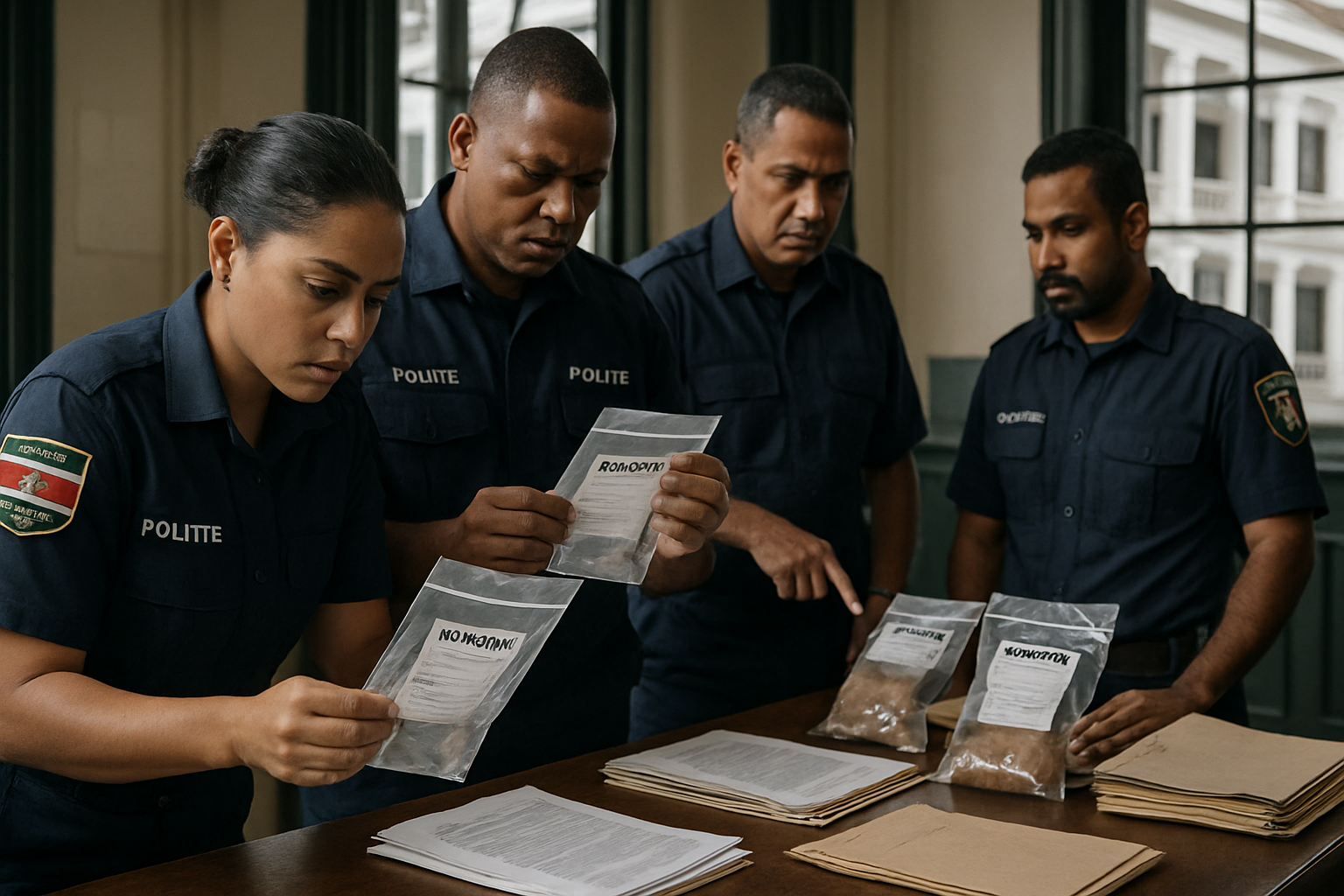
Surinamese authorities are confronting two distinct but equally concerning criminal operations this week, as a Cuban woman comes forward with harrowing accounts of sexual exploitation while a Dutch national was intercepted attempting to smuggle ten endangered songbirds out of the country in his hand luggage.
The Trafficking in Persons (TIP) division of the Suriname Police Corps announced the arrest of suspect Angel V. following a formal complaint filed by a Cuban woman alleging sexual exploitation, abuse, threats, and attempted rape. The victim has been officially designated as a trafficking survivor under Surinamese law, marking another case in what international experts describe as South America's expanding human trafficking networks.
Systematic Deception and Exploitation
According to police testimony, the Cuban victim was initially approached through an advertisement in Cuba promising legitimate employment opportunities in Suriname's hospitality sector. The criminal organization reportedly offered comprehensive support, including travel arrangements and job placement assistance, to lure the woman to Suriname under false pretenses.
"The victim was promised work in the hotel and restaurant industry," a police spokesperson confirmed. "The reality she encountered upon arrival was completely different from what had been advertised." Following coordination with the Surinamese Public Prosecutor's Office, Angel V. has been placed in preventive detention pending further investigation.
This case follows established patterns documented across the Caribbean and South America, where criminal networks exploit economic vulnerabilities and travel restrictions to deceive victims into trafficking situations. The modus operandi matches intelligence reports from neighboring countries, suggesting coordinated transnational operations spanning multiple jurisdictions.
Wildlife Crime Parallel Investigation
In a separate but equally significant enforcement action, customs officials at Johan Adolf Pengel International Airport intercepted a Dutch citizen attempting to smuggle ten 'twa twa' songbirds in his carry-on luggage on Sunday, March 15. The suspect was preparing to board a Surinam Airways flight to Amsterdam when the birds were discovered during security screening procedures.
The protected songbirds had been concealed in small wooden cages hidden within the passenger's hand luggage, demonstrating sophisticated concealment techniques typically associated with organized wildlife trafficking networks. The birds were immediately confiscated and the suspect was transferred to Zanderij Police Bureau for processing.
This incident reflects broader wildlife trafficking patterns affecting South American ecosystems, where exotic birds command high prices in European markets. Suriname's biodiversity, including numerous endemic species, makes it a target for international wildlife smugglers operating sophisticated supply chains connecting South American source regions to European consumer markets.
Regional Criminal Network Context
Both cases underscore Suriname's strategic importance within transnational criminal networks operating throughout the Caribbean Basin and northern South America. The country's position as a former Dutch colony with maintained connections to Europe, combined with its extensive rainforest borders with Brazil and French Guiana, creates unique vulnerabilities that criminal organizations actively exploit.
Security analysts note that Suriname has become increasingly significant as a transit point for various criminal enterprises, including drug trafficking operations moving South American cocaine to European markets, human trafficking networks exploiting vulnerable populations across the Caribbean, and wildlife smuggling operations targeting the country's rich biodiversity.
"These cases demonstrate the multi-faceted nature of criminal operations in the region," explained Dr. Maria Santos, a regional security expert at the University of São Paulo. "Criminal organizations don't operate in isolation - they often diversify their activities across drugs, humans, and wildlife to maximize profits and minimize risks."
Enhanced Law Enforcement Response
The Surinamese authorities' swift response to both incidents reflects improved institutional capacity developed through international cooperation programs. The TIP division's professional handling of the trafficking case demonstrates enhanced victim protection protocols, while the airport interdiction showcases improved customs screening procedures.
These capabilities have been strengthened through partnerships with Dutch authorities, U.S. Drug Enforcement Administration programs, and regional Caribbean security initiatives. Intelligence sharing agreements enable Surinamese law enforcement to access databases and analytical support that would be unavailable to smaller countries operating independently.
The investigation into both cases remains ongoing, with authorities indicating that additional arrests may follow as they trace the broader networks involved in both operations. Police emphasize that such cases require extensive international cooperation to identify and prosecute the full scope of criminal organizations involved.
Broader Implications for Regional Security
These incidents occur within a broader context of Caribbean and South American security challenges, where criminal networks have demonstrated increasing sophistication and international reach. Recent intelligence assessments indicate that transnational organized crime groups operating in the region have developed state-like capabilities in terms of logistics, communications, and operational security.
The exploitation of legitimate travel and trade infrastructure - as seen in both the trafficking case involving fraudulent job advertisements and the wildlife smuggling attempt using commercial aviation - represents a significant challenge for regional governments balancing security concerns with economic openness.
Regional experts emphasize that effective responses require sustained international cooperation, enhanced information sharing, and comprehensive approaches addressing both enforcement and prevention. The success of Surinamese authorities in detecting and responding to both criminal operations demonstrates the potential effectiveness of coordinated regional security strategies.
Protection and Prevention Measures
The Cuban trafficking victim has been provided with appropriate support services and protection measures while the investigation proceeds. Surinamese authorities have implemented victim-centered approaches that prioritize safety and recovery over immediate prosecution demands, reflecting international best practices in trafficking cases.
Meanwhile, the confiscated songbirds are receiving veterinary care and will be assessed for potential release back into their natural habitat, depending on their health status and conservation requirements. Wildlife protection organizations have praised the customs officials' vigilance in preventing what could have been a significant loss to Suriname's biodiversity.
Both cases highlight the importance of public awareness and reporting mechanisms that enable civilians to identify and report suspicious activities to authorities. The success of these investigations depended partly on information provided by community members and the vigilance of frontline enforcement personnel.
Looking Forward
As investigations continue into both criminal operations, Surinamese authorities are working with international partners to trace the full extent of the networks involved. The cases serve as important reminders that even smaller nations like Suriname play crucial roles in global efforts to combat transnational organized crime.
The dual nature of this week's enforcement actions - addressing both human trafficking and wildlife crime - demonstrates the complex security landscape that Caribbean and South American nations must navigate. Success in addressing these challenges requires sustained commitment to institutional development, international cooperation, and comprehensive approaches that address both immediate threats and underlying vulnerabilities.
The ongoing investigations promise to provide additional insights into how criminal networks operate across the region and how law enforcement agencies can most effectively respond to these evolving threats to both human rights and environmental security.