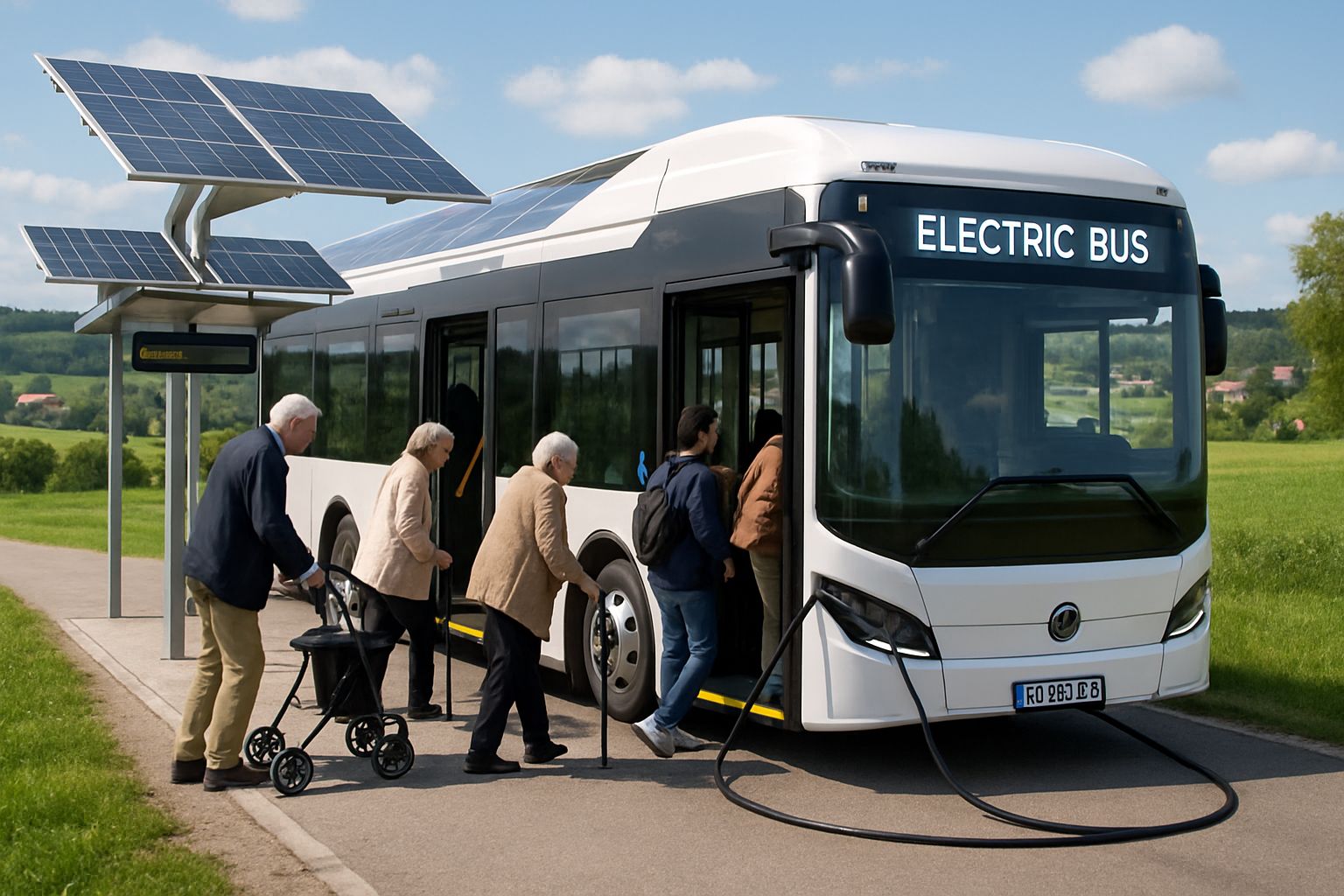
A quiet revolution in sustainable transportation is taking root across Europe, as countries pioneer innovative micro-mobility solutions and alternative logistics strategies to address the dual challenges of rural connectivity and environmental sustainability.
From Austria's ambitious expansion of on-demand rural transport to Cyprus's strategic reliance on maritime freight, European nations are demonstrating that sustainable transportation transformation requires diverse, locally-adapted approaches that serve both environmental goals and community needs.
Austria's Micro-Public Transport Revolution
In the mountainous province of Salzburg, a comprehensive expansion of demand-responsive transport systems is bridging the "last mile" gap that has long challenged rural mobility. These innovative "micro-public transport" services, known locally as "Mikro-Öffis," are making car-free living viable in Austria's countryside for the first time.
The Salzburg initiative utilizes call-and-ride taxi services that operate on flexible schedules, connecting remote villages to main public transport networks. Unlike traditional fixed-route services that often run empty in sparsely populated areas, these demand-responsive vehicles only operate when needed, dramatically improving efficiency while reducing emissions per passenger.
"These services don't just provide transportation – they enable social participation and maintain community connections that might otherwise be lost in rural areas,"
— Local Transport Authority, Salzburg
The contrast with neighboring Styria, where similar services have been discontinued, highlights the critical importance of sustained political commitment and adequate funding for rural transportation innovation. Salzburg's success demonstrates that with proper implementation, micro-mobility solutions can serve both environmental and social equity objectives.
Cyprus: Maritime Dominance and Strategic Logistics
While Austria focuses on land-based micro-mobility, Cyprus has embraced its geographic reality as an island nation by developing one of Europe's most maritime-focused transportation strategies. According to recent Eurostat figures, Cyprus recorded only a 3.5% road freight share in 2024, making it among the lowest in the European Union.
This low road freight percentage reflects not transportation failure, but strategic adaptation to Cyprus's island geography. With limited land mass and extensive coastline, the country has developed sophisticated port infrastructure and maritime logistics networks that minimize the need for long-distance road transport while maximizing efficiency for international trade.
The Cypriot model demonstrates how sustainable transportation solutions must be tailored to local geographic and economic realities. Rather than forcing inappropriate transportation modes, Cyprus has optimized its natural advantages to create an efficient, lower-emission logistics system.
Latvia's Rural Transport Challenges and Fuel Price Pressures
The sustainable transportation transformation is occurring against a backdrop of significant economic pressures, particularly in rural areas where transportation costs disproportionately affect local governments and residents. Latvia's rural municipalities are struggling with rising fuel costs and transportation expenses, despite temporary government intervention to reduce diesel excise taxes.
The Latvian Parliament's decision to reduce diesel fuel excise tax by 15.2% from April to June represents a short-term response to immediate cost pressures, but local governments argue that more comprehensive solutions are needed. The situation illustrates how fuel price volatility creates urgency around sustainable transportation alternatives that reduce fossil fuel dependence.

Rural school transport costs are particularly acute, as municipalities must balance educational access with transportation budget constraints. This challenge creates opportunities for innovative solutions like shared electric school buses, optimized routing systems, and integration with existing public transport networks.
Technology Integration and Climate Adaptation
The current wave of European transportation innovation occurs within the context of unprecedented global infrastructure investment, estimated at over $570 billion worldwide in 2026. Modern transportation projects incorporate sophisticated technology integration from the design phase, including real-time monitoring, predictive maintenance, and environmental optimization.
Climate adaptation has evolved from an optional consideration to a fundamental requirement. Transportation infrastructure must now be designed for future climate conditions rather than historical patterns, incorporating enhanced drainage, weather-resistant materials, and backup power systems to maintain service during extreme weather events.
Digital integration enables more efficient demand-responsive services like Austria's micro-public transport, while also supporting better integration between different transportation modes. Passengers can plan multi-modal journeys combining walking, cycling, public transport, and on-demand services through integrated digital platforms.
Economic and Social Impact
The economic implications of sustainable transportation transformation extend far beyond immediate transportation costs. Successful rural transportation systems enable social participation, economic opportunity, and community cohesion that might otherwise be lost as rural areas face demographic and economic pressures.
Austria's micro-public transport creates employment opportunities while maintaining essential services for aging rural populations who can no longer drive. Cyprus's maritime-focused strategy supports its position as a regional logistics hub, generating economic value from geographic positioning rather than despite it.
The social equity dimension is particularly important in rural areas where transportation disadvantage can compound other forms of exclusion. Sustainable transportation solutions that improve accessibility for elderly residents, people with disabilities, and low-income families serve broader social policy objectives while advancing environmental goals.
Regional Integration and Cooperation
European sustainable transportation development benefits from regional cooperation frameworks that enable knowledge sharing, coordinated procurement, and cross-border integration. The European Union's structural funds increasingly prioritize climate-conscious transportation projects that demonstrate environmental benefits alongside connectivity improvements.
Success factors include sustained political commitment that transcends electoral cycles, transparent governance frameworks, comprehensive stakeholder engagement, and adaptive management approaches that can respond to changing conditions. International cooperation provides technical assistance and knowledge sharing that accelerates innovation adoption across borders.
The diversity of European approaches – from Austria's demand-responsive rural services to Cyprus's maritime optimization – provides resilience against single-solution dependencies while offering multiple adaptation pathways for different geographic and economic circumstances.
Future Implications and Global Relevance
The European sustainable transportation revolution occurring in 2026 establishes precedents that will influence transportation policy worldwide for decades to come. The convergence of technological advancement, environmental awareness, and international cooperation is creating new development models that prioritize sustainability alongside economic viability.
The Austrian micro-mobility model offers templates for rural regions globally that face similar challenges balancing accessibility, sustainability, and cost-effectiveness. Cyprus demonstrates how countries can optimize their natural geographic advantages rather than conforming to standardized transportation approaches inappropriate to local conditions.
Latvia's experience with fuel cost pressures illustrates the urgency driving sustainable transportation adoption, as volatile fossil fuel prices make renewable electricity and efficient public transport increasingly attractive economic alternatives to private vehicle dependence.
"The choice between transformative infrastructure adaptation and reactive crisis management represents a critical policy decision of the current decade that will determine our adaptive capacity for an interconnected, climate-challenged world,"
— European Transportation Research Institute
As climate change continues to accelerate, with January 2026 marking the 18th consecutive month of temperatures exceeding 1.5°C above pre-industrial levels, the European sustainable transportation revolution represents both adaptation to necessity and innovation opportunity. Success in creating resilient, efficient, and socially equitable transportation systems will determine not only regional competitiveness but also the viability of rural communities facing unprecedented environmental and economic pressures.
The lessons emerging from Europe's diverse approaches to sustainable transportation offer hope that creative, locally-adapted solutions can address the complex challenges of the 21st century while building more resilient and equitable communities for the future.