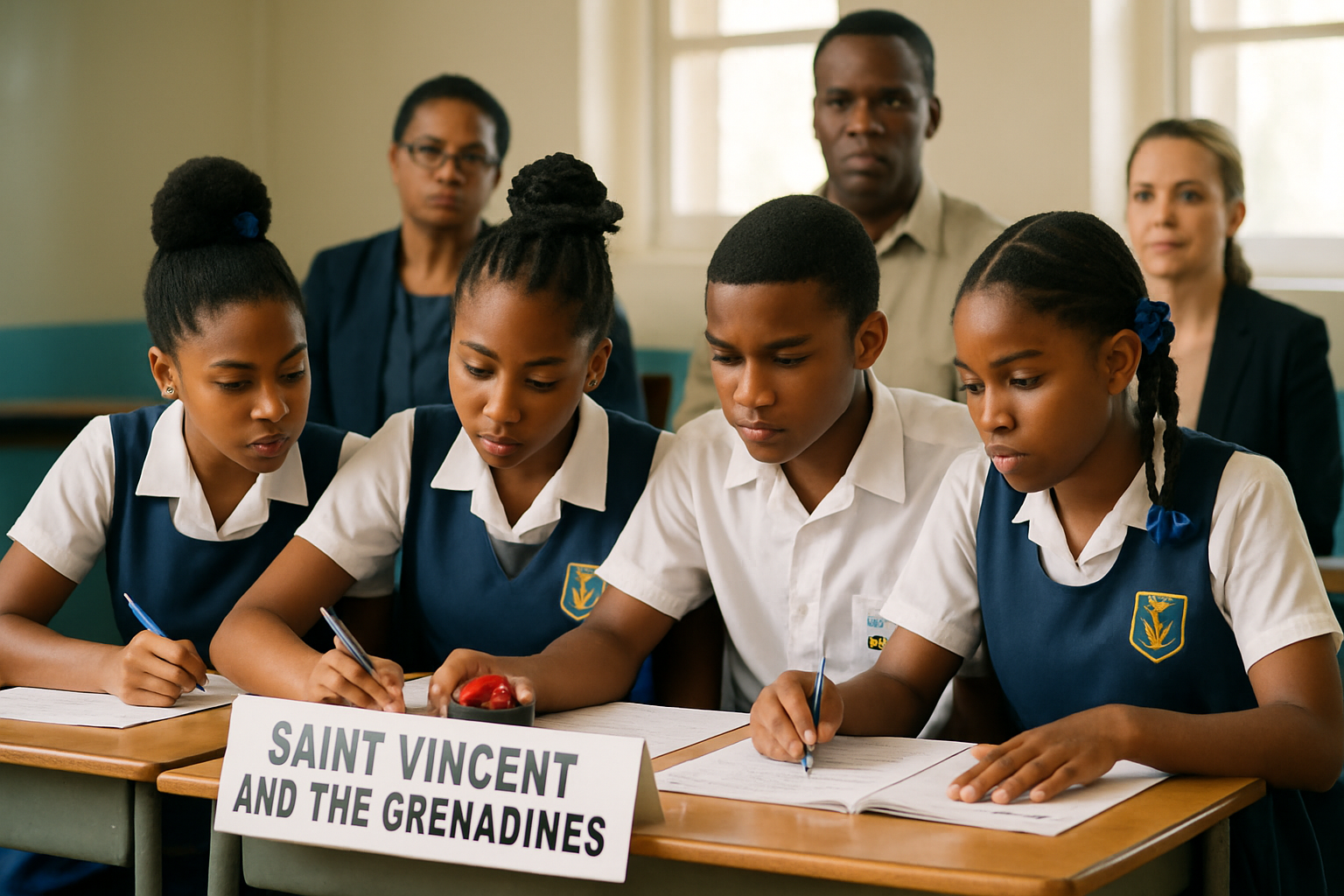
Saint Vincent and the Grenadines has emerged as a beacon of educational excellence and cultural preservation in the Caribbean, with recent achievements spanning academic competitions, arts education initiatives, and indigenous heritage recognition that position the nation at the forefront of the global "2026 Educational Technology Renaissance."
Academic Excellence Through KCCU Quiz Championship
St. Mary's Roman Catholic School delivered a commanding performance at the annual Kingstown Co-operative Credit Union (KCCU) School Quiz finals, held at the NIS Conference Room in Kingstown on March 18, 2026, securing the championship title with an impressive total of 4,850 points. The winning team, comprised of students Enzo and his teammates, demonstrated exceptional academic prowess across multiple subject areas in what has become one of the Caribbean's most prestigious secondary school competitions.
The KCCU Annual School Quiz finals brought together students from across Saint Vincent and the Grenadines, emphasizing the critical role of student development in national progress. This year's competition highlighted the country's commitment to fostering academic excellence while building strong foundations for future leadership in science, technology, and the humanities.
"This competition represents far more than academic achievement – it demonstrates our nation's investment in developing critical thinking skills essential for success in an increasingly complex global economy."
— KCCU Educational Initiative Coordinator
Cultural Innovation Through Arts Education
The University of the West Indies (UWI) Global Campus St. Vincent and the Grenadines announced a groundbreaking seminar focused on "Art Rooted in Community," exploring the transformative potential of arts as a sustainable creative career. This initiative represents a sophisticated understanding that cultural industries can serve as both economic engines and vehicles for preserving authentic Caribbean identity in an interconnected world.
The seminar addresses critical questions about how emerging artists can build viable careers while maintaining deep connections to their cultural roots. This approach aligns with global trends recognizing creative industries as strategic infrastructure for 21st-century economic development, particularly relevant for small island developing states seeking to leverage their unique cultural assets.
International Recognition for Indigenous Heritage
Saint Vincent and the Grenadines continues to gain international recognition for its comprehensive approach to indigenous heritage preservation and cultural education. The nation's systematic integration of Garifuna culture into national curricula and heritage site development has attracted attention from cultural preservation specialists worldwide, demonstrating how smaller nations can achieve significant cultural impact through authentic programming that serves community needs while gaining international recognition.

Minister Kashaka Cupid's leadership in heritage preservation initiatives has created a comprehensive framework for maintaining indigenous knowledge while adapting to contemporary educational needs. This work supports the nation's participation in international cultural forums and strengthens its position as a regional leader in heritage-based education.
Strategic Educational Infrastructure Development
The educational achievements in Saint Vincent and the Grenadines occur within the broader context of the global "2026 Educational Technology Renaissance," characterized by thoughtful integration of digital tools with traditional educational values. The nation's approach emphasizes human-centered learning that enhances rather than replaces fundamental teacher-student relationships while preparing students for an AI-integrated global economy.
Recent developments in the nation's educational sector demonstrate sophisticated understanding of modern learning challenges. The success of programs like the KCCU Quiz Championship and UWI's arts initiatives provides evidence that smaller nations can achieve remarkable educational outcomes through sustained political commitment, comprehensive stakeholder engagement, and cultural sensitivity in program design.
Regional Leadership and International Cooperation
Saint Vincent and the Grenadines' achievements extend beyond national borders, contributing to broader Caribbean educational transformation. The country's balanced approach to technological advancement and cultural preservation offers valuable templates for other small island developing states facing similar challenges in maintaining authentic identity while achieving global competitiveness.
The nation's participation in international educational cooperation frameworks, including Commonwealth Youth Awards and Caribbean examination modernization initiatives, positions it as an active contributor to global educational knowledge networks rather than merely a recipient of external assistance.
"Our educational model demonstrates that effective modernization requires thoughtful adaptation to specific cultural, economic, and social contexts rather than standardized solutions imposed from outside."
— Caribbean Educational Policy Expert
Economic Implications of Educational Investment
The educational initiatives in Saint Vincent and the Grenadines generate significant economic benefits extending far beyond immediate academic outcomes. Prevention-first educational approaches demonstrate superior economic returns through reduced crisis intervention costs, decreased unemployment rates, and improved workforce productivity that enhances the nation's international competitiveness.
Cultural tourism potential created through authentic educational programming attracts international visitors seeking meaningful engagement with Caribbean heritage. The UWI arts seminar and indigenous heritage initiatives create sustainable revenue streams while preserving cultural authenticity, demonstrating how educational excellence can support broader economic development goals.
Technology Integration and Human-Centered Learning
Saint Vincent and the Grenadines exemplifies successful educational technology integration that amplifies rather than replaces authentic cultural expression. Digital platforms extend global reach for local cultural programming while maintaining community ownership and spiritual significance of traditional knowledge systems.
The nation's approach addresses challenges facing educational systems worldwide, including the global semiconductor crisis that has driven memory chip prices to unprecedented levels, forcing more efficient and sustainable technology integration approaches across all educational programs until new manufacturing facilities come online in 2027.
Future Implications and Global Significance
March 2026 represents a critical juncture for global educational policy, with successful approaches like those demonstrated in Saint Vincent and the Grenadines providing templates for scaling effective practices across diverse cultural and economic contexts. The nation's achievements contribute to evidence that educational modernization requires maintaining human creativity, critical thinking, and cultural knowledge while preparing students for an interconnected global economy.
The success of Saint Vincent and the Grenadines in balancing tradition with innovation, local authenticity with global cooperation, and economic viability with cultural integrity establishes precedents for 21st-century cultural stewardship that honors the past while embracing future possibilities.
Challenges and Adaptive Strategies
Despite remarkable achievements, Saint Vincent and the Grenadines continues to address common challenges facing educational systems globally, including climate change impacts on outdoor programming, economic pressures affecting youth participation in traditional arts, and the ongoing need to balance global visibility with local authenticity.
Solutions emphasize community leadership, international resource sharing, and innovative programming that respects traditions while embracing helpful technological and methodological innovations. Climate adaptation strategies include developing contingency plans that protect participants and cultural assets while maintaining essential community functions.
The nation's comprehensive approach to these challenges provides valuable insights for other countries navigating similar transitions, demonstrating that thoughtful cultural investment creates lasting positive impact that honors historical heritage while embracing contemporary possibilities.