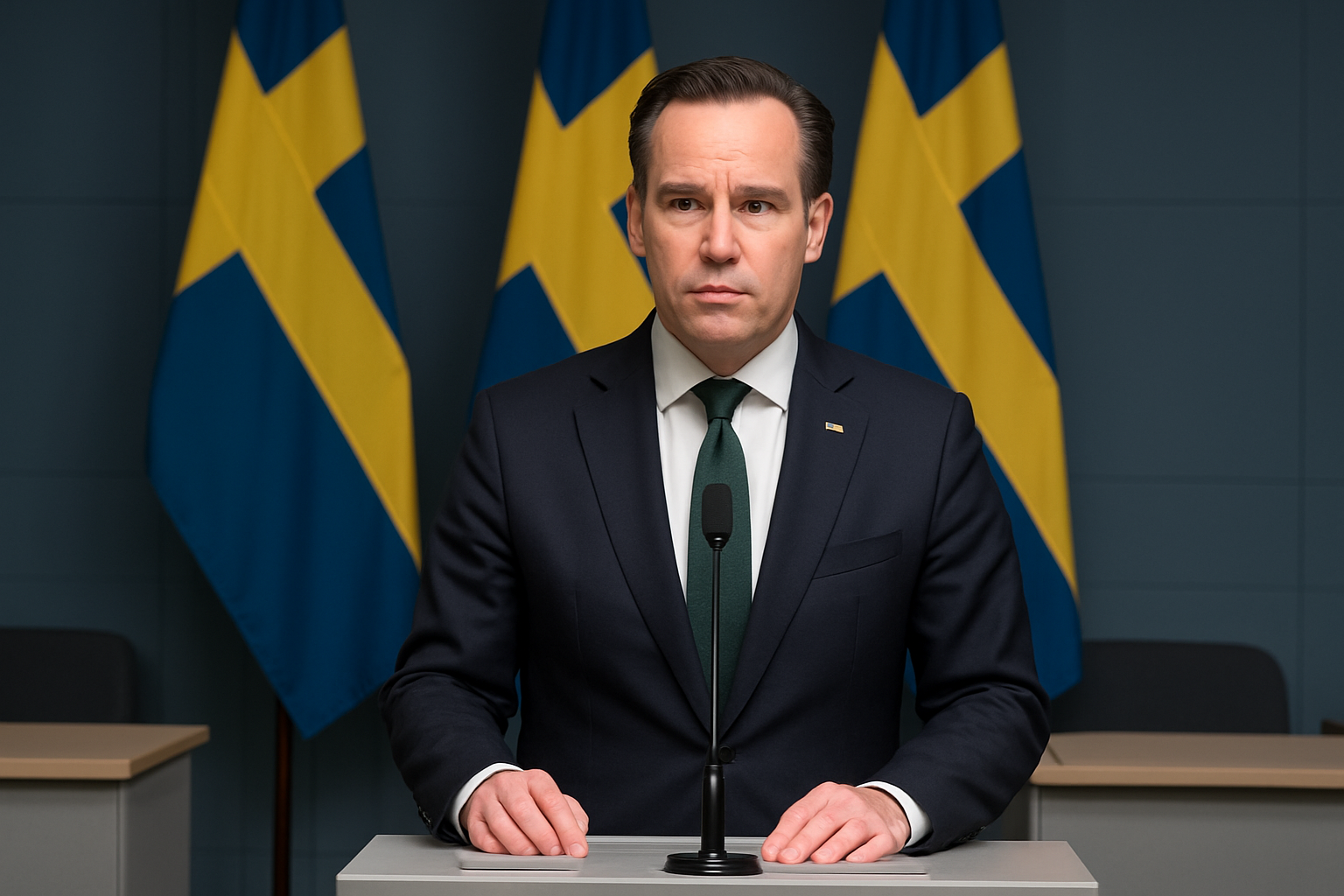
Sweden's Defense Minister Pål Jonson has made a groundbreaking departure from the Nordic nation's long-standing nuclear-free policy, announcing that Sweden would be open to hosting nuclear weapons on its soil during wartime conditions.
Speaking to Swedish media, Jonson emphasized that the country must "do everything possible to ensure Sweden's survival," marking the most significant shift in Swedish nuclear policy in decades. The statement represents a dramatic evolution from Sweden's traditionally pacifist stance and its commitment to remaining nuclear-weapon-free since the Cold War era.
Historic Policy Reversal
The announcement comes at a time of unprecedented European security challenges, with the continent grappling with the ongoing Ukraine conflict and deteriorating nuclear arms control frameworks. Sweden's position is particularly noteworthy given its recent NATO accession in March 2024, following decades of military neutrality.
"One must do everything one can to ensure Sweden's survival," Jonson declared, according to multiple Nordic media outlets including Aftenposten and VG. The defense minister's comments were first reported by Swedish Radio (SR Ekot), underscoring the gravity of this policy shift.
This marks a fundamental departure from Sweden's post-World War II security doctrine, which has consistently rejected the deployment of nuclear weapons on Swedish territory. The country has maintained this position even as neighboring nations like Denmark and Norway joined NATO's nuclear sharing arrangements during the Cold War.
European Nuclear Landscape in Flux
Jonson's statements occur against the backdrop of broader European discussions about nuclear deterrence and strategic autonomy. Recent months have witnessed unprecedented conversations among European leaders about expanding nuclear defense cooperation, particularly following growing concerns about the reliability of U.S. security guarantees.
The timing is especially significant given the expiration of the New START Treaty between the United States and Russia on February 5, 2026 – the first time in over 50 years without binding nuclear arms control between the world's two largest nuclear powers. This development has created what UN Secretary-General António Guterres called a "grave turning point," with nuclear weapon use risks at their "highest in decades."
European strategic thinking has evolved considerably since Russia's invasion of Ukraine. At the Munich Security Conference in February 2026, German Chancellor Friedrich Merz confirmed direct talks with French President Emmanuel Macron about nuclear deterrence cooperation – the first serious discussions about alternative nuclear arrangements since the Cold War ended.
Nordic Security Context
Sweden's policy shift cannot be separated from the broader transformation of Nordic and Baltic security architecture. The country's NATO membership, alongside Finland's accession, has fundamentally altered the strategic balance in Northern Europe. Both nations abandoned their traditional neutrality in response to Russia's aggression in Ukraine and Moscow's increasingly threatening posture toward the region.
The decision also reflects the reality that Sweden now participates in NATO's collective defense arrangements, including potential nuclear scenarios. Article 5 of the NATO treaty commits all members to mutual defense, which theoretically could involve nuclear weapons in extreme circumstances.
"Sweden must be prepared for all scenarios to guarantee our national survival and security."
— Pål Jonson, Swedish Defense Minister
Regional and Global Implications
The announcement has significant implications for regional security dynamics and global nuclear governance. Sweden's willingness to host nuclear weapons during wartime could influence other traditionally neutral or nuclear-free nations to reconsider their positions, particularly in light of deteriorating international security conditions.
The policy shift also occurs as European nations grapple with the implications of the New START Treaty's expiration and the broader breakdown of Cold War-era arms control mechanisms. Russia now possesses approximately 4,380 nuclear warheads (1,710 deployed), while the United States maintains roughly 3,708 warheads (1,670 deployed), controlling over 80% of the world's nuclear weapons without bilateral constraints for the first time since the early Cold War.
This nuclear governance crisis has prompted European leaders to consider alternative deterrence arrangements. France's nuclear force of approximately 290 warheads, historically viewed as insufficient for extended deterrence, is now part of discussions about expanded European nuclear cooperation involving Germany, Poland, and Finland.
Political and Public Response
The defense minister's announcement is likely to generate significant domestic debate in Sweden, where public opinion has traditionally favored nuclear disarmament and peaceful resolution of international conflicts. Swedish civil society organizations have historically been strong advocates for nuclear abolition, and the country has played a leading role in international disarmament initiatives.
However, public sentiment has shifted considerably since Russia's invasion of Ukraine. Polls consistently show increased support for NATO membership and stronger defense capabilities among Swedish citizens. The government led by Prime Minister Ulf Kristersson has prioritized defense spending increases and closer integration with NATO structures.
Strategic Implications for NATO
Sweden's openness to nuclear weapons during wartime strengthens NATO's northern flank and provides additional strategic flexibility for alliance planners. The country's geographic position, advanced defense industry, and sophisticated military capabilities make it a valuable contributor to collective defense arrangements.
The policy shift also demonstrates the practical implications of NATO membership for traditionally neutral states. While Sweden maintains its peacetime nuclear-free stance, its wartime flexibility aligns with NATO's nuclear deterrence doctrine and integrated defense planning.
This development complements other European defense initiatives, including the NATO Arctic Sentry mission, where the UK is doubling its troop presence in Norway and Sweden is deploying Gripen jets for Greenland exercises, demonstrating increased Nordic-Baltic-Arctic security coordination.
Future Implications
Jonson's announcement represents more than a tactical policy adjustment; it signals Sweden's full embrace of collective defense responsibilities and its recognition that traditional neutrality concepts are inadequate for contemporary security challenges. The statement acknowledges that in extreme scenarios, nuclear deterrence may be necessary for national survival.
This shift is particularly significant given the ongoing diplomatic efforts to resolve the Ukraine conflict, including the recent Geneva peace talks and planned Washington negotiations by June 2026. European nations are preparing for various scenarios, including potential Russian escalation or further territorial aggression.
The broader European security architecture is undergoing fundamental transformation, with nations choosing between strategic autonomy and continued dependence on American guarantees. Sweden's position suggests a pragmatic approach that maintains alliance solidarity while acknowledging the changed security environment.
As the international community grapples with the collapse of nuclear arms control frameworks and rising global tensions, Sweden's policy evolution reflects the difficult choices facing European democracies in an increasingly dangerous world. The Nordic nation's journey from neutrality to NATO membership and now to nuclear flexibility illustrates the profound impact of Russia's aggression on European strategic thinking.