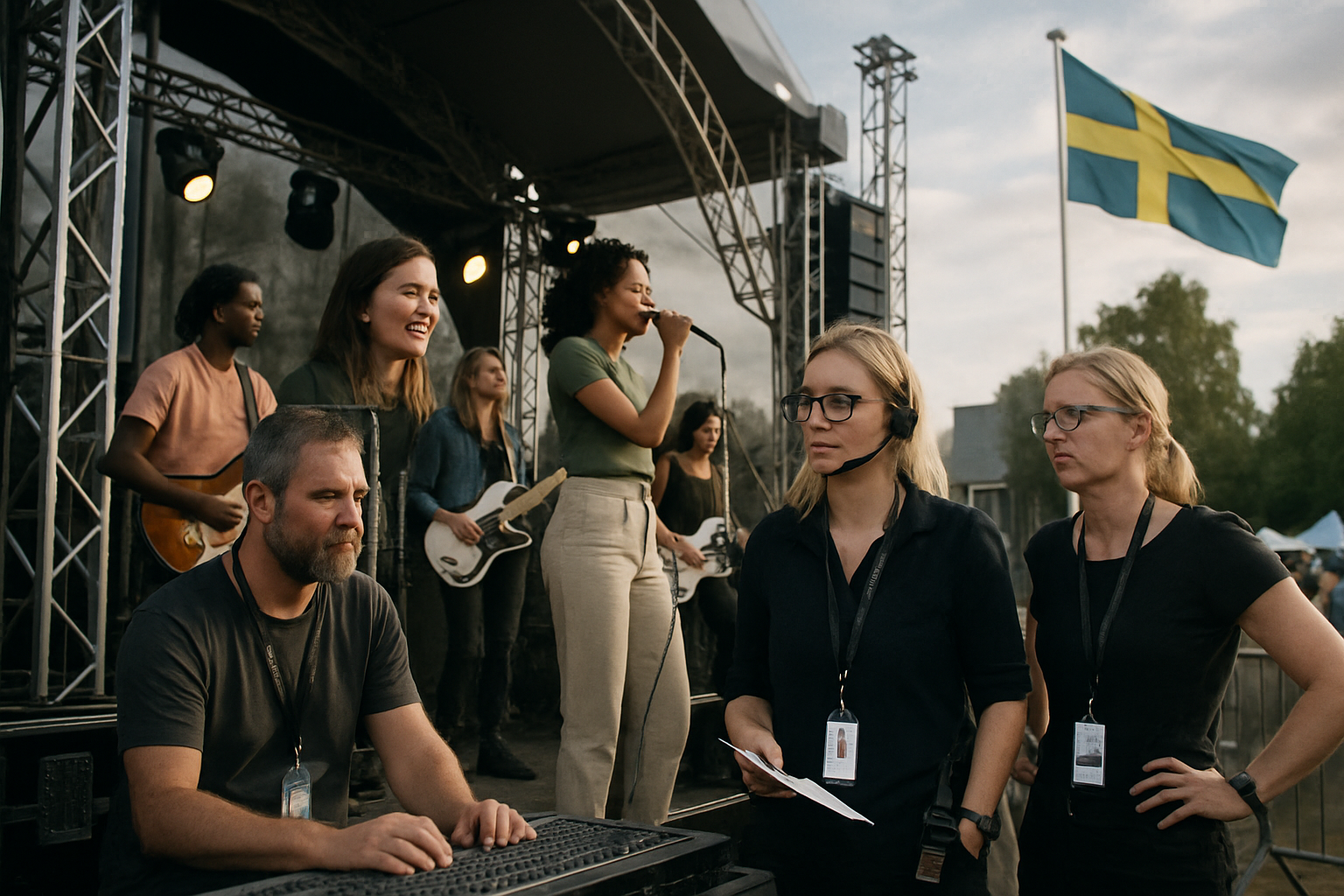
Sweden's vibrant festival culture is experiencing a renaissance, but behind the colorful stages and packed audiences lies a stark reality: the music industry's booking sector remains overwhelmingly male-dominated, sparking calls for fundamental change in how cultural events are organized across Scandinavia.
The issue has gained renewed urgency as Swedish festivals cement their position as cultural powerhouses in the global music landscape. While Sweden continues to punch above its weight in producing internationally acclaimed artists and hosting world-class festivals, industry professionals are now confronting an uncomfortable truth about who controls the booking process that shapes these cultural experiences.
According to Norwegian industry data that mirrors Swedish patterns, male booking managers dominate festival programming decisions across Nordic countries. This gender imbalance extends far beyond simple representation numbers, influencing everything from which artists get opportunities to perform to how festival lineups reflect diverse musical voices.
The Utkantfestivalen Challenge
Leading the charge for change is Ingvild Nordfonn from Norway's Utkantfestivalen, whose call for transformation has resonated throughout the Nordic festival circuit. Her emphasis on increasing female representation in booking positions reflects broader concerns about decision-making power in an industry where programming choices can make or break artistic careers.
"The booking industry has an overweight of male booking managers," the Norwegian source material confirms, highlighting how this imbalance affects festival culture across the region. While Nordfonn's focus is specifically on Norwegian festivals, the interconnected nature of the Nordic music scene means Swedish festivals face identical challenges.
The Swedish festival ecosystem, from major international gatherings like Way Out West and Sweden Rock Festival to smaller regional celebrations, operates within similar industry structures where booking decisions flow through networks that have historically excluded women from key positions.
Cultural Renaissance Meets Industry Reality
This gender dynamics issue emerges during what industry observers are calling a "February 2026 Cultural Renaissance" across Europe. Swedish festivals have been at the forefront of this cultural surge, with events showcasing everything from traditional folk music to cutting-edge electronic acts, creating platforms for artistic expression that reach international audiences.
"Festival culture serves as a bridge between tradition and innovation, but who controls that bridge determines which voices are heard."
— Nordic Music Industry Analyst
The irony is palpable: while Swedish festival culture celebrates diversity on stage, the behind-the-scenes power structures remain stubbornly homogeneous. Female artists may headline major festivals, but the gatekeepers who decide which artists receive those opportunities are predominantly male.
This dynamic affects not just individual career trajectories but the broader cultural narrative that festivals help create. When booking decisions are made primarily by men, there's an inevitable impact on how festivals represent different musical genres, cultural perspectives, and artistic approaches.
Economic and Cultural Stakes
Swedish festivals represent significant economic and cultural investments. Major events generate millions in revenue, support thousands of jobs, and serve as cultural ambassadors for Swedish music internationally. The Gothenburg-based Way Out West, for instance, has become a model for sustainable festival practices while maintaining its reputation for innovative programming.
However, the concentration of booking power raises questions about whether these cultural investments are reaching their full potential. Industry research suggests that more diverse decision-making teams produce more innovative programming, which can translate into stronger festival brands and better audience engagement.
The economic argument for change is compelling: festivals that better reflect their audience demographics in their programming teams often see improved ticket sales and stronger brand loyalty. For a country like Sweden, where cultural exports constitute a significant economic sector, ensuring diversity in cultural gatekeeping roles becomes a matter of competitive advantage.
International Context and Solutions
Sweden's festival culture doesn't exist in isolation. The global festival circuit has seen increasing attention to gender equality, with initiatives ranging from the Keychange program's 50/50 gender balance goals to targeted mentorship programs for women in music industry roles.
Some Swedish festivals have already begun implementing changes, introducing more systematic approaches to booking that include diverse voices in decision-making processes. These efforts include establishing advisory panels with gender-balanced representation and creating mentorship programs to develop more women in booking and programming roles.
The technology sector's involvement in festival culture also presents opportunities for change. Digital platforms and data analytics tools can help identify and address unconscious biases in programming decisions, providing objective metrics alongside subjective artistic judgments.
Broader Industry Transformation
The push for gender equality in festival booking reflects broader transformations within the Swedish music industry. Record labels, management companies, and venue operators are all grappling with similar representation challenges, creating momentum for systemic change rather than isolated initiatives.
Educational institutions are also playing a role, with music industry programs in Swedish universities increasingly emphasizing diversity and inclusion in their curricula. This educational foundation is crucial for developing a new generation of industry professionals who approach booking and programming decisions with different perspectives and priorities.

Professional organizations within the Swedish music industry are developing guidelines and best practices for improving gender representation in key roles. These efforts include networking initiatives, professional development programs, and advocacy for policy changes that could create more equitable industry structures.
The Path Forward
Addressing gender imbalances in festival booking requires coordinated action across multiple levels. Individual festivals can implement more inclusive hiring practices and establish booking committees that include diverse voices. Industry organizations can create mentorship programs and professional development opportunities specifically designed to support women entering booking and programming roles.
Government cultural agencies also have a role to play, potentially incorporating diversity requirements into festival funding criteria or supporting initiatives that develop underrepresented talent in key industry positions.
The Swedish approach to social change has historically emphasized gradual, consensus-building processes that create lasting transformation rather than superficial adjustments. Applying this methodology to festival culture could produce sustainable changes that benefit both individual professionals and the broader cultural ecosystem.
Looking Ahead
The conversation about gender dynamics in Swedish festival booking represents a maturation of the country's cultural sector. Rather than simply celebrating Sweden's festival success, industry professionals are examining the power structures that shape cultural expression and asking whether they serve the country's creative potential effectively.
As Sweden's festival culture continues its renaissance, the integration of more diverse voices in booking and programming decisions could strengthen the sector's international competitiveness while ensuring that Swedish festivals truly reflect the full spectrum of the country's cultural creativity.
"Change requires acknowledging that who makes decisions affects what decisions get made. Swedish festival culture is too important to leave in the hands of any single demographic."
— Swedish Cultural Policy Researcher
The ultimate goal isn't simply numerical representation but cultural enrichment through diverse perspectives in positions of influence. As Swedish festivals continue to evolve, the industry's willingness to address these structural imbalances will determine whether the current cultural renaissance produces lasting change or remains a missed opportunity for deeper transformation.
Success in this endeavor would position Swedish festival culture as a global model not just for artistic excellence but for inclusive cultural practice, demonstrating how traditional Nordic values of equality can reshape contemporary creative industries.