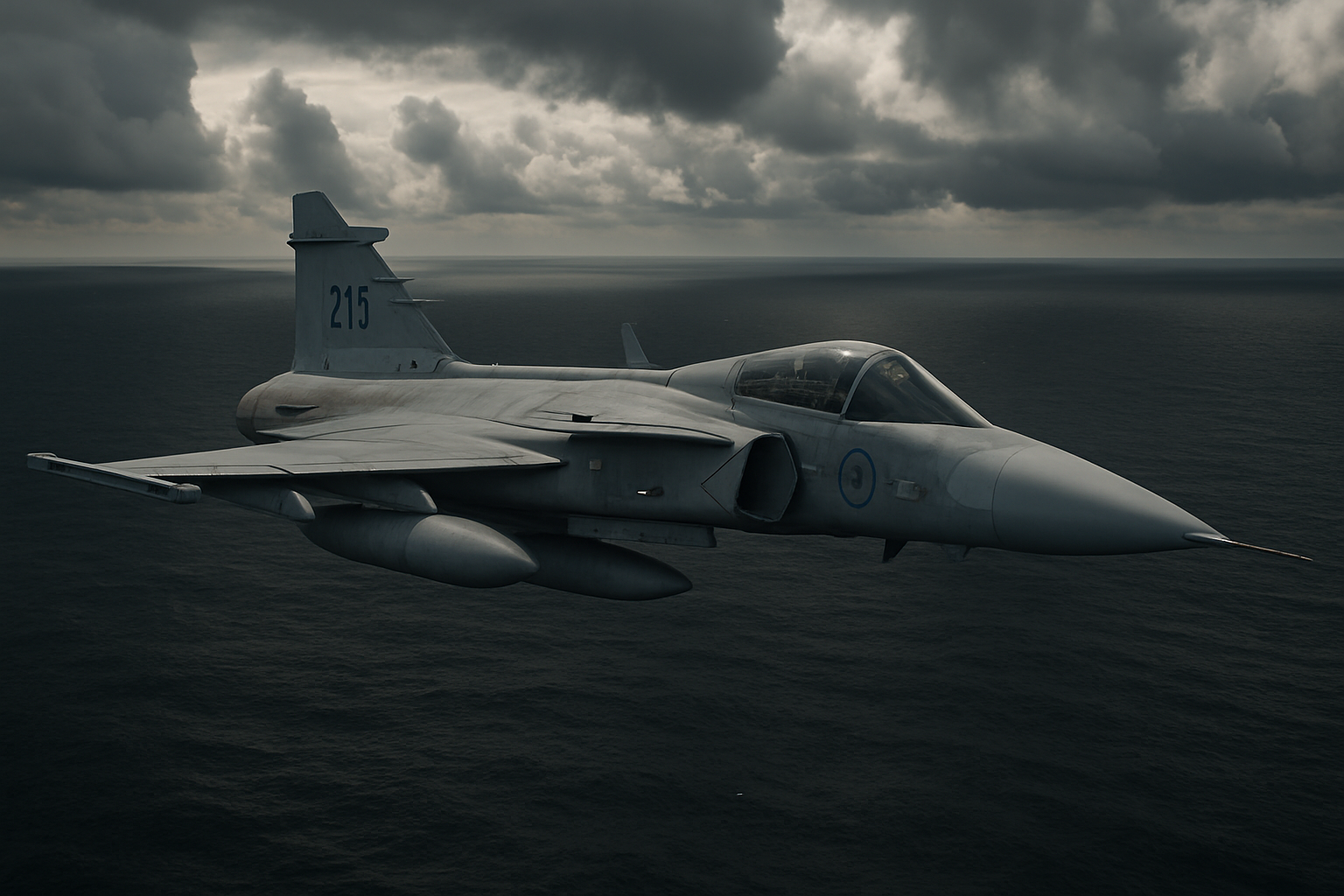
Swedish JAS Gripen fighter jets tracked a Russian Kilo-class submarine through the Kattegat strait on Friday evening, as the vessel made its way toward the Baltic Sea in a closely monitored transit that underscores mounting tensions in Northern European waters.
The Swedish Armed Forces confirmed the submarine tracking operation in an official press release, with spokesperson Pär Pihlqvist stating that the Russian vessel was "on its way into the Baltic Sea." The incident represents the latest demonstration of Sweden's enhanced maritime surveillance capabilities since joining NATO, part of a broader pattern of increased Russian naval activity in the region.
Strategic Maritime Chokepoint
The Kattegat strait, a critical waterway between Sweden and Denmark connecting the Baltic Sea to the North Sea, has become an increasingly important focal point for Nordic defense cooperation. Defense expert Hans Liwång emphasized the operational significance, noting that "the Navy and Air Force have the task of continuously monitoring movements in the vicinity of the Baltic Sea."
Swedish defense officials have indicated that such tracking operations are part of routine surveillance designed to maintain comprehensive situational awareness of maritime activities near Swedish territorial waters. The deployment of advanced JAS Gripen aircraft demonstrates Sweden's commitment to monitoring potential security threats in collaboration with allied nations.
Escalating Regional Security Concerns
Friday's submarine tracking occurs against a backdrop of dramatically increased Russian military reconnaissance activities across the Nordic region. Intelligence assessments indicate a 23% surge in Russian military activity since Sweden and Finland's NATO membership fundamentally altered the strategic balance in Northern Europe.
Recent incidents have included Russian drone operations near NATO assets, increased submarine incursions, systematic GPS jamming, and underwater cable reconnaissance missions. This pattern of provocative activities has prompted enhanced security coordination among Nordic and Baltic states through initiatives like NATO's Arctic Sentry mission.
"Man ska känna att Sverige och våra allierade har en väldigt god lägesbild av vårt närområde."
— Pär Pihlqvist, Swedish Armed Forces Press Secretary
The spokesperson's emphasis that "Sweden and our allies should feel that we have a very good situational picture of our immediate area" reflects the heightened vigilance now required to maintain regional security.
Historical Context and Pattern Recognition
This submarine monitoring operation builds upon a concerning pattern of Russian naval activities in Nordic waters documented throughout early 2026. Previous incidents have included sophisticated intelligence-gathering operations targeting critical undersea infrastructure, with international forces successfully deterring month-long Russian submarine surveillance of undersea cables and energy pipelines in British and Norwegian waters.
Lithuanian intelligence assessments warn that Russia could be ready for "limited military conflict" within 3-5 years if current geopolitical tensions persist. This timeline is based on force reconstitution requirements and the development of Baltic Sea-specific operational capabilities following any potential Ukraine ceasefire.
NATO Integration and Enhanced Capabilities
Sweden's response to Friday's submarine transit demonstrates the operational benefits of NATO membership and enhanced regional cooperation. The country has significantly upgraded its defense capabilities, including commitments to host nuclear weapons during wartime periods - a dramatic departure from decades of nuclear-free policies.
The integration extends beyond traditional military responses. Enhanced intelligence sharing, satellite surveillance, and coordinated maritime patrols through NATO's Arctic Sentry mission have created unprecedented regional security cooperation. This framework enables rapid, coordinated responses to potential threats while maintaining proportional deterrent messaging.
Advanced Surveillance Technologies
Modern submarine detection and tracking capabilities combine sophisticated technologies including satellite monitoring, AI-powered maritime awareness systems, and coordinated multinational intelligence networks. These advanced systems enable effective detection while ensuring that operations remain within established international maritime law frameworks.
Sweden's JAS Gripen aircraft provide exceptional surveillance capabilities with advanced sensor systems and data fusion technology. The aircraft can detect, track, and coordinate responses to both traditional naval vessels and modern submarine threats while maintaining secure communications with allied forces.
Regional Response Framework
The coordinated response to Friday's submarine passage reflects broader Nordic security transformation. Countries across the region have implemented enhanced defense spending, with all NATO members now meeting the 2% GDP defense spending target for the first time in the alliance's history.
Finland has similarly strengthened its maritime surveillance capabilities and announced plans to lift its comprehensive nuclear weapons ban to meet NATO membership requirements. Norway has doubled its cooperation with UK forces, while Denmark continues to play a crucial role in Baltic Sea security coordination.
This regional approach demonstrates how smaller nations can effectively coordinate defense capabilities during periods of great power competition, providing a template for international cooperation while maintaining national sovereignty.
Broader Security Implications
The Russian submarine passage through the Kattegat occurs during a period of unprecedented nuclear governance uncertainty. The New START Treaty's expiration in February 2026 marked the first time in over 50 years without US-Russia nuclear constraints, creating additional strategic complexity for regional security planning.
Energy security concerns add another dimension to maritime surveillance operations. Recent Ukrainian strikes on Russian energy export facilities have stranded dozens of shadow fleet tankers in the Gulf of Finland, demonstrating how regional conflicts can affect maritime traffic patterns and security considerations.
Sweden's energy independence model - featuring 88% renewable electricity and continental Europe's largest battery storage facility - provides some insulation from energy-related maritime security concerns while requiring protection of critical infrastructure.
"Marinen och flyget har i uppgift att hela tiden följa vilka rörelser som finns i närheten av Östersjön."
— Hans Liwång, Defense Expert
International Law and Proportional Response
Swedish officials have emphasized that Friday's submarine tracking operation adhered to established international maritime law while ensuring national security interests. The response demonstrates sophisticated diplomatic coordination - monitoring potential threats while avoiding unnecessarily provocative actions that could escalate tensions.
The operation provides a model for managing submarine incidents through proportional responses that maintain deterrent effects while preserving diplomatic stability. This approach has proven effective in previous incidents, including successful UK-Norwegian coordination against Russian submarine operations in the North Sea.
Looking Forward: Template for Regional Security
Friday's submarine tracking operation represents more than a single maritime surveillance mission. It demonstrates the effectiveness of enhanced Nordic cooperation in addressing 21st-century security challenges through coordinated, technologically advanced responses.
The success of this operational model - combining advanced surveillance capabilities, rapid multinational coordination, and proportional deterrent messaging - influences broader European security planning. As regional tensions continue, the ability to maintain comprehensive situational awareness while avoiding escalation becomes increasingly critical.
Intelligence assessments suggest that such submarine monitoring operations will likely become more frequent as Russia continues developing Baltic Sea-specific operational frameworks. Sweden's demonstrated capability to track and coordinate responses to these activities provides reassurance to both domestic populations and international allies about regional security resilience.
The coordinated international response to Russian submarine activities establishes important precedents for managing hybrid warfare challenges while maintaining the rule of law in international waters. Success in these operations affects not only immediate regional security but also broader questions of territorial sovereignty and democratic resilience in an era of increasing authoritarian challenges.