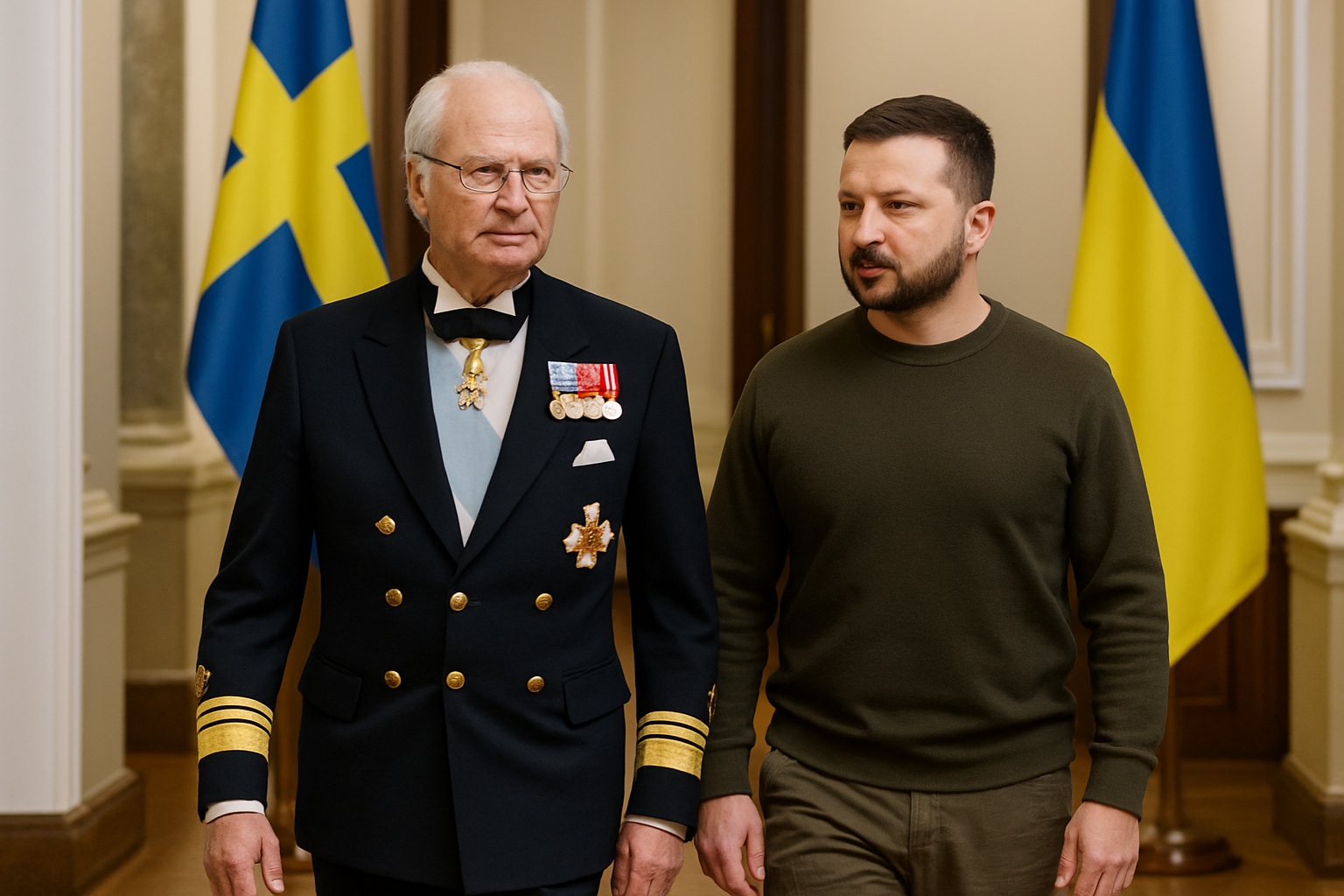
Swedish King Carl XVI Gustaf arrived in Ukraine on April 17, 2026, becoming the first reigning monarch to visit the war-torn nation since Russia's full-scale invasion began in February 2022, marking an unprecedented diplomatic milestone that underscores European royal solidarity with Ukraine's struggle for sovereignty.
The 77-year-old Swedish monarch's surprise visit to meet with President Volodymyr Zelensky represents a historic breach of traditional royal protocol, as constitutional monarchs typically avoid visiting active war zones. The Swedish government confirmed the visit, describing it as demonstrating Sweden's unwavering commitment to Ukrainian independence and territorial integrity.
Historic Royal Diplomacy During Wartime
King Carl XVI Gustaf's arrival comes at a critical juncture for Ukraine, as the nation continues to face daily bombardments and territorial challenges from Russian forces. The visit carries profound symbolic weight, as it marks the first time a European monarch has personally traveled to Ukraine since the conflict escalated into full-scale war four years ago.
Swedish government officials emphasized that the king's presence in Ukraine demonstrates that European institutions, including constitutional monarchies, stand firmly behind Ukraine's fight for democratic values and national sovereignty. The visit was carefully coordinated with Ukrainian security services to ensure the monarch's safety while maintaining the diplomatic significance of royal support.
"This historic visit by King Carl XVI Gustaf shows that Ukraine is not alone in its struggle. The presence of a reigning European monarch on Ukrainian soil during wartime sends an unmistakable message to the world about European unity and commitment to democratic principles."
— Swedish Government Spokesperson
Meeting with President Zelensky
The central focus of the royal visit was King Carl XVI Gustaf's private audience with President Zelensky, where discussions centered on Sweden's continued military and humanitarian support for Ukraine. Sweden has emerged as one of Ukraine's strongest European supporters, providing advanced air defense systems, military equipment, and substantial financial assistance throughout the conflict.
The meeting takes place against the backdrop of Sweden's recent NATO membership, achieved in March 2024, which has positioned the Nordic nation as a key strategic player in European security architecture. Sweden's transition from historic neutrality to active NATO participation has been partly driven by the security implications of Russia's invasion of Ukraine.
Sources familiar with the discussions indicated that King Carl XVI Gustaf expressed Sweden's long-term commitment to Ukrainian reconstruction and European integration, while President Zelensky briefed the monarch on current military situations and humanitarian needs.
Context of Suspended Peace Negotiations
The royal visit occurs during a particularly challenging period for Ukrainian diplomacy, as promising trilateral peace negotiations between Ukraine, Russia, and the United States remain indefinitely suspended due to the ongoing Iran crisis in the Middle East. Previous breakthroughs in February 2026, including a historic 314-prisoner exchange and the restoration of US-Russia military communications, have been stalled by competing international priorities.
European leaders have increasingly stepped forward to fill the diplomatic void, with the Swedish monarch's visit representing the highest-profile European engagement with Ukraine since peace talks were postponed. The visit underscores Europe's determination to maintain momentum in supporting Ukraine despite setbacks in broader international negotiations.
Military and Humanitarian Support
Sweden has provided substantial support to Ukraine throughout the conflict, including advanced air defense systems worth hundreds of millions of euros. The Swedish-Danish joint contribution of €246 million for air defense systems represents one of the most significant Nordic contributions to Ukrainian military capabilities.
The king's visit comes as Ukraine continues to face systematic attacks on civilian infrastructure, with over 1,170 buildings in Kyiv lacking adequate heating and nuclear power plants forced to halt electricity production for the first time since the conflict began. These attacks have been characterized by international observers as violations of the Geneva Conventions due to their targeting of civilian infrastructure during extreme winter conditions.
Sweden's humanitarian assistance has been equally significant, contributing to winter support programs that have reached over 17.8 million Ukrainians during the harsh 2025-2026 winter period, which President Zelensky has described as the "most difficult since the beginning of the war."
Constitutional Monarchy in Crisis Diplomacy
King Carl XVI Gustaf's visit represents an evolution in constitutional monarchy's role during international crises. While European monarchs traditionally maintain strict political neutrality, the unprecedented nature of the Ukraine conflict has prompted several royal houses to take more visible positions in support of democratic values and international law.
The Swedish royal visit stands in stark contrast to other European monarchies currently facing their own challenges. The British Royal Family has been embroiled in the Prince Andrew-Jeffrey Epstein investigation crisis, while Norway's Crown Princess Mette-Marit faces potential criminal proceedings related to the same international scandal.
Royal experts note that King Carl XVI Gustaf's decision to visit Ukraine during active hostilities demonstrates how constitutional monarchies can play meaningful roles in international solidarity while maintaining their institutional integrity.
Strategic Implications for European Security
The visit carries broader implications for European security architecture, as Sweden's position as both a new NATO member and a constitutional monarchy positions King Carl XVI Gustaf as a unique diplomatic figure bridging traditional European institutions with modern security arrangements.
Sweden's transformation from neutrality to NATO membership, driven largely by the Ukraine conflict, has made it a key player in European defense coordination. The country's advanced defense industry and strategic Baltic Sea position give Swedish support particular military significance for Ukraine's defensive capabilities.
The royal visit also comes as Ukraine has evolved from primarily receiving aid to becoming a security provider, deploying over 200 military specialists to Middle Eastern nations to share expertise in combating Iranian Shahed drones—the same weapons systems that have devastated Ukrainian infrastructure.
International Response and Historical Context
The international community has closely watched King Carl XVI Gustaf's historic visit, recognizing it as a significant moment in wartime diplomacy. European Union leaders have praised the visit as demonstrating continued European commitment to Ukrainian sovereignty despite the suspension of broader peace initiatives.
The visit occurs during a period of unprecedented international support for Ukraine, including the European Union's historic €90 billion loan package—the largest single-nation assistance program in EU history—though divisions remain, with Hungary, Slovakia, and Czech Republic refusing participation.
Historical parallels are limited, as few constitutional monarchs have visited active war zones during their reigns. The closest comparison might be British royal visits during World War II, though those occurred within the United Kingdom itself rather than in foreign conflict zones.
Nuclear Context and Ongoing Challenges
The royal visit takes place against the backdrop of an unprecedented nuclear governance crisis, with the New START treaty between the United States and Russia having expired on February 5, 2026—marking the first time in over 50 years without bilateral nuclear constraints between the superpowers who control 80% of global nuclear weapons.
UN Secretary-General António Guterres has described the current period as a "grave turning point" with nuclear risks at their "highest levels in decades." The restoration of US-Russia military communications through earlier diplomatic breakthroughs remains the only formal channel between the nuclear superpowers.
Ukraine continues to face significant military challenges, with official figures showing 55,000 Ukrainian soldiers killed and a "large number" missing in action, though international estimates suggest actual casualties could be significantly higher.
Looking Forward: Diplomatic and Military Trajectories
King Carl XVI Gustaf's visit represents both a culmination of Swedish support for Ukraine and a potential catalyst for renewed European diplomatic engagement. While trilateral peace talks remain suspended due to the Iran crisis, the framework for negotiations—including prisoner exchange mechanisms and military communication protocols—remains preserved for future activation.
The visit demonstrates Europe's capacity to maintain strategic relationships and support democratic values even when broader international negotiations face obstacles. As Ukraine continues to face territorial disputes over eastern regions under Russian control, European solidarity through visits like this provides crucial moral and political support.
The timing of the royal visit, coming as the conflict approaches its fourth anniversary, underscores the long-term nature of European commitment to Ukrainian sovereignty. With the Trump administration's June 2026 peace deadline uncertain due to Middle East priorities, European leadership through both diplomatic and royal channels becomes increasingly significant.
Precedent for Future Royal Diplomacy
The Swedish monarch's groundbreaking visit may establish new precedents for constitutional monarchy engagement during international crises. As European security architecture continues to evolve in response to 21st-century challenges, the role of traditional institutions like constitutional monarchies in supporting democratic values and international law takes on renewed importance.
The success of King Carl XVI Gustaf's Ukraine visit could influence other European monarchies to consider similar demonstrations of solidarity, potentially reshaping how constitutional monarchies engage with international conflicts and democratic movements worldwide.
As Ukraine continues its strategic evolution from aid recipient to security provider while maintaining its fight for territorial integrity, the support of European institutions—including constitutional monarchies—provides crucial legitimacy and continuity for its democratic aspirations and European integration goals.