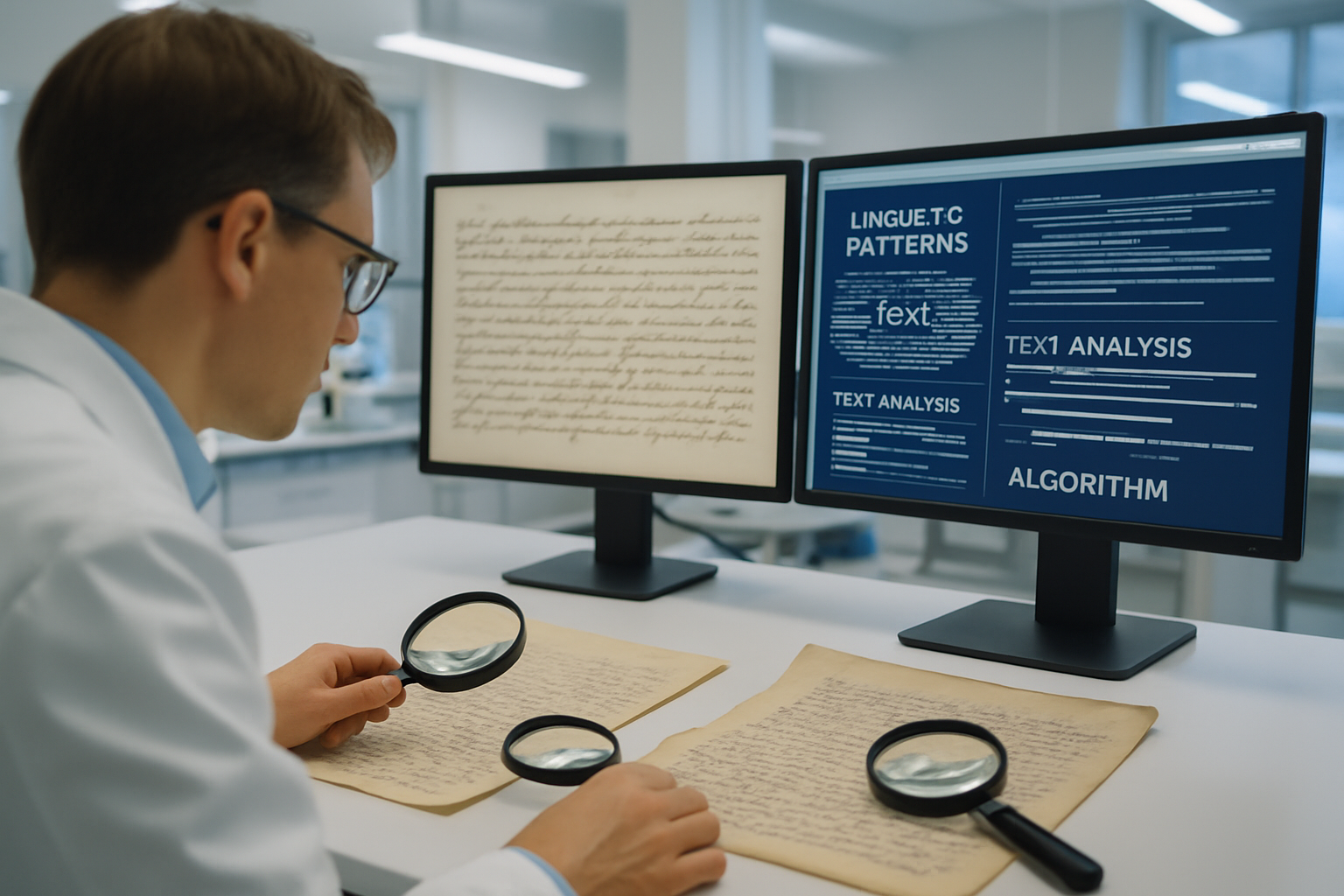
Swedish researchers at Lund University have achieved a breakthrough in deception detection, demonstrating that written text patterns can reveal when someone is lying, marking a significant expansion beyond traditional verbal-focused lie detection methods.
The groundbreaking research, conducted by Lund University's psychology department, represents the first comprehensive study to establish reliable connections between written communication patterns and deceptive behavior. While previous lie detection research has primarily concentrated on verbal communication, vocal stress patterns, and physiological responses, this Swedish study opens an entirely new frontier in psychological analysis.
Revolutionary Methodology in Written Deception Analysis
The research team analyzed thousands of written samples across multiple contexts, identifying specific linguistic markers that consistently appear when individuals attempt to deceive through written communication. These markers include sentence structure variations, word choice patterns, punctuation usage, and subtle grammatical inconsistencies that emerge unconsciously during deceptive writing.
"Previous lie detection research focused exclusively on spoken communication, but our digital age requires understanding how deception manifests in written form," explained the lead researcher in a statement to SVT Nyheter. "Text messages, emails, social media posts, and written statements represent the primary communication methods for many people today."
The study reveals that deceptive writing exhibits measurable differences in cognitive load indicators. When people lie in writing, they demonstrate increased mental effort through longer response times, more complex sentence structures, and specific linguistic patterns that betray the psychological stress of maintaining false narratives.
Applications in Mental Health and Criminal Justice
Beyond lie detection, the research demonstrates broader applications for understanding psychological states through written communication analysis. The findings suggest that written text can reveal depression indicators, anxiety patterns, and other mental health conditions through unconscious linguistic choices.
This development occurs within the global "Therapeutic Revolution of 2026," where mental health research increasingly emphasizes prevention-first approaches and innovative diagnostic methods. The Swedish research aligns with international efforts to develop more sophisticated understanding of psychological wellness through technological and analytical advances.
Criminal justice applications include analyzing written statements, digital communications in legal proceedings, and forensic document analysis. The methodology could revolutionize how legal professionals assess witness credibility and evaluate written evidence in court proceedings.
Digital Age Communication Analysis
The research addresses critical needs in our increasingly digital world, where written communication dominates personal and professional interactions. Social media posts, instant messaging, email correspondence, and online forums create vast amounts of written data that can now be analyzed for psychological insights.
The study identified specific digital communication patterns that indicate deceptive intent, including unusual emoji usage, punctuation variations, and response timing patterns. These findings have immediate applications for online fraud detection, cybersecurity, and digital forensics.
"Digital communication leaves psychological fingerprints just as distinctive as physical fingerprints," noted the research team. "Our methodology can identify these patterns with remarkable accuracy across different languages and cultural contexts."
International Implications and Ethical Considerations
The Swedish breakthrough arrives amid global discussions about privacy, surveillance, and psychological profiling through digital communications. While the research offers powerful tools for understanding human behavior, it raises important questions about consent, privacy rights, and potential misuse of psychological analysis technologies.
Mental health professionals worldwide are examining how written communication analysis can enhance therapeutic relationships and treatment outcomes. The ability to identify psychological distress through writing patterns could enable earlier intervention and more targeted mental health support.
However, experts emphasize the need for ethical frameworks governing the use of written deception analysis. The technology's power to reveal psychological states through text analysis requires careful consideration of individual privacy rights and appropriate application contexts.
Future Research Directions
Lund University researchers plan to expand their methodology across multiple languages and cultural contexts to ensure universal applicability. The team is developing automated analysis tools that could process large volumes of written communication for psychological assessment purposes.
Collaboration with international research institutions will refine the methodology's accuracy and explore applications in therapeutic settings, educational environments, and organizational psychology. The research represents a fundamental shift in understanding how psychological states manifest in written communication.
The Swedish research contributes to growing evidence that human behavior analysis is becoming increasingly sophisticated through technological advancement and psychological research integration. As digital communication continues expanding globally, understanding the psychological dimensions of written text becomes increasingly valuable for multiple professional and personal applications.
This breakthrough from Lund University positions Sweden as a leader in psychological research innovation, demonstrating how traditional academic research can address contemporary challenges in our digitally connected world. The implications extend far beyond lie detection to encompass comprehensive understanding of human psychological expression through written communication.