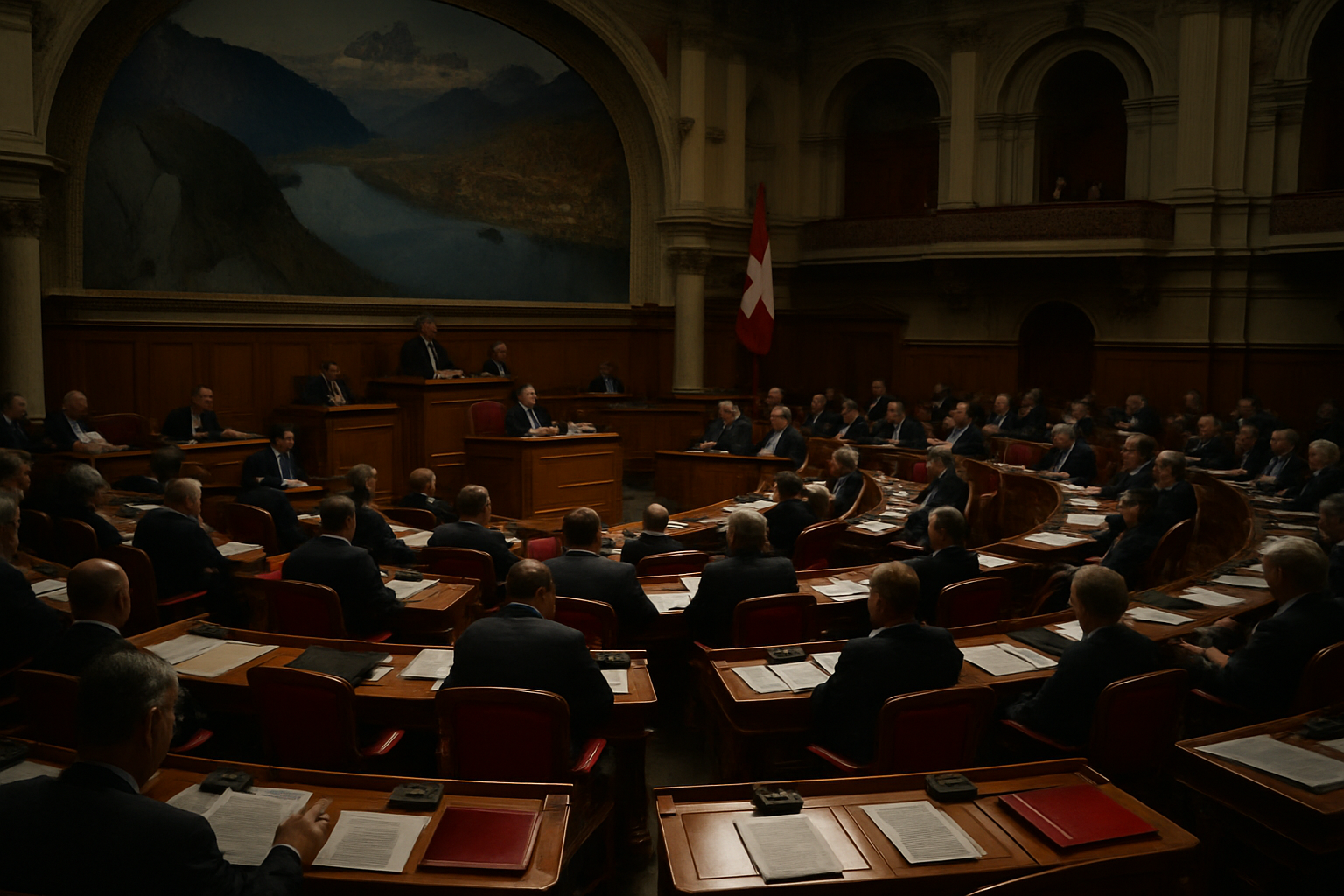
Switzerland's National Council delivered sharp criticism of the Trump administration's foreign policy approach while federal police revealed disturbing new details about last week's deadly bus fire in Kerzers that claimed six lives in what investigators now confirm was a deliberate act of violence.
The dual developments highlight Switzerland's complex navigation of international diplomacy while grappling with unprecedented domestic security challenges that have shaken the nation's traditionally peaceful public transportation system.
Parliamentary Criticism of Trump Administration
In a significant diplomatic statement on Monday, Switzerland's National Council declared that the international law prohibition on the use of force "is not negotiable," marking one of the strongest criticisms yet from the traditionally neutral nation regarding the Trump administration's aggressive foreign policy stance.
The parliamentary majority's position reflects growing international concern over recent U.S. military actions and diplomatic approaches that have strained traditional alliance relationships. Switzerland, which has historically maintained strict neutrality while serving as a diplomatic mediator, rarely issues such direct criticism of major powers.
The statement comes amid broader European concerns about American institutional stability and predictability during complex international negotiations, including ongoing Middle East tensions and nuclear diplomacy challenges. Multiple European allies have expressed similar reservations about the Trump administration's departure from traditional multilateral cooperation frameworks.
Kerzers Bus Fire: Deliberate Attack Confirmed
Nearly a week after the tragic bus fire in Kerzers, Canton Fribourg, police spokesperson Frederic Papaux confirmed that investigators have found "elements suggesting a deliberate act by a person inside the bus." The revelation has sent shockwaves through the small community of fewer than 5,000 residents located approximately 20 kilometers from Bern.
The incident occurred Tuesday evening at approximately 6:25 PM when a PostAuto bus traveling from the railway station direction became completely engulfed in flames. Eyewitness accounts, corroborated by Finnish and Italian media reports, describe a passenger pouring gasoline throughout the vehicle before igniting the fire, causing rapid spread that trapped multiple passengers.
"The investigation has revealed elements suggesting this was a deliberate act by someone inside the bus,"
— Frederic Papaux, Police Spokesperson
Emergency responders faced intense conditions as thick black smoke and flames several meters high prevented immediate rescue attempts. Social media videos captured the devastating scene of the completely destroyed vehicle, highlighting the severity of what investigators now classify as a potential terrorist attack on public transportation.
Community Impact and National Security Concerns
The confirmation of deliberate intent has transformed the Kerzers incident from a tragic accident into one of Switzerland's most serious public transportation security breaches in recent history. The small town, deeply affected by the loss of life, has established counseling services for residents struggling with the trauma.
One of the injured victims remains in critical condition at hospital, while authorities continue victim identification processes. The attack raises significant questions about Switzerland's public transportation security protocols, which have historically operated under assumptions of safety in peaceful communities.
Federal and cantonal police are coordinating a comprehensive investigation involving forensic specialists, transportation safety authorities, and international security experts. The probe includes analysis of surveillance footage, extensive witness interviews, and wreckage examination for accelerants and other evidence.
International Context and Security Implications
The Kerzers attack occurs within a broader pattern of transportation security challenges across Europe, including recent incidents in Glasgow Central Station and various aviation safety concerns. The deliberate nature of the Swiss incident represents a particularly troubling escalation in attacks targeting civilian transportation infrastructure.
Switzerland's dual focus on international diplomacy criticism and domestic security challenges reflects the complex reality facing neutral nations in an increasingly polarized global environment. The country must balance its traditional role as a mediator and host to international organizations with growing security threats that challenge assumptions about domestic safety.
PostAuto, Switzerland's national bus service, has pledged full cooperation with the investigation and announced a comprehensive review of internal safety protocols. The company's response will likely influence public transportation security measures nationwide, despite Switzerland's historically excellent safety record.
Diplomatic and Security Policy Intersection
The timing of the National Council's Trump administration criticism alongside the Kerzers investigation revelation underscores Switzerland's evolving approach to both international relations and domestic security. The parliamentary statement on international law reflects concerns about global stability that directly affect Swiss security interests.
European intelligence sources indicate growing coordination between nations facing similar transportation security threats, with Switzerland's response to the Kerzers attack likely to inform international transportation security protocols. The incident demonstrates that even the most peaceful societies remain vulnerable to deliberate violence targeting civilian infrastructure.
Swiss authorities are emphasizing transparency in both the criminal investigation and policy response, maintaining public confidence while adapting security measures to address new threat realities. The investigation's findings are expected to influence not only Swiss transportation policy but also contribute to broader international understanding of transportation security vulnerabilities.
Looking Forward: Policy and Security Adaptations
The investigation into the Kerzers attack is expected to continue for several weeks as authorities work to establish the complete sequence of events and potential motives. Federal officials have indicated that findings will inform future transportation security policies while maintaining Switzerland's commitment to accessible public services.
Meanwhile, the National Council's criticism of Trump foreign policy signals Switzerland's continued commitment to international law principles and multilateral cooperation, even as domestic security challenges require significant policy adaptations. The dual focus reflects the interconnected nature of international stability and domestic security in the modern era.
As Switzerland grapples with these parallel challenges, the country's response will serve as a template for other neutral nations facing similar pressures to balance diplomatic principles with evolving security realities. The coming weeks will prove crucial in determining how effectively Switzerland can maintain its traditional values while adapting to 21st-century security challenges.