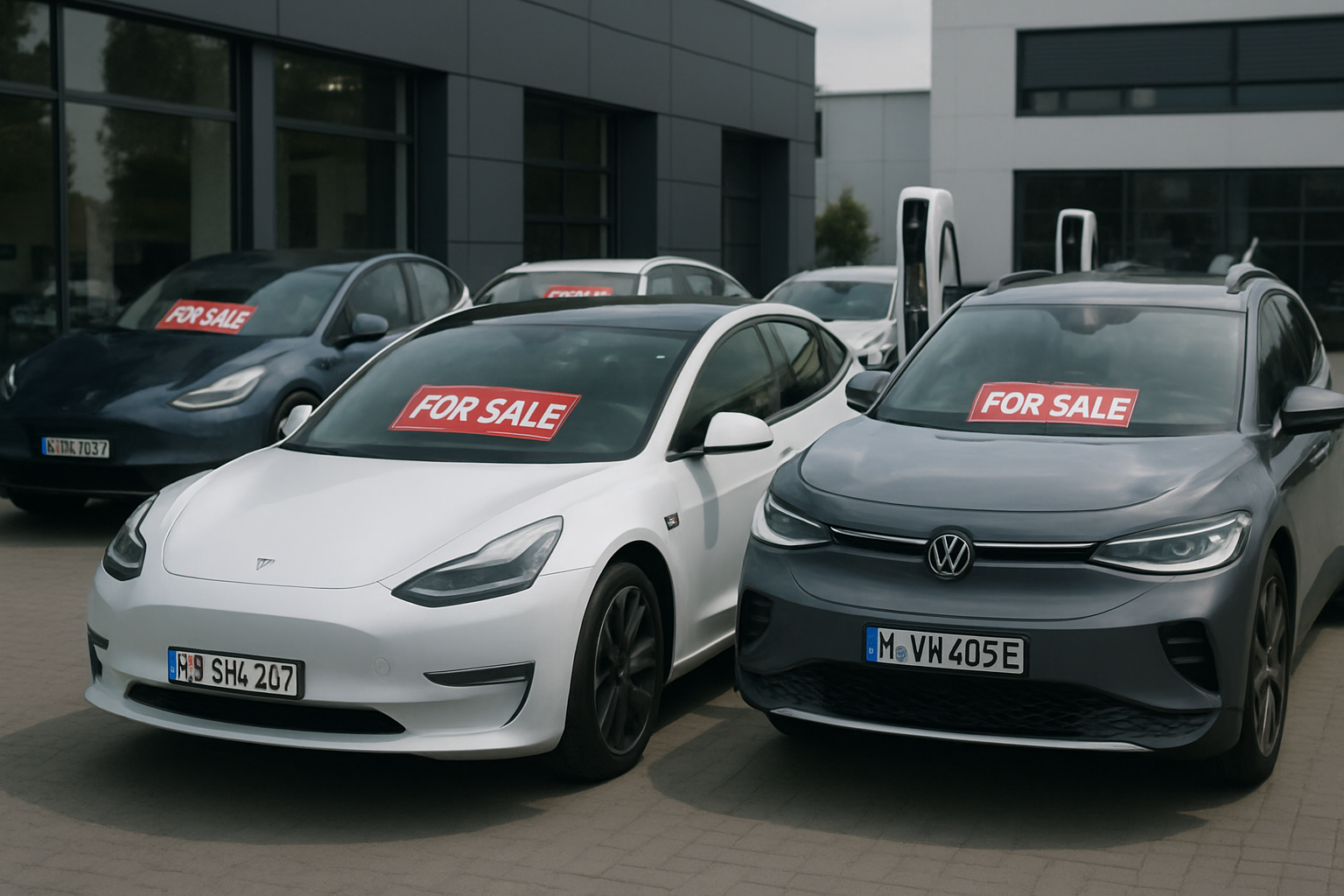
European automotive markets have reached a historic tipping point as Swiss data confirms used electric vehicles are now cheaper than their combustion engine counterparts for the first time, marking a fundamental shift in transportation economics driven by the ongoing fuel crisis and accelerating EV adoption.
The milestone represents a watershed moment in automotive history, as electric vehicles transition from premium alternatives to mainstream economic necessity. Swiss automotive industry analysis shows EVs are "often cheaper than bensin- and dieselbilar" (gasoline and diesel cars), reflecting broader European market dynamics transformed by the Iranian oil crisis that has pushed Brent crude to $119.50 and WTI to $108.15.
Crisis-Driven Market Transformation
The dramatic shift follows Iran's closure of the Strait of Hormuz, affecting 40% of global oil transit and creating the most severe energy crisis since the 1970s oil shocks. European fuel prices have reached crisis levels, with costs approaching €3 per liter in many markets, making electric vehicles the economically rational choice for consumers.
Romanian automotive data confirms that interest in electric vehicles has grown "vertiginously" across Europe since the conflict began in February 2026. Online marketplaces in the United Kingdom, Germany, France, and Spain report massive increases in electric vehicle inquiries as consumers seek alternatives to volatile fuel costs.
"The oil crisis has pushed gasoline price increases that highlight the cheaper energy available from the electrical grid"
— MEDIAFAX, Romanian News Agency
Technology Convergence Enables Adoption
The economic shift coincides with breakthrough technological advances that have eliminated traditional EV adoption barriers. Chinese manufacturer BYD's Megawatt Flash Charging system delivers 1,360 kW power, enabling vehicles to gain 400km range in just 5 minutes—addressing the primary consumer concern about charging time.
Battery technology has matured significantly, with longevity studies showing Tesla Model S vehicles from 2012-2014 retaining 85-92% capacity after 200,000+ miles, while Nissan Leaf models from 2011-2013 maintain 75-85% retention after a decade of operation. These findings suggest practical lifespans of 15-20 years, far exceeding initial warranty predictions and supporting robust used EV markets.
Cold Weather Performance Breakthrough
Recent advances in battery chemistry have addressed cold climate concerns. BYD's Blade Battery 2.0 functions effectively at temperatures down to -30°C, while Chinese scientists have developed hydrofluorocarbon-based electrolytes that maintain efficiency at minus 70°C temperatures while doubling energy density compared to traditional systems.
Infrastructure Investment Surge
European governments have responded to the crisis with unprecedented infrastructure investment. Austria has doubled its EV charging capacity by adding 1,000 stations, while Estonia leads with 88% renewable electricity and continental Europe's largest battery storage system serving 90,000 households.
The infrastructure boom extends globally, with New Zealand investing $50 million to double its public charging network through ChargeNet and Meridian Energy partnerships, deploying 2,574 new charging points. Canada has returned EV incentives under Prime Minister Mark Carney's $9.7 billion automotive strategy.
Supply Chain Challenges and Opportunities
The transition occurs amid significant supply chain constraints, with China maintaining 60% of critical materials production and 90% of refining capacity for lithium, cobalt, and rare earth elements. Memory chip shortages have driven semiconductor prices up sixfold, affecting vehicle control systems until new fabrication facilities come online in 2027.
However, these challenges have paradoxically benefited Chinese manufacturers with integrated supply chains. The US-EU-Japan Critical Minerals Partnership, involving 55 countries and seven African suppliers, represents efforts to diversify supply chains, though implementation requires massive investment and years of development.
Regional Success Stories
The Caribbean provides compelling evidence of EV economic advantages, with owners saving $75 for every $100 compared to gasoline vehicles, even accounting for electricity rate increases. Barbadian fire officials have confirmed that electric vehicles are statistically less likely to catch fire than gasoline vehicles, addressing public safety concerns.
Denmark continues to set EV sales records despite winter months that historically present automotive sales challenges, demonstrating fundamental market maturation. Asia-Pacific markets achieved 11 million EV sales annually—nearly double the rest of the world combined—establishing regional leadership in global adoption.
Urban-Rural Adoption Patterns
Adoption patterns reveal persistent urban-rural disparities, with homeowners and rural residents advantaged through home charging capabilities, while urban apartment dwellers face infrastructure barriers. However, workplace charging initiatives and vehicle-to-grid technology are expanding urban networks and creating new solutions.
Vehicle-to-grid technology enables EVs to serve as mobile energy storage systems, charging during off-peak renewable generation periods and discharging during high demand, supporting electrical grid stability while providing additional value to owners.
Commercial Vehicle Acceleration
The transformation extends beyond passenger vehicles to commercial applications. Tesla has achieved large-scale Semi production milestones after development beginning in 2017, while BMW begins electric 3 Series production at its Munich facility in August 2026. Fleet operators naturally prioritize total cost of ownership calculations, making them early adopters of advanced electric technologies.
Climate Context and Policy Response
The market transformation occurs against a backdrop of climate urgency, with January 2026 marking the 18th consecutive month of temperatures exceeding 1.5°C above pre-industrial levels. This demonstrates human-induced climate change overriding natural variability, emphasizing the necessity of transportation electrification during this decisive climate action decade.
Policy responses include China's comprehensive regulatory approach, implementing a hidden door handle ban effective January 2027 that affects Tesla, BYD, NIO, and XPeng, prioritizing functional safety over aesthetic design. European automakers are intensifying calls for Brussels subsidies to compete with Chinese manufacturers achieving technological and cost advantages.
Industry Transformation Requirements
The automotive sector is experiencing the most significant transformation in modern history, requiring coordination across energy systems, infrastructure development, materials supply chains, and regulatory frameworks. Regional manufacturing strategies are emerging as automakers establish production closer to primary markets, reducing transportation costs and supply chain vulnerabilities.
Success depends on sustained international cooperation, strategic technology and infrastructure investments, and adaptive management responding to rapid market changes. The convergence of technological advancement, environmental urgency, economic incentives, and evolving consumer preferences creates accelerated transformation conditions.
Strategic Significance
March 2026 represents a watershed moment where crisis-driven demand converges with technological readiness, creating inflection point conditions for mass adoption acceleration. The shift from electric vehicles as environmental choice to economic necessity fundamentally restructures personal mobility approaches rather than simply adding electric options to existing markets.
This transformation during Earth's most environmentally challenging recorded period demonstrates both the urgency of action and the potential for rapid technological adoption when economic incentives align with environmental necessity. The European experience provides a template for emerging markets navigating similar transitions while contributing to global climate goals.
The window for effective climate action is narrowing, but the convergence of technological innovation, economic incentives, and policy coordination offers genuine opportunities for maintaining planetary habitability through comprehensive transportation system transformation. April 2026 continues this acceleration, positioning sustainable mobility as both economic opportunity and climate imperative for the remainder of this decisive decade.