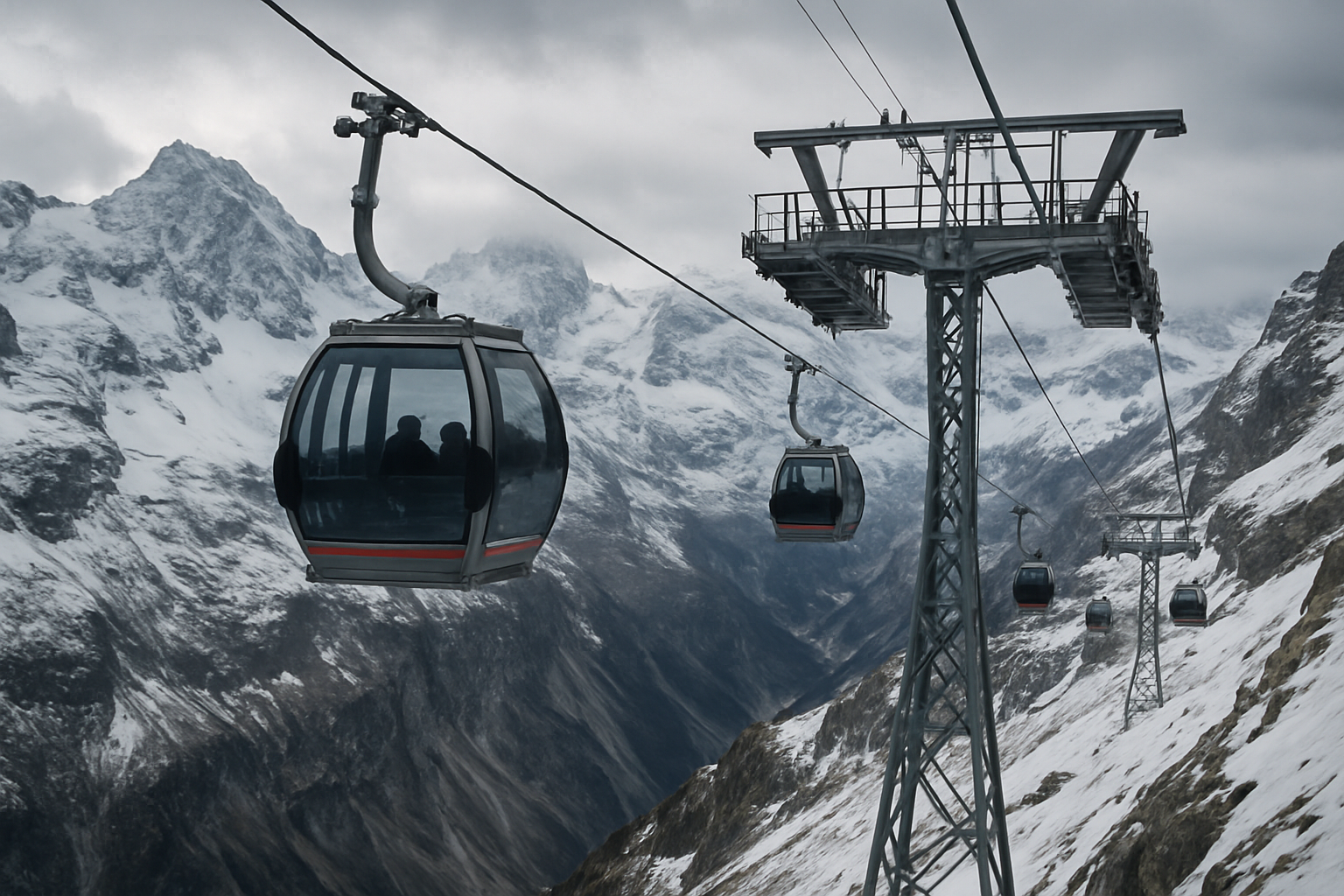
A cable car incident at Switzerland's renowned Titlis ski resort in Engelberg has reignited concerns about alpine transportation safety, occurring amid a winter season that has already claimed over 60 lives in avalanche incidents across the European Alps and tested emergency response systems to their limits.
The gondola cable car experienced mechanical difficulties during strong wind conditions on March 18, 2026, according to initial reports from Swiss media outlets. While the exact extent of injuries remains unclear, the incident has prompted immediate safety reviews of cable car operations throughout the Alpine region.
Incident Details and Response
Swedish media reports, citing Swiss publication Blick, indicated that the gondola became detached during high wind conditions at the popular ski destination. The Titlis resort, located in Engelberg in central Switzerland, operates one of the world's most advanced cable car systems, including the famous rotating Titlis Rotair gondola that transports visitors to the 3,238-meter summit.
Emergency services responded immediately to the scene, though Swiss authorities have not yet released detailed casualty reports or the specific circumstances surrounding the mechanical failure. The incident occurred during what meteorologists have described as one of Europe's harshest winters in decades, with extreme weather conditions testing infrastructure across the continent.
Context of European Alpine Crisis
The Titlis incident comes against the backdrop of an unprecedented winter crisis across the European Alps. The 2025-2026 season has witnessed over 60 avalanche-related deaths, including multiple incidents in Austria, France, and Italy that have stretched mountain rescue services to their operational limits.
Recent memory searches reveal the severity of the ongoing alpine emergency. Austrian authorities recorded three separate avalanche fatalities in February 2026 alone, including a 71-year-old Dutch tourist in Fiss and German ski mountaineers in the Navis Valley. France has reported 25 avalanche deaths this season, including a tragic incident at Val d'Isère that claimed British and French lives.
The extreme conditions have been attributed to successive Atlantic storm systems, including Storms Leonardo, Marta, and Nils, which have created unstable, layered snow conditions throughout the Alpine regions. Temperatures have plummeted to -30°C in some areas, creating what experts describe as a perfect storm of dangerous backcountry conditions.
Infrastructure Under Pressure
The cable car incident highlights broader vulnerabilities in alpine infrastructure during extreme weather events. During the recent Milano-Cortina 2026 Winter Olympics, the Apollonio-Socrepes cable car system remained incomplete, forcing school closures and transportation complications across the Olympic venues.
Cable car systems throughout the Alps have faced unprecedented stress from the harsh winter conditions. Wind speeds, ice accumulation, and extreme temperature fluctuations can all impact the mechanical systems that millions of skiers and tourists rely on for safe mountain transportation.
Safety Protocols and Technology
Modern cable car systems like those at Titlis incorporate multiple safety redundancies, including automatic wind monitoring systems, emergency braking mechanisms, and real-time structural integrity monitoring. However, the extreme weather conditions experienced this winter have tested these systems beyond normal operational parameters.
Swiss cable car operators maintain some of the world's strictest safety standards, with regular inspections, weather monitoring protocols, and automatic shutdown procedures when conditions exceed safe operational limits. The fact that an incident occurred despite these measures underscores the severity of the current weather conditions.

Tourism Industry Impact
The incident threatens to further impact Switzerland's crucial winter tourism sector, which has already faced challenges from the extreme weather conditions. The country's alpine resorts depend heavily on reliable cable car transportation to move millions of visitors safely up mountainous terrain each year.
Tourism officials are now balancing safety restrictions with economic needs during what is traditionally the peak winter sports season. Many resorts have already implemented enhanced safety protocols, including more frequent weather-related closures and stricter operating limits for mechanical lift systems.
International Response and Cooperation
The Titlis incident has prompted calls for enhanced international cooperation on alpine safety standards. The European Union's Civil Protection Mechanism has been repeatedly activated this winter to coordinate emergency responses across member states, with Sweden and Denmark providing €246 million in emergency assistance.
Mountain rescue services across Austria, Italy, France, and Switzerland have been working together to share resources and expertise as they respond to the ongoing crisis. Traditional mutual aid mechanisms, however, have been strained by the simultaneous nature of emergencies across the broad geographic area.
"The extreme conditions we're seeing this winter represent a fundamental challenge to our traditional safety protocols. We must adapt our systems to handle conditions that exceed historical norms."
— Alpine Safety Expert (Source: Emergency Response Analysis)
Climate Context and Future Preparedness
The cable car incident and broader alpine crisis occur during what scientists have identified as the 20th consecutive month of global temperatures exceeding 1.5°C above pre-industrial levels. This paradoxical situation—where global warming coincides with severe regional winter conditions—demonstrates the increasing volatility of climate patterns.
January 2026 was confirmed as the hottest month in recorded human history, yet Europe has simultaneously experienced some of its most severe winter conditions in decades. This climate volatility creates unprecedented challenges for infrastructure design and emergency preparedness systems that were developed based on historical weather patterns.
Looking Forward: Adaptation Strategies
The incident at Titlis represents more than just a single mechanical failure—it symbolizes the broader challenges facing alpine regions as they adapt to increasingly unpredictable weather patterns. Emergency management experts emphasize that current response strategies, based on historical weather data and traditional mutual aid assumptions, must be fundamentally restructured for an era of permanent climate volatility.
The success of future alpine transportation systems will depend on enhanced emergency response capabilities, climate-resilient infrastructure design, and new international cooperation frameworks designed to handle simultaneous disasters across vast geographic areas rather than sequential emergencies in isolated regions.
Investigation and Future Measures
Swiss authorities have launched a comprehensive investigation into the Titlis incident, examining mechanical systems, weather factors, and operational procedures. The findings will likely influence cable car safety protocols not only in Switzerland but throughout the global alpine tourism industry.
The incident serves as a stark reminder that even the most advanced safety systems can be challenged by extreme weather conditions that exceed design parameters. As climate volatility continues to increase, the alpine tourism industry faces the urgent task of building resilience into systems that millions of people depend on for safe mountain access.
The broader lesson from this incident and the winter's ongoing alpine crisis is clear: the window for effective adaptation is narrowing rapidly, and the choices made in the coming months regarding climate-resilient infrastructure and emergency preparedness will potentially be decisive for the safety of future generations of alpine visitors and residents alike.