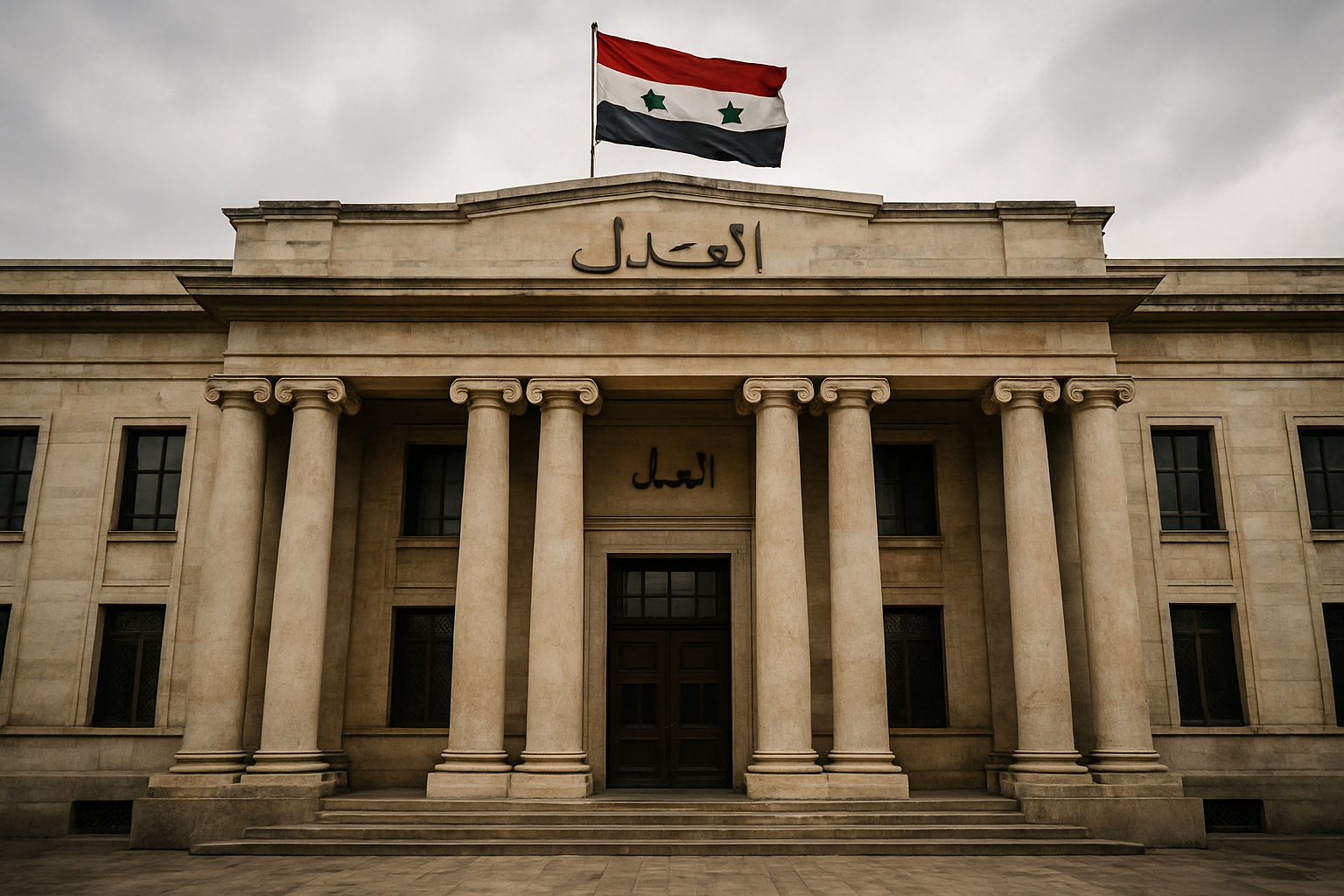
Syria commenced its first historic trial against ousted President Bashar al-Assad and senior officials from his former government on Sunday, marking a pivotal moment in the country's pursuit of transitional justice following the regime's collapse in December 2024.
A Syrian court held its inaugural hearing in what represents the most significant legal reckoning with the Assad era since the regime's downfall. Assad and his brother Maher al-Assad are being tried in absentia after fleeing Syria, while former security official Atef Najib appeared in court in handcuffs, according to state media reports.
Unprecedented Legal Proceedings
The proceedings represent Syria's first formal judicial confrontation with decades of systematic persecution under Assad rule. Atef Najib, a former Syrian army brigadier general and Assad's cousin who headed the Political Security Branch in Daraa province, faces charges of "crimes against the Syrian people."
The significance of Najib's case extends beyond his family connections to Assad. He served during the critical March 2011 period when peaceful protests in Daraa province sparked what became known as the "cradle of the revolution." His arrest in January 2025 following the regime's collapse marked one of the first high-profile detentions of Assad-era officials.
"This represents a fundamental shift toward accountability after decades of impunity."
— Legal Observer, Damascus
The charges against multiple defendants encompass systematic persecution of civilians, torture, extrajudicial killings, and crimes against humanity committed during Assad's rule. Prosecutors maintain allegations of a "pivotal role" in systematic murders, enforced disappearances, and torture by security forces and vigilante groups.
In Absentia Proceedings
The judge announced charges against several high-ranking officials being tried in absentia, including Bashar al-Assad, his brother Maher al-Assad, former Defense Minister Fahd Jassem al-Freij, and former military intelligence chiefs Laith al-Ali and Wafiq Nasser. The hearing was adjourned until May 10, 2026.
Al-Ikhbariya television broadcast footage showing Najib in the defendant's cage during the Fourth Criminal Court proceedings in Damascus. The combination of in-person and in-absentia trials reflects the practical realities of pursuing justice when key figures have fled the country.
Transitional Justice Framework
This landmark case represents Syria's domestic approach to transitional justice after years of limitations on international tribunal options. The proceedings establish a crucial test case for balancing accountability demands with due process requirements and institutional independence during the country's political transition.
The trials coincide with broader efforts to establish legitimate governance structures under Syria's new leadership. International technical assistance has been provided for judicial capacity building, witness protection protocols, and evidence preservation systems essential for fair proceedings.
Daraa province holds particular symbolic significance as the birthplace of Syria's 2011 uprising, which began with peaceful protests before evolving into a prolonged conflict. Najib's role during this period makes his prosecution especially meaningful for communities that suffered systematic repression.
Regional and International Implications
The proceedings parallel European universal jurisdiction cases against Syrian officials and align with documented evidence of systematic torture, enforced disappearances, and mass killings during Assad's rule. International observers view these domestic trials as a significant development in post-conflict accountability mechanisms.
Regional monitoring of these cases extends beyond Syria, as they serve as potential precedents for societies emerging from authoritarian rule and mass atrocities. The success of these domestic accountability mechanisms could influence transitional justice approaches globally.
Challenges Ahead
The trials face substantial challenges including evidence preservation, witness protection, and maintaining fair trial standards during ongoing political transition. The balance between pursuing accountability and promoting reconciliation remains a delicate consideration for the transitional government.
Legal experts emphasize that the success of these proceedings will be measured not only by their outcomes but by their adherence to international standards of due process and judicial independence. The May 10 continuation date represents the beginning of what could be lengthy legal proceedings addressing decades of systematic human rights violations.
Template for Justice
These historic trials may establish crucial precedents for how post-conflict societies address systematic state violence while preserving democratic principles. The proceedings test Syria's commitment to rule of law and institutional independence as the country works to establish stable democratic governance.
As Syria begins this unprecedented chapter in transitional justice, the international community watches closely to see whether domestic courts can effectively address mass atrocities while maintaining the procedural safeguards essential to legitimate judicial proceedings. The outcome may influence how future transitions from authoritarian rule approach the complex balance between accountability and reconciliation.