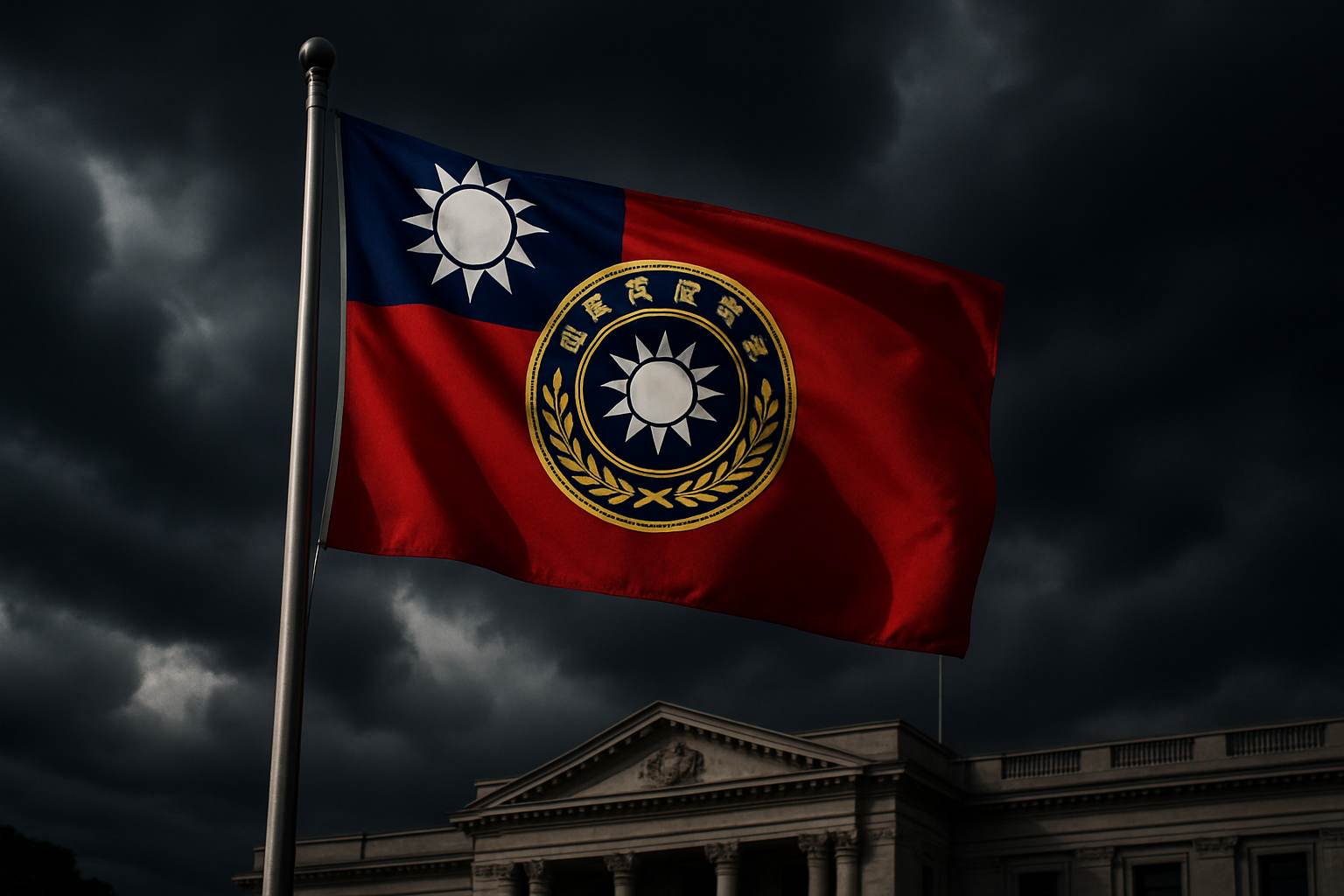
Taiwan's President Lai Ching-te issued a stark warning that if Beijing succeeds in seizing the democratic island, other countries in the Indo-Pacific region would become the "next" targets of Chinese aggression, escalating diplomatic tensions as military pressure continues to mount across the Taiwan Strait.
In an interview with Agence France-Presse, President Lai specifically identified Japan, the Philippines, and other regional democracies as potential future targets should China's territorial ambitions succeed in Taiwan. The warning comes amid sustained Chinese military pressure that has seen aircraft activity increase by 23% in 2025, with daily warplane and naval vessel deployments designed to "exhaust" Taiwan's population according to Defense Minister Wellington Koo.
Regional Security Architecture Under Threat
The Taiwanese president's warning reflects growing concerns about China's broader strategic objectives in the Indo-Pacific. Historical context from recent developments shows China has been employing a "complex and precise" dual-track approach, combining military pressure with attempts to engage Taiwan's opposition parties to circumvent the current Democratic Progressive Party (DPP) government.
"The next countries under threat would be Japan, the Philippines, and others in the Indo-Pacific region," Lai stated during the AFP interview, positioning Taiwan's democratic survival as critical to regional stability. This assessment aligns with recent diplomatic developments where China attempted to rally Southeast Asian nations against Japan following Japanese Prime Minister Sanae Takaichi's controversial November remarks supporting Taiwan, though the effort gained little regional traction.
Escalating Military Pressure Campaign
Taiwan's Defense Minister Wellington Koo has raised alarms about China's systematic military pressure campaign, describing it as designed to "fatigue" and "exhaust" Taiwan's population through sustained psychological warfare. The 23% increase in Chinese military aircraft activity during 2025 represents the most intensive pressure campaign to date, with daily deployments around Taiwan becoming routine.
"This is a systematic campaign to exhaust Taiwan population through military pressure, cyber attacks, and psychological warfare."
— Wellington Koo, Taiwan Defense Minister
Chinese strategy has evolved to include what analysts describe as "complex and precise" tactics combining military exercises, cyber attacks, and psychological warfare as part of Beijing's "great rejuvenation of Chinese nation" objectives. The latest large-scale Chinese military exercises were conducted in December 2025, maintaining constant pressure on Taiwan's defenses.
International Response and Alliance Building
The regional implications of Lai's warning have resonated across the Indo-Pacific, where allies are increasingly coordinating their response to Chinese pressure. Japan's recent historic electoral victory for Prime Minister Sanae Takaichi has strengthened Tokyo's position to support regional security cooperation, with unprecedented U.S. endorsement and a planned March 19 summit with President Trump.
Taiwan officials have welcomed recent Trump-Xi conversations as potentially stabilizing, stating they "believe it will contribute to stabilizing the situation, especially given that China continues to escalate tensions in Taiwan Strait." However, Taiwan maintains "rock solid" confidence in its relationship with the United States despite evolving diplomatic dynamics.
ASEAN's Strategic Balancing Act
Southeast Asian nations have demonstrated reluctance to align with Beijing's anti-Japan campaign despite China being the region's largest trading partner. ASEAN countries prefer multilateral approaches, balancing economic ties with China against security partnerships with Japan and the United States, reflecting sophisticated diplomatic positioning amid great power competition.
The Philippines, specifically mentioned in Lai's warning, has been establishing monitoring stations in strategic locations like Tubbataha Reefs Natural Park in the South China Sea, where Chinese vessels previously operated. This demonstrates the interconnected nature of territorial disputes across the region that Taiwan's president highlighted.
China's Dual-Track Strategy
Beijing has announced intentions to "continue strengthening exchanges and contacts" with Taiwan's main opposition party to "unite efforts" for "great rejuvenation of Chinese nation," representing strategic engagement beyond the current DPP government. This political strategy runs parallel to military pressure, seeking alternative channels to achieve unification goals.
During recent conversations with President Trump, Chinese President Xi Jinping called Taiwan "the most important issue" in China-US relations, urging "prudence" on weapons supplies to the island. This diplomatic engagement occurs alongside continued military exercises and pressure campaigns, illustrating Beijing's multi-faceted approach.
Regional Democratic Stakes
President Lai's warning comes as Taiwan navigates between security needs and diplomatic constraints while upgrading defensive capabilities. The island maintains focus on defense modernization through democratic partnerships, recognizing that Taiwan Strait shipping lanes are crucial for global supply chains and that regional stability affects broader Asia-Pacific security dynamics.
The success of Taiwan's democracy and its survival has implications extending far beyond the island itself. As Lai's warning suggests, the precedent of successful Chinese territorial expansion could embolden further aggression against other democracies in the region, fundamentally altering the strategic balance of power in the Indo-Pacific.
Economic and Strategic Implications
The Taiwan Strait crisis affects broader regional cooperation frameworks, including North Korea nuclear concerns, South China Sea disputes, and Indo-Pacific alliance structures. Democratic allies emphasize the importance of peaceful resolution, while regional powers monitor developments for their trade and security impacts.
Taiwan's strategic position in global semiconductor supply chains adds another dimension to the crisis, with the island maintaining global leadership in advanced chip manufacturing that supports everything from smartphones to advanced military systems worldwide.
Looking Forward
As military tensions continue to escalate with China's sustained pressure campaign, President Lai's warning serves as both a call for regional solidarity and a stark assessment of the stakes involved. The coming months will test whether diplomatic channels can provide peaceful solutions while respecting democratic principles and regional stability.
Taiwan's position requires careful navigation of complex triangulation between the United States' strategic ambiguity supporting Taiwan security, China's pursuit of unification through multiple engagement channels, and the island's own needs to maintain security while preserving diplomatic flexibility. Success in managing these challenges will likely determine not only Taiwan's future but the broader trajectory of democracy and security across the Indo-Pacific region.