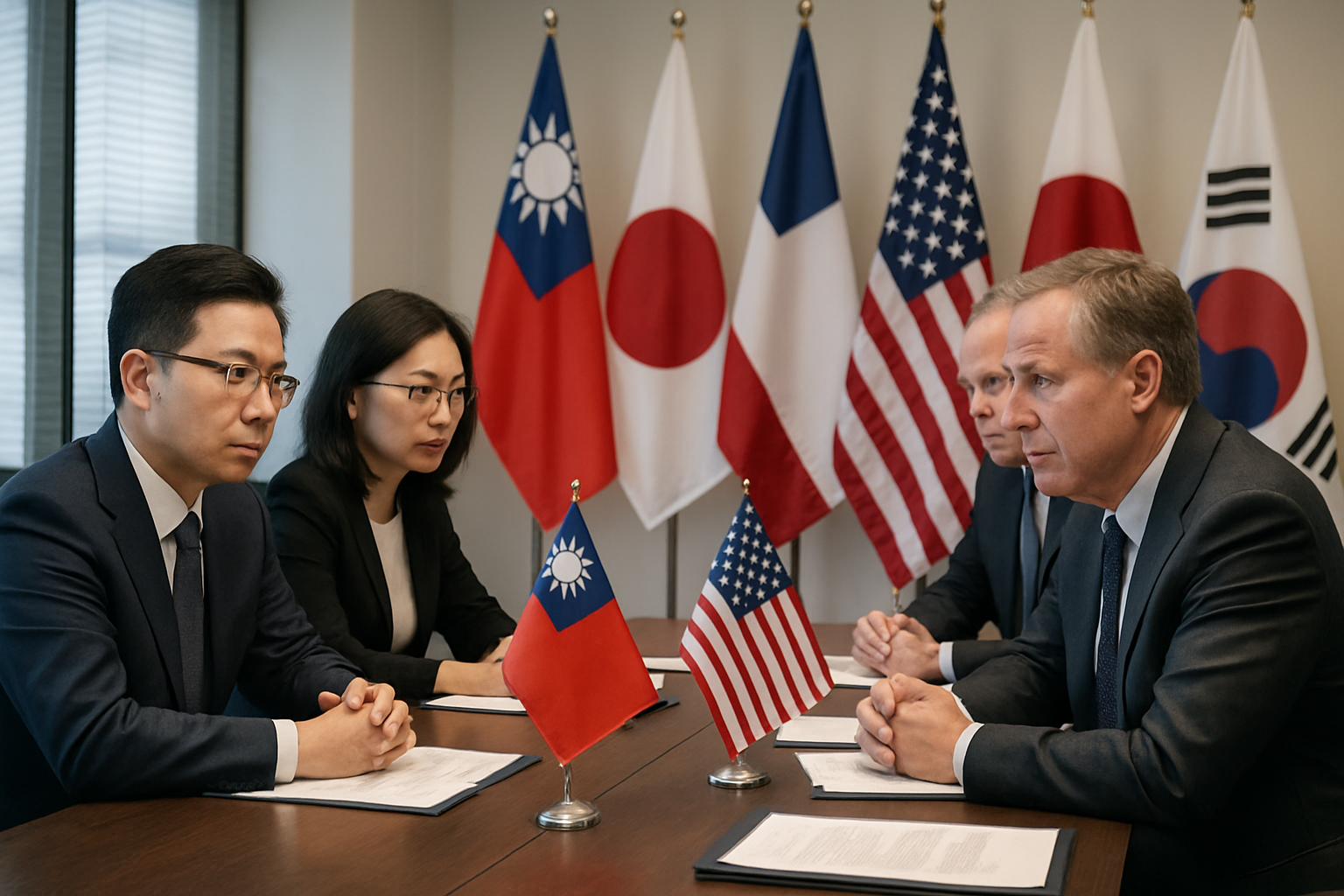
Taiwan negotiators are preparing for final phase trade deal meetings in the United States, marking a critical juncture in bilateral economic relations as regional tensions continue to escalate between Taiwan and mainland China.
The upcoming negotiations come at a particularly sensitive time, as China has announced its intention to offer "firm support for patriotic pro-reunification forces" in Taiwan while simultaneously promising to "strike hard against separatists," according to top Chinese officials responsible for policy toward the democratically-governed island.
Cross-Strait Military Pressure Intensifies
The diplomatic and economic talks occur against a backdrop of heightened military tensions. Taiwan Defense Minister Wellington Koo has raised concerns about China's systematic military pressure campaign designed to "exhaust" and "fatigue" Taiwan's population through sustained military activities.
Chinese military aircraft activity increased by 23% in 2025, with daily warplane and naval vessel deployments around Taiwan representing the most sustained pressure campaign to date. China's latest large-scale military exercises were conducted in late December 2025, demonstrating Beijing's evolving strategy that combines military pressure with cyber attacks and psychological warfare operations.
This dual-track approach by Beijing includes regular military exercises while simultaneously engaging Taiwan's opposition parties to circumvent the current Democratic Progressive Party (DPP) government, as part of China's pursuit of "great rejuvenation of the Chinese nation" through alternative political channels.
Technology Competition Reshapes Regional Dynamics
Meanwhile, mainland China continues its aggressive push for technological self-sufficiency, particularly in critical semiconductor manufacturing. The Shanghai Integrated Circuit Industry Investment Fund, backed by the municipal government, has expanded one of its three funds more than 11-fold, increasing its registered capital by 5.5 billion yuan (US$794 million) to 6 billion yuan.
This massive expansion of Shanghai's chip fund represents part of China's broader pursuit of tech self-reliance amid ongoing technology restrictions and supply chain pressures. The third phase of the fund, known as Shanghai IC Fund III, added two new equity partners as part of China's comprehensive strategy to reduce dependence on foreign semiconductor technology.
The timing of this investment surge coincides with Taiwan's own efforts to strengthen its position as a critical player in global technology supply chains, making the current trade negotiations with the United States particularly significant for maintaining Taiwan's technological edge.
Regional Security Implications
Taiwan officials have maintained confidence in their "rock solid" relationship with the United States despite ongoing diplomatic evolution. They have welcomed recent Trump-Xi conversations as potentially stabilizing factors, with officials stating their belief that improved dialogue "will contribute to stabilizing the situation, especially given that China continues to escalate tensions in Taiwan Strait."
The regional security context extends beyond bilateral Taiwan-China relations, affecting North Korea nuclear concerns, South China Sea disputes, and broader Indo-Pacific alliance structures. Democratic allies throughout the region continue to emphasize the importance of peaceful resolution while monitoring developments closely.
Taiwan Strait shipping lanes remain crucial for global supply chains, with regional powers including Japan, South Korea, and ASEAN nations carefully watching for any developments that could impact trade and security relationships throughout the Asia-Pacific region.
Strategic Balancing Act
The current situation represents a complex diplomatic triangulation where the United States maintains strategic ambiguity while supporting Taiwan's security needs, China advances unification goals through multiple engagement channels including opposition party cultivation, and Taiwan navigates between security requirements and diplomatic constraints.
Success in the upcoming trade negotiations will likely depend on pragmatic solutions that address security concerns while respecting democratic principles and contributing to regional stability. The talks represent part of a broader great power competition dynamic in the Indo-Pacific, with implications extending far beyond bilateral economic arrangements.
As negotiations enter this final phase, international observers will be closely monitoring whether economic partnerships can provide stability amid ongoing security tensions, or whether increasing military pressure will ultimately undermine diplomatic and commercial progress in one of the world's most strategically important regions.
Looking Ahead
The success of these final trade negotiations will serve as an important indicator of whether economic cooperation can continue despite escalating military and political tensions. With China's military activities showing no signs of decreasing and technology competition intensifying, the stakes for these discussions extend well beyond traditional trade considerations.
Regional stability, technological innovation, and democratic governance principles all hang in the balance as negotiators prepare for what could be decisive talks in shaping the future of cross-strait economic relations and broader Indo-Pacific security architecture.