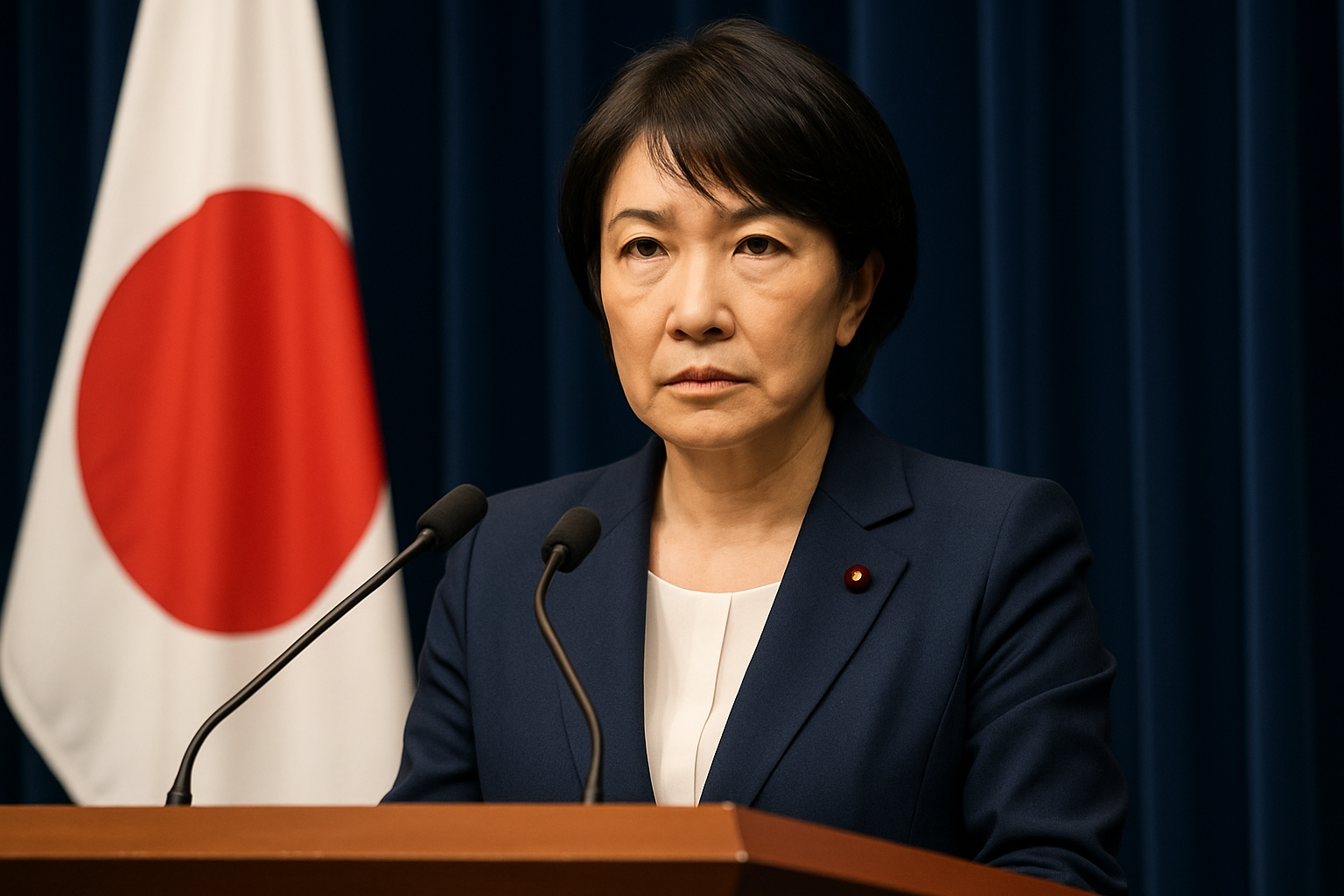
Prime Minister Sanae Takaichi's commanding electoral victory in Japan's snap parliamentary election has sent ripples of concern through Beijing, as China grapples with the potential for strengthened Japan-Taiwan cooperation that could complicate its long-term reunification objectives.
The Liberal Democratic Party's historic landslide, securing 316 of 465 lower house seats and achieving a two-thirds supermajority with coalition partners, represents more than just a domestic political triumph. Beijing's annual work conference on Taiwan affairs, held immediately after the February 9 election results, underscored Chinese leadership's wariness about the regional implications of Takaichi's strengthened position.
Beijing's Strategic Concerns Mount
Wang Huning, the Communist Party's fourth-ranked leader, led discussions at the Taiwan affairs conference that focused heavily on countering what Beijing perceives as growing Japan-Taiwan cooperation. Chinese officials have been particularly concerned about Takaichi's previous statements regarding Taiwan and her administration's potential to deepen security ties with Taipei.
The timing of China's concerns is not coincidental. Chinese military aircraft activity around Taiwan increased by 23 percent in 2025, with daily deployments representing what Taiwan's Defense Minister Wellington Koo described as a systematic campaign to "exhaust" and "fatigue" Taiwan's population. Now, with Takaichi's electoral mandate secured, Beijing faces the prospect of a more assertive Japan that could provide additional support to Taiwan's defensive capabilities.
"The election results have sounded alarm bells in Beijing," noted regional analysts, pointing to how China's earlier attempts to rally Southeast Asian nations against Japan following Takaichi's November remarks on Taiwan had gained little traction among ASEAN members who prefer multilateral approaches to regional disputes.
Economic Promises Face Reality Test
Despite the foreign policy implications dominating regional headlines, Takaichi faces immediate domestic challenges that could undermine her international positioning. Fresh government data reveals that inflation-adjusted wages shrank by 1.3 percent in 2025, extending a three-year slide in real incomes that directly contradicts her campaign promises of economic revitalization.
The average employee's purchasing power continues to erode as essential goods prices outstrip wage increases, creating a gap between Takaichi's "trickle-down" economic rhetoric and the lived reality of Japanese households. This economic pressure comes at a particularly sensitive time, as 54 percent of voters cited inflation as their primary concern during the election campaign.
"The data suggests voters' faith in the Prime Minister's brand of prosperity may soon be tested as the reality of persistent wage decline becomes apparent."
— Economic analyst, commenting on post-election economic data
The disconnect between campaign promises and economic fundamentals could limit Takaichi's ability to maintain the political capital necessary for ambitious foreign policy initiatives, particularly those that might provoke Chinese economic retaliation.
Regional Security Architecture Evolving
Takaichi's electoral success occurs against a backdrop of intensifying great power competition in the Asia-Pacific region. Her administration has already benefited from unprecedented U.S. presidential endorsement from Donald Trump, with a March 19 bilateral summit planned to strengthen security cooperation frameworks.
The enhanced U.S.-Japan partnership comes as regional security dynamics continue to evolve. The Quad partnership between the United States, Japan, Australia, and India has gained momentum, while China's military pressure campaign around Taiwan has intensified. Takaichi's supermajority now provides her with the legislative authority to pursue constitutional reforms that could enable expanded Japanese defense capabilities.
For Beijing, this represents a convergence of unfavorable trends: a strengthened Japanese government with enhanced legislative power, closer U.S.-Japan coordination, and the potential for more direct Japanese involvement in Taiwan's security architecture. The combination threatens to complicate China's calculations regarding the timing and feasibility of any future Taiwan operation.
The 'Iron Lady' Phenomenon
Takaichi's political persona, often compared to Margaret Thatcher and dubbed Japan's "Iron Lady," has become central to understanding her approach to regional challenges. Her background as a former heavy metal drummer who admired Thatcher's conservative principles has translated into a hardline stance on China that resonates with Japanese voters concerned about regional security.
The snap election gamble that Takaichi took—promising to resign if her party failed to achieve a majority—paid off spectacularly, providing her with unprecedented political authority in modern Japanese democracy. This mandate enables her to pursue policies that previous administrations might have found politically difficult to implement.
However, the "Iron Lady" image also carries risks. Takaichi's confrontational approach toward China could escalate regional tensions at a time when economic interdependence still provides incentives for diplomatic moderation. Her administration must balance domestic political expectations for a tough China policy with the practical need to maintain stable economic relationships.
Taiwan's Strategic Calculation
From Taiwan's perspective, Takaichi's victory offers both opportunities and risks. The prospect of enhanced Japanese support comes as Chinese military pressure continues to intensify, with Beijing employing what defense officials describe as "complex and precise" tactics combining military exercises, cyber attacks, and psychological warfare.
Taiwan officials have welcomed Trump's conversations with Chinese President Xi Jinping as potentially stabilizing, but they remain focused on strengthening defensive capabilities through partnerships with democratic allies. Japan's enhanced role in regional security cooperation could provide crucial support for Taiwan's defense modernization efforts.
Yet Taiwan must also be careful not to become overly dependent on Japanese support in ways that might provoke premature Chinese action. The island's leadership continues to emphasize the importance of maintaining its "rock solid" relationship with the United States while developing complementary partnerships with regional democracies.
ASEAN's Balancing Act
The regional response to Japan's political developments illustrates the complex balancing act that Southeast Asian nations continue to perform between competing great powers. China's failed attempt to rally ASEAN support against Japan following Takaichi's Taiwan statements revealed the limits of Beijing's economic leverage when it conflicts with regional security interests.
ASEAN members increasingly recognize that their long-term prosperity depends on maintaining stability in the Taiwan Strait, which serves as a crucial shipping lane for global trade. This pragmatic approach has led to greater receptivity to Japanese initiatives that promote regional stability while providing alternatives to exclusive dependence on Chinese economic relationships.
The preference for multilateral approaches over bilateral confrontation reflects ASEAN's institutional culture, but it also represents a strategic choice to maintain room for maneuver as great power competition intensifies. Takaichi's success in building regional partnerships will depend on her ability to work within this multilateral framework rather than demanding exclusive alignment with Japanese positions.
Economic Vulnerabilities and Strategic Constraints
Despite the political triumph of Takaichi's election victory, underlying economic vulnerabilities could constrain her administration's ability to fulfill ambitious regional security commitments. The persistent decline in real wages affects not just domestic political support but also Japan's capacity to fund expanded defense capabilities and foreign assistance programs.
Japan's demographic challenges—with 30 percent of the population over 65 and the world's lowest birth rate in 2024—compound these economic pressures by limiting the human resources available for both economic growth and defense modernization. These constraints require careful prioritization of strategic objectives and realistic assessment of what Japan can accomplish in the regional security architecture.
The success of Takaichi's "trickle-down" economic policies will be crucial for maintaining the public support necessary for sustained engagement in regional security competitions. If wage stagnation continues while defense spending increases, domestic political pressure could force a recalibration of Japan's international commitments.
Looking Ahead: Implications for Regional Order
The confluence of Takaichi's electoral mandate, China's intensified pressure on Taiwan, and evolving U.S. strategic commitments creates a dynamic environment where miscalculation risks are elevated. Beijing's immediate post-election focus on Taiwan policy suggests that Chinese leaders recognize the window for achieving reunification through political pressure alone may be narrowing.
For Japan, the challenge lies in leveraging its strengthened political position to enhance regional deterrence without provoking Chinese actions that could destabilize the very order that Tokyo seeks to preserve. This requires sophisticated diplomatic coordination with the United States and regional partners to ensure that enhanced capabilities serve stability rather than escalation.
The coming months will test whether Takaichi can successfully navigate the competing pressures of domestic economic challenges and regional security imperatives. Her success or failure in managing these contradictions will have implications that extend far beyond Japan's borders, potentially reshaping the strategic balance in one of the world's most consequential regions.
As Beijing recalibrates its Taiwan strategy in response to Japan's political evolution, the stakes for all parties continue to rise. The "Iron Lady's" electoral triumph may have won her domestic political authority, but translating that victory into effective regional leadership while managing economic realities at home represents her administration's defining challenge.