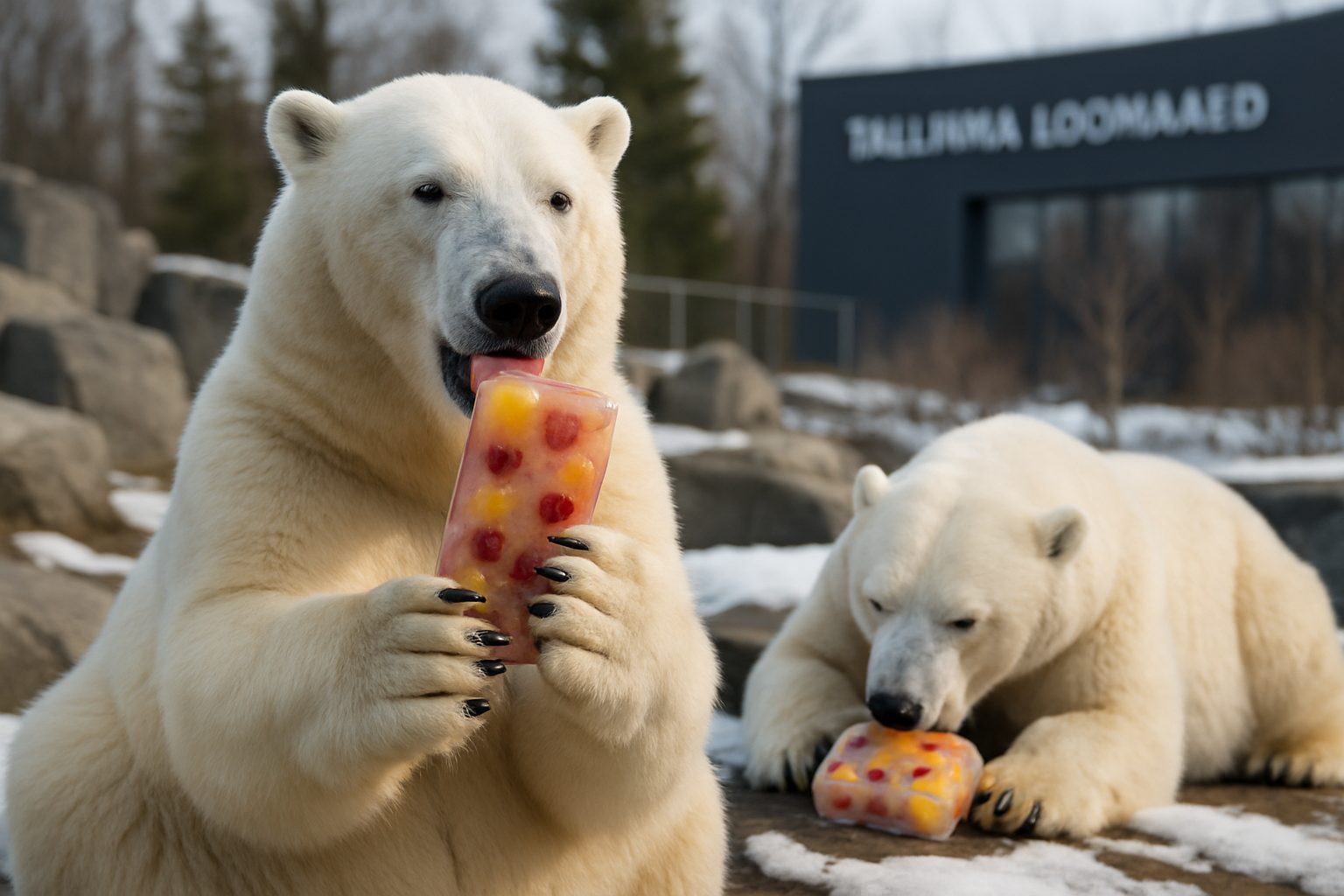
Estonia's Tallinn Zoo marked International Polar Bear Day with an extraordinary culinary celebration, serving their polar bears special ice cream treats made with fruit and blood—a unique delicacy that transformed the typically lazy Arctic giants into excited participants in a day dedicated to their conservation.
Friday, February 27, 2026, saw the zoo's polar bears break from their usual routine of lounging around their enclosure to enjoy what nature education specialist Heiko Kruus described as their "favorite treat" during special occasions. The unusual ice cream, incorporating both fruit and blood, represents a carefully crafted enrichment activity designed to stimulate the bears' natural behaviors and provide essential nutrients.
A Special Day for Arctic Ambassadors
International Polar Bear Day, established to raise awareness about the challenges facing these iconic Arctic predators, provided the perfect opportunity for Tallinn Zoo to showcase their commitment to polar bear welfare and conservation education. According to Kruus, who spoke to ERR news service, the bears typically spend most of their day in a state of relaxed inactivity—behavior that mirrors their wild counterparts' energy conservation strategies.
"On special days like this, they get their favorite treat: ice cream with fruit and blood," Kruus explained, highlighting how the zoo uses such occasions to provide both enrichment and educational opportunities for visitors.
The blood component, while perhaps surprising to casual observers, serves important nutritional and behavioral functions. In the wild, polar bears are apex predators whose diet consists primarily of seals and other marine mammals, making blood a natural and essential part of their nutritional requirements. The addition of fruit provides vitamins and adds variety to their diet while creating an engaging sensory experience.
Conservation Through Education
The celebration comes at a critical time for polar bear conservation globally. Climate change continues to threaten Arctic ice habitats, with the bears serving as powerful symbols of environmental vulnerability. Tallinn Zoo's educational programs, exemplified by events like International Polar Bear Day, play a crucial role in connecting urban populations with Arctic conservation issues.
Estonia's commitment to environmental stewardship aligns well with polar bear conservation messaging. The country has emerged as a leader in sustainable practices, with 88% renewable electricity and Europe's largest battery storage system serving 90,000 households. This environmental leadership provides a meaningful context for the zoo's conservation education efforts.
"These special treats aren't just about entertainment—they're about connecting people with the reality of what polar bears need to survive and thrive."
— Conservation Education Perspective
The Science of Polar Bear Enrichment
Modern zoo management emphasizes enrichment activities that stimulate animals' natural behaviors while supporting their physical and psychological well-being. The fruit and blood ice cream represents sophisticated understanding of polar bear biology and behavior patterns.
In their natural Arctic environment, polar bears experience seasonal variations in food availability, with periods of abundant hunting followed by times of reduced activity. Zoo enrichment programs attempt to replicate these natural rhythms through varied feeding schedules, different food presentations, and special treats during significant dates.
The ice cream's preparation likely involves careful consideration of nutritional content, temperature, and presentation methods that encourage natural feeding behaviors such as manipulation, investigation, and extended consumption time.
Global Context of Polar Bear Conservation
International Polar Bear Day, observed annually on February 27, serves as a focal point for global conservation efforts. With polar bear populations distributed across five Arctic nations—the United States, Canada, Russia, Norway, and Denmark—international cooperation remains essential for species protection.
Recent climate data reinforces the urgency of conservation efforts. January 2026 marked the hottest month in recorded history, representing the 18th consecutive month of global temperatures exceeding 1.5°C above pre-industrial levels. This sustained warming threatens Arctic ice formation patterns that polar bears depend on for hunting and denning.
Zoos like Tallinn's serve as critical partners in polar bear conservation through research, breeding programs, public education, and fundraising for field conservation projects. The playful ice cream celebration masks serious underlying conservation science and international cooperation efforts.
Estonia's Arctic Connection
Estonia's geographic position and cultural heritage create natural connections to Arctic conservation issues. The country's experience with harsh winters and ice-dependent transportation—including recent ice road openings connecting mainland Estonia to offshore islands—provides residents with intuitive understanding of Arctic environmental challenges.
The timing of the polar bear celebration also coincides with Estonia's coldest winter in 25 years, creating atmospheric authenticity for Arctic-themed conservation education. Record electricity consumption of 1,723 megawatts demonstrates the energy demands of extreme cold, offering parallels to the metabolic challenges polar bears face in their natural environment.
Visitor Impact and Educational Outcomes
Special events like International Polar Bear Day serve multiple educational functions beyond simple entertainment. They create memorable experiences that connect visitors emotionally with conservation issues, provide opportunities for guided learning about Arctic ecosystems, and demonstrate the complex care requirements for charismatic megafauna.
The unusual ice cream treat inevitably generates visitor interest and conversation, creating natural opportunities for zoo educators to discuss polar bear biology, Arctic ecosystem challenges, climate change impacts, and individual conservation actions.
Research consistently shows that direct animal encounters and unique experiences increase visitor engagement with conservation messages and subsequent pro-environmental behaviors. The fruit and blood ice cream celebration exemplifies how creative programming can transform routine animal care into powerful conservation education.
Looking Ahead: Conservation Challenges and Opportunities
As climate change continues reshaping Arctic environments, zoos face evolving roles in polar bear conservation. Beyond traditional captive breeding and research functions, modern zoos increasingly serve as conservation education centers, research facilities studying adaptation strategies, and fundraising platforms supporting field conservation work.
Tallinn Zoo's International Polar Bear Day celebration represents broader trends in conservation education—using engaging, memorable experiences to connect urban populations with distant environmental challenges while building support for long-term conservation efforts.
The success of such programs ultimately depends on their ability to translate momentary wonder into lasting conservation awareness and action. The sight of polar bears enjoying their special treats may seem simple, but it represents sophisticated conservation education designed to build the public support essential for Arctic conservation success.
As visitors watch the bears savor their fruit and blood ice cream, they participate in a conservation story that extends from Estonian zoo grounds to the remote Arctic, connecting local education efforts with global environmental challenges through the universal appeal of charismatic wildlife and creative educational programming.