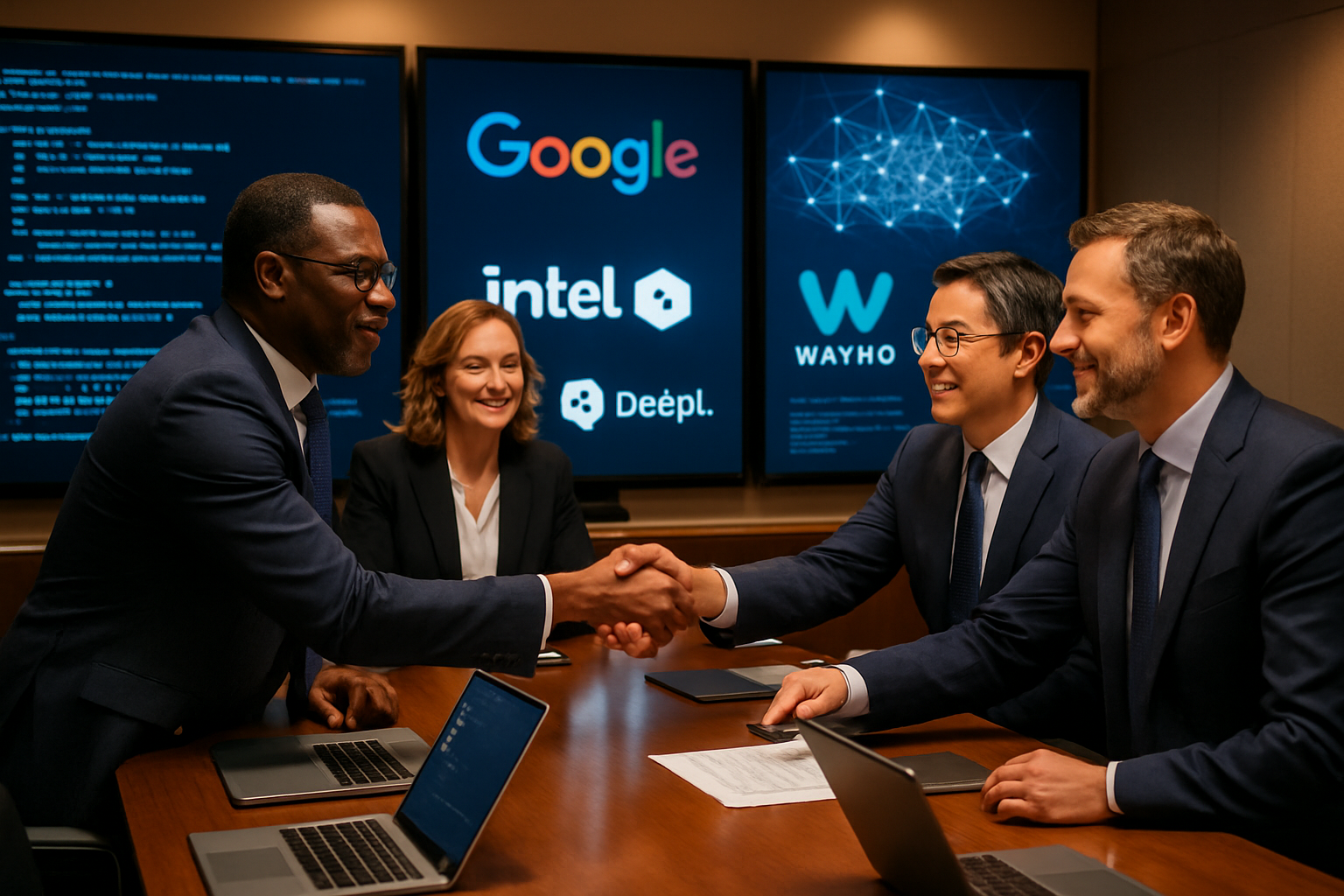
Technology giants are forging strategic partnerships and launching innovative AI products at an unprecedented pace in early February 2026, as the industry grapples with a sixfold increase in memory prices while racing to capitalize on the artificial intelligence boom.
Multiple significant developments emerged over the past week, signaling a shift in global AI dynamics as companies seek cost-effective alternatives to expensive infrastructure and pursue collaborative approaches to overcome supply chain constraints affecting the semiconductor industry.
Chinese AI Models Gain Global Traction
OpenClaw, the breakout AI agent that became a global sensation following its late 2025 launch, announced Friday that it has integrated Chinese startup Moonshot AI's latest Kimi K2.5 and Kimi Coding agent into its free service offerings. The platform also added support for MiniMax, another Chinese foundational AI developer, marking a significant endorsement of Chinese AI technology on the global stage.
Industry analysts attribute this adoption to the favorable balance of cost and performance offered by Chinese open-source artificial intelligence models, a crucial advantage as companies worldwide seek alternatives to increasingly expensive AI infrastructure. The move comes amid the ongoing memory supply crisis that has seen computer memory prices surge sixfold, dramatically increasing operational costs for AI companies.
"Chinese AI models are demonstrating exceptional value for money at a time when infrastructure costs are skyrocketing across the industry,"
— Tech industry analyst quoted by South China Morning Post
Strategic Cloud and Enterprise Partnerships
Google Cloud and Liberty Global struck a five-year AI partnership this week, representing another major collaboration as cloud providers expand their artificial intelligence capabilities to enterprise customers. The partnership, announced Tuesday, underscores the growing demand for AI-powered business solutions as companies across sectors rush to integrate artificial intelligence into their operations.
Meanwhile, DeepL, the global AI product and research company based in Cologne, Germany, announced the general availability of its DeepL Voice API. This innovative product enables developers to integrate real-time voice transcription and translation capabilities directly into their applications, significantly enhancing multilingual support for businesses operating in increasingly global markets.
The DeepL Voice API allows businesses to stream audio and receive instant multilingual translations, addressing a critical need as remote work and international collaboration continue to expand. The launch represents a significant step forward in making AI-powered communication tools more accessible to developers and businesses of all sizes.
Semiconductor Industry Collaboration
In the semiconductor sector, a new Japan-US collaboration is taking shape as SAIMEMORY, a semiconductor memory startup established by SoftBank, signed an agreement with US chipmaker Intel to jointly pursue the commercialization of next-generation memory technology. This partnership comes at a critical time when memory supply constraints are hampering AI development across the industry.
The collaboration between SoftBank's startup and Intel represents a strategic response to the current memory crisis affecting AI companies worldwide. As computer memory prices have increased sixfold due to generative AI development demand outstripping supply, partnerships like this could prove crucial in developing new memory technologies and manufacturing capabilities.
Autonomous Vehicle Investment Surge
Waymo, the robotaxi pioneer owned by Alphabet, secured another $16 billion in funding to accelerate its global expansion plans. The massive investment injection demonstrates continued confidence in autonomous vehicle technology despite broader market uncertainties and reflects the significant capital requirements for scaling AI-powered transportation solutions.
The funding will help fuel Waymo's ambition to provide self-driving car rides throughout the world, building on its existing operations in select US cities. The investment comes as the autonomous vehicle industry faces increasing competition and regulatory challenges while working to prove the commercial viability of robotaxi services.
Public Sector AI Adoption Accelerates
New research from Appian reveals that AI adoption in the public sector has gained rapid traction, with 70% of public sector workers reporting that AI is now integrated into their daily tasks. This represents a significant increase from 58% just one year ago, placing the public sector close behind large enterprises in AI implementation.
However, the research also highlights that progress in the public sector is being hampered by fragmented systems and data challenges. Australian public sector organizations, in particular, are struggling with integration issues as they attempt to implement AI solutions across diverse government departments and agencies.
Industry Implications and Future Outlook
These developments collectively illustrate the technology industry's response to current challenges while positioning for future growth. The adoption of Chinese AI models by global platforms like OpenClaw suggests a pragmatic approach to cost management during a period of supply chain stress.
The semiconductor partnerships, particularly the SoftBank-Intel collaboration, indicate that companies are taking long-term approaches to address the memory supply crisis that has become a significant constraint on AI development. With memory manufacturers Samsung, SK Hynix, and Micron operating at full capacity but unable to meet demand, new partnerships and technologies will be essential for continued AI advancement.
The substantial funding raised by Waymo demonstrates that investors remain confident in AI applications despite current infrastructure challenges, while the expansion of AI into government operations shows the technology's growing acceptance in traditionally conservative sectors.
As the industry navigates the ongoing memory supply crisis and explores new collaborative models, these February 2026 developments suggest that strategic partnerships and cost-effective alternatives will play increasingly important roles in shaping the future of artificial intelligence development and deployment.