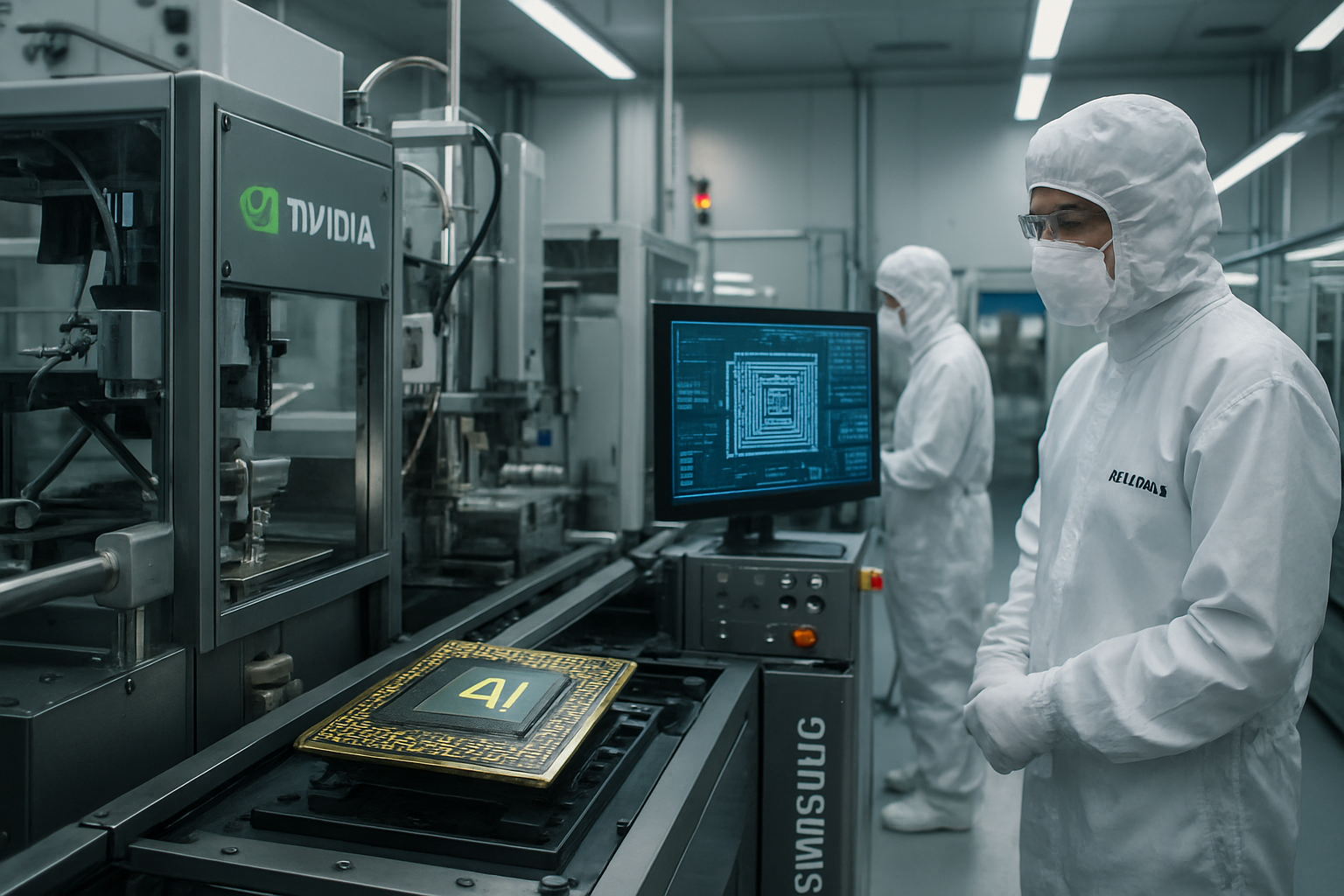
Technology giants including Nvidia and Samsung are confronting an increasingly complex regulatory environment while simultaneously racing to expand AI chip production capabilities, creating unprecedented challenges in a global semiconductor market already strained by sixfold price increases and supply constraints expected to persist until 2027.
Nvidia CEO Jensen Huang recently confirmed the company is restarting production of high-performance chips for clients in China, according to sources familiar with the matter. This development comes as the technology sector navigates what industry analysts describe as the most critical inflection point since the internet's commercialization, with artificial intelligence transitioning from experimental applications to essential business infrastructure.
The Global Semiconductor Crisis Context
The current regulatory challenges unfold against the backdrop of an unprecedented global memory crisis affecting Samsung, SK Hynix, and Micron, all operating at full capacity yet unable to meet explosive AI demand. Memory chip prices have surged sixfold, driving consumer electronics costs up 20-30%, with shortages expected to persist until 2027 when new fabrication facilities come online.
This infrastructure crisis creates what industry experts call a "critical vulnerability window," forcing companies to develop memory-efficient algorithms and alternative processing strategies while navigating increasingly complex international regulatory frameworks.
"We're witnessing the most sophisticated technology governance attempt since internet commercialization," explains a senior technology policy analyst. "Companies must now balance innovation acceleration with safety governance while maintaining international competitiveness."
— Industry Policy Expert
Regulatory Intensification Across Multiple Jurisdictions
The regulatory landscape has intensified dramatically across multiple jurisdictions, with Spain implementing the world's first criminal executive liability framework for tech platforms, creating personal imprisonment risks for technology executives. France has escalated enforcement through cybercrime raids on AI companies, while the European Commission investigates Digital Services Act violations with potential billion-dollar penalties.
The United Nations has established an Independent Scientific Panel with 40 experts under Secretary-General António Guterres, marking the first fully independent global AI assessment body. This coordinated international approach represents the most sophisticated attempt to govern rapidly evolving digital technologies while preserving innovation incentives.
Simultaneously, AMD CEO Lisa Su is reportedly planning to visit Samsung's chip manufacturing facilities in South Korea to discuss expanding business relationships, while Samsung executives anticipate AI driving strong chip demand throughout 2026. These strategic partnerships emerge as companies seek to navigate supply constraints and regulatory complexities through enhanced collaboration.
The "SaaSpocalypse" Market Disruption
The technology sector faces what analysts term the "SaaSpocalypse" - the elimination of hundreds of billions in traditional software market capitalization as AI systems demonstrate direct replacement capabilities for conventional solutions. German analysts describe this as an "apocalypse for software houses," with 20% stock declines across the sector.
Microsoft's Mustafa Suleyman predicts AI will replace the majority of office workers within two years, with lawyers and auditors facing displacement within 18 months. However, regional variations emerge in response strategies, with Indian IT giants like Infosys, Wipro, and HCL implementing comprehensive worker transition programs rather than mass layoffs.
Military-Civilian AI Tensions
Adding complexity to the regulatory environment, reports indicate the Trump administration is defending the blacklisting of Anthropic in U.S. court, highlighting tensions between military AI applications and civilian safety restrictions. The Pentagon has successfully integrated ChatGPT into military systems serving 800+ million weekly users, while pressuring AI companies to deploy systems on classified networks without traditional safety restrictions.
Ukrainian forces have deployed AI-enhanced drone systems with improved low-light capabilities, and one-third of countries have agreed to AI warfare governance frameworks, though the United States and China abstain from comprehensive commitments. This creates a complex intersection between civilian AI development and national security applications.
Successful Integration Models Emerge
Despite these challenges, successful AI integration models are emerging globally. Canada has implemented AI teaching assistants in universities while maintaining critical thinking standards. Malaysia operates the world's first AI-integrated Islamic school, successfully combining technology with traditional learning approaches. Singapore's WonderBot 2.0 demonstrates successful heritage education AI applications.
These success models share common characteristics: treating AI as amplification tools rather than wholesale replacements for human capabilities, maintaining sustained institutional commitment, engaging stakeholders throughout implementation, and preserving cultural sensitivity while leveraging computational advantages.
Infrastructure Investment Despite Constraints
Despite supply constraints, massive corporate investments continue. Alphabet has committed $185 billion to AI infrastructure in 2026 - the largest single-year corporate technology investment in history. Amazon's development plans exceed $1 trillion. The World Bank projects AI water demand will reach 4.2-6.6 billion cubic meters by 2027 for data center cooling, equivalent to 4-6 times Denmark's annual water consumption.
These investments occur as Chinese companies achieve significant breakthroughs, with DeepSeek reportedly training models using restricted Nvidia Blackwell chips despite U.S. export controls, demonstrating systematic approaches to accessing advanced technology while developing indigenous capabilities.
The March 2026 Critical Inflection Point
Industry experts identify March 2026 as representing what they term a "civilizational choice point" - a critical juncture determining whether AI serves democratic values and human flourishing or becomes a tool for exploitation and control beyond democratic accountability.
Success requires unprecedented coordination between governments, technology companies, educational institutions, and civil society. The challenge involves balancing innovation acceleration with safety governance, commercial interests with human welfare, and national competitiveness with international cooperation.
Global Competitive Dynamics
The competitive landscape has evolved beyond traditional Silicon Valley concentration toward a multipolar AI ecosystem. China's technological advancement despite restrictions demonstrates adaptability in creating sustainable competitive advantages. European digital sovereignty efforts, including Deutsche Telekom's Industrial AI Cloud in Munich, represent regional attempts to reduce dependency on American platforms.
The emergence of this multipolar landscape creates new opportunities for international cooperation while also complicating regulatory coordination efforts. Countries implementing comprehensive approaches - including infrastructure investment, educational reform, and worker retraining programs - show greater resilience during this technological transformation.
Looking Ahead: Sustainable Development Models
The most promising path forward involves sophisticated human-AI collaboration that amplifies human capabilities while preserving creativity, cultural understanding, and emotional intelligence. Organizations succeeding in this transition treat AI as sophisticated amplification tools serving specific human goals rather than wholesale replacements for human judgment and creativity.
The window for effective coordinated action is narrowing as technological development accelerates faster than regulatory frameworks can adapt. Decisions made in 2026 will likely determine the human-AI relationship trajectory for the remainder of the century, making current regulatory challenges not merely technical issues but fundamental questions about democratic governance in the digital age.
As technology companies navigate these complex regulatory pressures while expanding production capabilities, their success will depend on developing sustainable business models that prioritize human welfare alongside technological advancement. The stakes extend far beyond individual corporate performance to encompass the broader question of whether democratic institutions can effectively govern the technologies that will shape human society for decades to come.