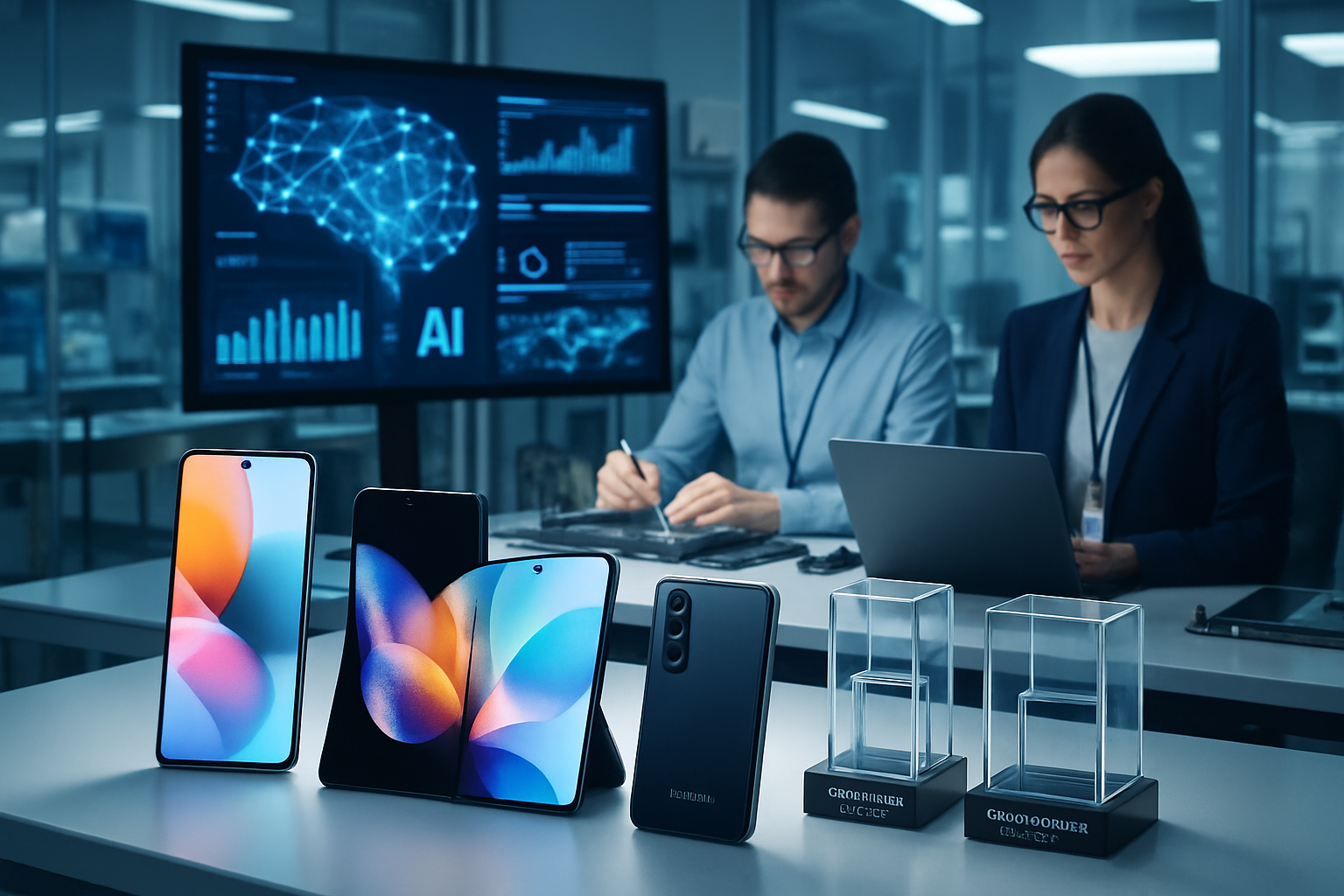
Global technology markets are witnessing an unprecedented surge of innovation as Samsung unveils revolutionary smartphone features, AI-powered digital payment systems advance, and breakthrough battery technologies emerge to address the ongoing semiconductor crisis affecting consumer electronics worldwide.
The technology industry is experiencing what analysts describe as the most significant transformation since the internet's emergence, driven by artificial intelligence integration, advanced hardware capabilities, and innovative solutions to supply chain constraints that have plagued the sector throughout 2026.
Samsung Galaxy S26 Ultra: Privacy-First Innovation
Samsung Electronics has positioned itself at the forefront of smartphone innovation with the Galaxy S26 Ultra, featuring industry-first hardware-level Privacy Display technology that controls pixel light dispersion to prevent side-angle viewing. This revolutionary feature eliminates "shoulder surfing" concerns without requiring permanent screen protectors, allowing users to activate privacy protection on-demand while maintaining full display quality when privacy is unnecessary.
The device integrates Samsung's third-generation Galaxy AI system, representing a comprehensive multi-agent ecosystem spanning Notes, Clock, Gallery, Reminders, and Calendar applications. The AI integration extends to third-party applications through confirmed partnerships, including a strategic collaboration with Perplexity AI that enables conversational search, intelligent content generation, predictive scheduling, and advanced image analysis capabilities.
"The Galaxy S26 series represents Samsung's evolution from a traditional smartphone manufacturer to an AI-powered technology platform during this critical industry transformation period."
— Technology Industry Analysis, February 2026
Technical specifications include a QHD+ 6.9-inch display, 200MP main camera with computational photography AI, and design improvements featuring a thinner profile with a raised camera island replacing individual lenses. The device incorporates center-aligned hole-punch display design and rounded corners for enhanced ergonomics, demonstrating Samsung's commitment to both functionality and user experience.
Revolutionary Battery Technology Developments
Amid growing consumer demand for enhanced battery performance, Samsung is taking a cautious approach to silicon-carbon battery technology adoption. In an exclusive interview with TechRider.ro, Tiberiu Dobre, Vice President of Samsung Romania, detailed the company's position on new energy storage solutions and the efficiency strategy chosen for the Galaxy series.
While competitors rush to introduce silicon-carbon storage solutions, Samsung maintains rigorous testing standards before implementing new battery technologies. This measured approach contrasts with the rapid adoption strategies of other smartphone manufacturers who prioritize speed-to-market over comprehensive safety and performance validation.
The cautious strategy reflects Samsung's commitment to meeting internal quality standards before releasing breakthrough technologies to consumers. This approach has proven beneficial as the company navigates the global memory crisis affecting semiconductor production, where vertical integration provides competitive advantages over rivals dependent on external suppliers.
AI Integration and Digital Payment Evolution
The smartphone industry's transformation extends beyond hardware innovations to encompass sophisticated artificial intelligence integration across consumer electronics platforms. Samsung's Galaxy AI ecosystem demonstrates the shift from experimental AI features to essential infrastructure that enhances daily user interactions through predictive capabilities and intelligent automation.
Digital payment systems are simultaneously evolving to incorporate AI-powered security features, fraud detection algorithms, and personalized financial management tools. These developments represent the convergence of hardware capabilities with intelligent software systems that adapt to user behavior patterns and preferences.
The integration challenges facing manufacturers include balancing on-device processing capabilities with cloud-based AI services while maintaining user privacy and data security. Samsung's approach combines local neural processing units with encrypted cloud channels, ensuring both performance optimization and privacy protection for sensitive information.
Global Supply Chain Challenges
The technology industry continues to face significant supply chain constraints, with memory semiconductor prices experiencing a sixfold increase due to unprecedented AI development demand. Memory manufacturers Samsung, SK Hynix, and Micron are operating at full capacity but remain unable to meet the explosive demand from major technology companies for AI training and data center operations.
Consumer electronics costs have increased 20-30% over the past year, affecting smartphones, computers, gaming consoles, and smart home technologies. The crisis is expected to persist until 2027 when new fabrication facilities come online, requiring 18-24 months for construction and equipment installation.
Samsung's vertical integration strategy, encompassing semiconductor manufacturing, display production, and device assembly, provides significant competitive advantages during this constrained supply environment. The company's ability to prioritize internal production requirements while maintaining innovation momentum demonstrates the value of comprehensive manufacturing capabilities.
Industry Response to Infrastructure Constraints
Technology companies are adapting to supply chain limitations through innovative approaches including memory-efficient algorithms, alternative computing architectures, and strategic partnerships. The constraints have accelerated development of edge computing solutions and distributed processing systems that reduce dependence on centralized data center resources.
Major corporate investments continue despite infrastructure challenges, with Alphabet committing $185 billion to AI infrastructure development in 2026, while Amazon has announced over $1 trillion in AI development plans. These investments signal industry confidence in long-term transformation potential despite near-term supply constraints.
The semiconductor shortage is driving fundamental shifts toward supply chain diversification, strategic stockpiling, and domestic manufacturing capabilities. Companies with existing supplier relationships and financial resources are positioning themselves advantageously for the remainder of the decade.
Consumer Impact and Market Dynamics
Consumers are experiencing delayed product launches, reduced feature sets in some devices, and extended replacement cycles, particularly affecting mid-range and budget device segments. Gaming console availability remains constrained, while business IT procurement costs have risen substantially across all technology categories.
Industry experts recommend completing technology purchases sooner rather than later, as prices are expected to continue rising throughout 2026. The premium smartphone market has shown resilience, with consumers willing to pay higher prices for advanced features including AI capabilities and enhanced privacy protection.
The crisis has also created opportunities for innovation, as manufacturers develop more efficient hardware designs and software optimizations to maximize performance within resource constraints. This efficiency focus may ultimately result in more refined products that deliver superior user experiences with reduced resource consumption.
Looking Forward: Technology Transformation
The technology industry transformation represents a critical inflection point from experimental AI integration to essential infrastructure deployment across consumer electronics. Success requires unprecedented coordination between innovation acceleration and responsible development, commercial interests and human welfare considerations.
Samsung's Privacy Display technology establishes hardware-level privacy precedents that could influence industry standards for mobile device security. The success of such innovations may accelerate similar technology adoption across the smartphone industry, reshaping consumer expectations for privacy features in flagship devices.
The resolution of supply chain constraints anticipated in late 2027 depends on continued investment, geopolitical stability, and successful deployment of new manufacturing facilities. The competitive positioning for the remainder of the decade will likely be determined by companies' ability to navigate these unprecedented challenges while maintaining innovation momentum.
As the industry moves toward AI-essential infrastructure, the convergence of hardware capabilities, intelligent software systems, and innovative manufacturing approaches will define the next generation of consumer technology experiences. The current period represents the most significant transformation in consumer electronics since the smartphone revolution, with implications extending far beyond individual device capabilities to encompass fundamental changes in how technology serves human needs and enhances daily life.