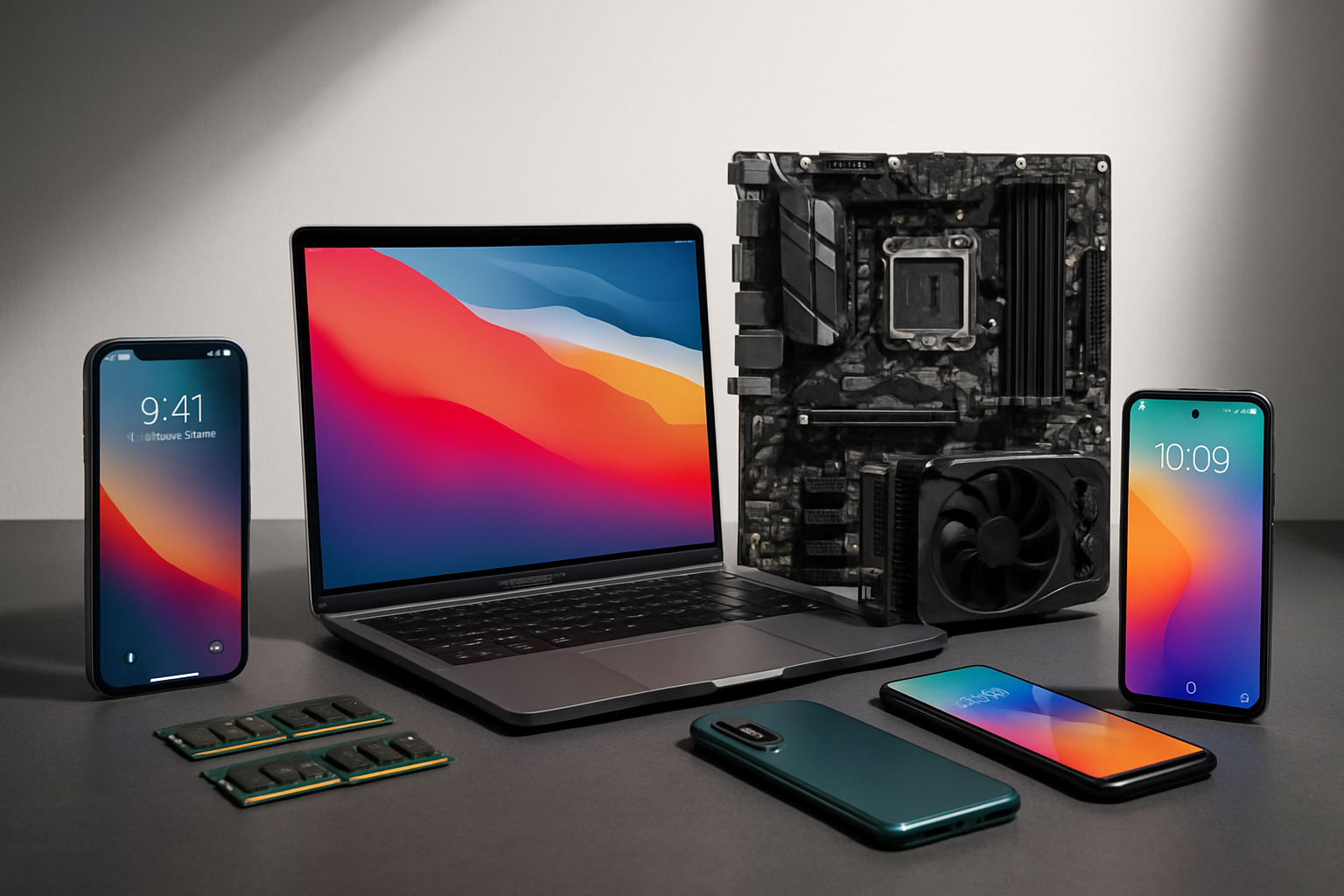
The global technology sector faces an unprecedented crisis as rising memory costs threaten to devastate personal computer sales while smartphone manufacturers struggle to innovate amid severe supply chain constraints, industry analysts warned this week.
According to research firm Omdia, worldwide shipments of desktops, notebooks, and workstations are projected to plummet by 12% in 2026 to approximately 245 million units, marking the most severe decline in the PC market since the COVID-19 pandemic. The dramatic forecast stems from a memory and storage price surge expected to reach at least 60% in the first quarter of 2026 alone.
Memory Crisis Reshapes Industry
The semiconductor shortage, which began in 2024, has evolved into a full-scale crisis affecting every major technology company. Memory manufacturers Samsung, SK Hynix, and Micron are operating at full capacity but remain unable to meet explosive demand from artificial intelligence companies and data center operations.
"Since the first quarter of 2025, the cost of mainstream memory and storage components has increased dramatically," Omdia reported. "The crisis is expected to persist until 2027 when new fabrication facilities come online, creating an 18-24 month window of severe supply constraints."
Consumer electronics costs have already risen 20-30% over the past year, forcing manufacturers to make difficult decisions about product features and pricing strategies. The World Bank projects that AI infrastructure alone will require 4.2-6.6 billion cubic meters of water by 2027 for data center cooling—equivalent to four to six times Denmark's annual water withdrawal.
Apple iPhone 18 Pro Emerges Despite Constraints
Apple is preparing to unveil its iPhone 18 Pro and Pro Max models in September 2026, according to Pakistani technology sources. Unlike previous generations, the company is reportedly focusing on performance enhancements and camera technology rather than major design changes, adapting to supply chain realities.
Key anticipated features include a significantly smaller "Dynamic Island" display cutout, shrinking by up to 35% thanks to Apple's success in integrating Face ID components beneath the display. The company is also introducing a variable aperture main camera system similar to DSLR technology, allowing automatic lens adjustment according to lighting conditions.
Most significantly, Apple plans to debut its proprietary C2 5G modem, ending years of reliance on Qualcomm components. The new modem promises faster 5G speeds and better power efficiency, though industry observers question whether Apple can execute this transition smoothly amid broader supply constraints.
Motorola Returns to Premium Foldables
Motorola's upcoming Razr 2026, spotted on China's TENAA certification platform with model number XT2657-2, represents the company's continued push into premium foldable smartphones. Egyptian technology reports suggest the device will feature enhanced charging capabilities and refined design elements, though specific technical specifications remain under wraps.
The timing of Motorola's foldable push comes as the broader smartphone market faces what industry analysts describe as an "unprecedented crisis" with marginal improvements and rapidly rising costs constraining innovation across all price segments.
Automotive Sector Shifts Strategy
The technology crisis extends beyond traditional consumer electronics into the automotive sector, where manufacturers are dramatically altering product strategies. Automakers have increasingly focused on higher-margin luxury vehicles, with the average US vehicle price now reaching approximately $47,000.
This shift toward premium models reflects what economists describe as a "K-shaped economy," where affluent consumers drive a larger share of spending while middle- and lower-income buyers are relegated to used vehicle markets. The trend has created vulnerabilities to lower-priced international competitors while reducing vehicle accessibility for average consumers.
Industry Adaptation Strategies
Technology companies are developing various strategies to navigate the memory crisis. Some manufacturers are implementing memory-efficient algorithms and hybrid processing solutions to maximize capabilities while minimizing hardware requirements. Others are pursuing vertical integration advantages, with companies like Samsung leveraging their semiconductor manufacturing capabilities to secure component supplies.
The crisis has also accelerated the development of alternative architectures and space-based computing solutions. Industry leaders suggest that the constraint-driven innovation period may ultimately benefit long-term technological development by encouraging efficiency over brute-force computational approaches.
Regulatory and Competitive Pressures
The technology industry transformation occurs amid intensifying regulatory pressure globally. Spain has implemented the world's first criminal executive liability framework for technology platforms, while France has conducted AI company cybercrime raids. The UN has established an Independent Scientific Panel with 40 experts for the first global AI assessment.
These regulatory developments create additional complexity for companies already struggling with supply chain constraints and market pressures. The convergence of infrastructure limitations, regulatory intensification, and competitive dynamics represents what industry observers describe as the most significant technological transformation since the internet's commercialization.
Consumer Impact and Market Outlook
For consumers, the crisis translates to delayed product launches, reduced features, and extended replacement cycles, particularly affecting mid-range and budget device segments. Gaming console availability remains constrained, and business IT procurement costs have risen substantially across all categories.
Industry experts recommend that consumers complete planned technology purchases sooner rather than later, as prices are expected to continue rising throughout 2026. The crisis particularly impacts educational institutions and emerging markets where budget constraints limit access to premium alternatives.
Relief is anticipated in late 2027 with new semiconductor fabrication facilities, but the timeline depends on continued investment and geopolitical stability. The success of current adaptation strategies will likely determine competitive positioning for the remainder of the decade.
As the technology industry navigates this unprecedented challenge, the decisions made in 2026 regarding AI integration, supply chain diversification, and sustainable innovation will influence competitive dynamics and technological trajectories for years to come. The crisis serves both as a warning and an opportunity for building more resilient, equitable technology systems that can serve global needs despite infrastructure constraints.