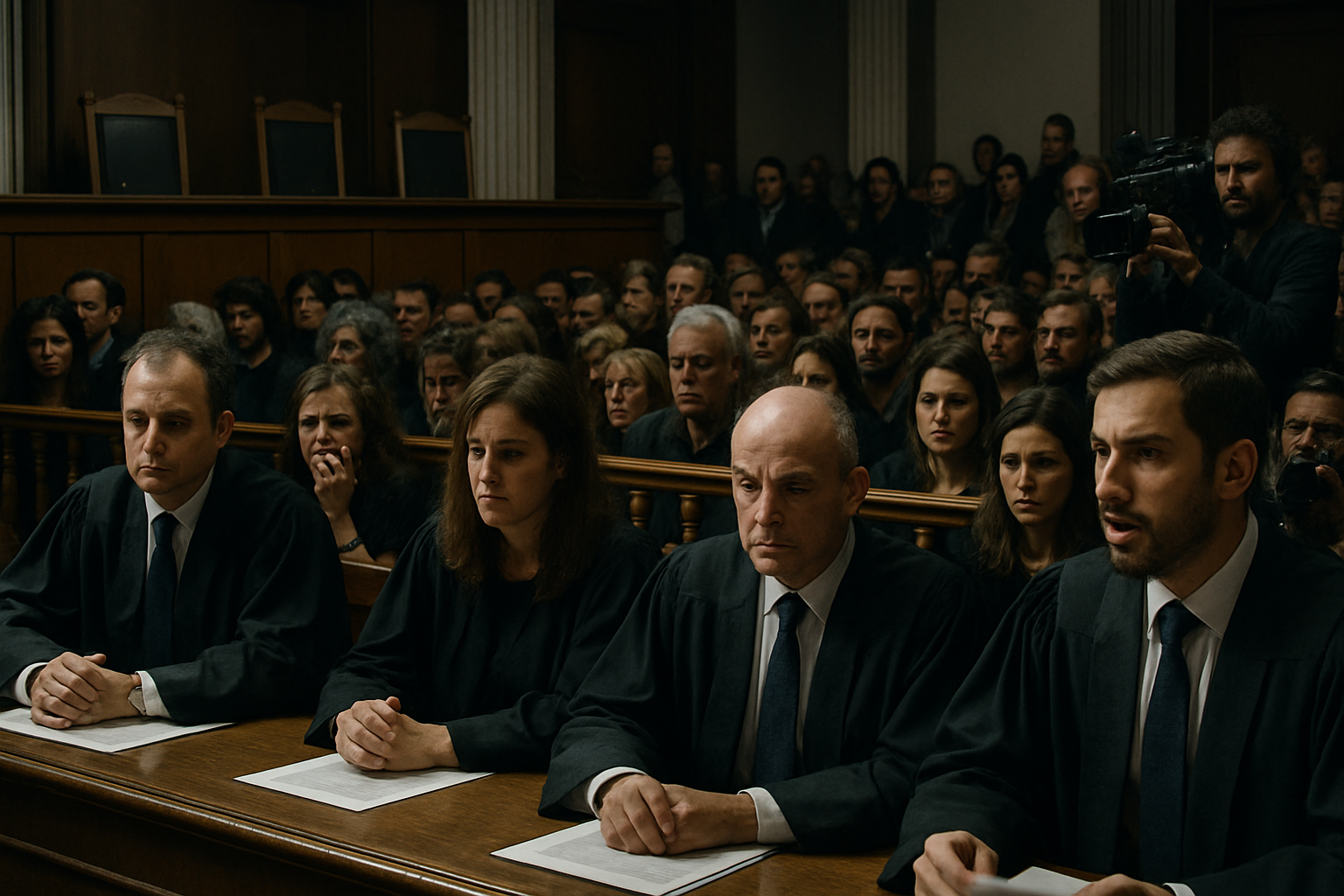
The long-awaited trial for Greece's deadliest train disaster began Monday in Larissa, with 36 defendants facing charges related to the February 28, 2023 collision at Tempe that killed 57 people and exposed decades of systematic failures in the country's railway system.
Under heavy security measures and in a packed courtroom, the proceedings commenced at 9 a.m. with 33 of the defendants charged with felony-level offenses. The disaster occurred when a passenger train carrying students from Athens to Thessaloniki collided head-on with a freight train, creating a devastating fireball that has been described as the worst rail disaster in modern Greek history.
A Nation Seeks Justice
The trial represents a critical moment for Greek justice, coming more than three years after the tragedy that not only claimed lives but also triggered nationwide protests and strikes. Demonstrators have consistently demanded political accountability and an end to what many see as systemic corruption and negligence that contributed to the disaster.
The courtroom atmosphere was tense from the outset, with families of victims, legal representatives, and media representatives filling every available seat. Court President Stefanidou was forced to request that cameras and media personnel leave the courtroom due to overcrowding and disruptions, leading to heated exchanges with defense lawyers who argued they "didn't come for a show."
Among those facing charges are a station master and several railway managers, accused of offenses ranging from traffic disruption leading to deaths to negligent manslaughter. The charges reflect the investigation's findings that the crash resulted from a complex web of human error, safety deficiencies, and years of infrastructure neglect during Greece's economic crisis.
Systemic Failures Exposed
The February 2023 disaster shed harsh light on the Greek rail system's fundamental problems, including corruption, safety deficiencies, and years of neglect during the country's debt crisis. The collision, which caused a massive explosion and fireball, demonstrated how decades of underinvestment and poor maintenance had created deadly conditions on the nation's railways.
Investigation findings revealed that basic safety systems that could have prevented the collision were either non-functional or improperly maintained. The tragedy became a symbol of broader state failings, with protesters across Greece demanding not just individual accountability but systemic reform of the country's infrastructure management.
The President of the Bar Association called upon all defense lawyers and prosecutors to "rise to the occasion" with strict adherence to procedural rules and professional ethics, emphasizing the historic significance of the proceedings.
Legal and Political Ramifications
The trial has already faced interruptions, with the court proceedings temporarily suspended due to the chaotic conditions in the overcrowded courtroom. The intense media coverage and public interest reflect the disaster's profound impact on Greek society and its ongoing demand for accountability.
Legal experts note that the case represents one of the most complex transportation disaster prosecutions in modern Greek legal history. The extensive investigation required years to untangle the various factors that contributed to the collision, from individual decisions made on the night of the disaster to systemic policy failures spanning multiple administrations.
The charges against the 36 defendants vary in severity, with 33 facing felony charges that could result in significant prison sentences if convicted. The prosecution must prove not only individual negligence but also demonstrate how various failures in the system combined to create the conditions that made the disaster inevitable.
Families Demand Answers
For the families of the 57 victims, the trial represents both hope for justice and a painful reminder of their losses. Many of the victims were young students returning from Athens, making the tragedy particularly heartbreaking for Greek society. The disaster's impact extended far beyond the immediate casualties, affecting hundreds of families and raising fundamental questions about public safety and government accountability.
Throughout the investigation period, victims' families have organized protests and advocacy efforts, demanding transparency in the judicial process and comprehensive reforms to prevent similar tragedies. Their presence in the courtroom serves as a constant reminder of the human cost of the systematic failures that led to the disaster.
The families have also called for broader accountability beyond the individual defendants, arguing that political leaders who oversaw the deterioration of the railway system should also face consequences. However, the current trial focuses specifically on those directly involved in the operational aspects of the disaster.
A Test for Greek Democracy
The Tempe trial represents a crucial test of Greece's judicial system and democratic institutions. The case's complexity, high public profile, and political sensitivities create significant challenges for ensuring a fair and thorough legal process while meeting society's demands for accountability.
The proceedings occur against the backdrop of broader European concerns about transportation safety and infrastructure investment. The disaster highlighted how economic pressures and austerity measures can compromise essential safety systems, with potentially catastrophic consequences.
As the trial continues, it will likely serve as a landmark case for transportation safety law and government accountability not just in Greece but across Europe. The outcome could influence how similar cases are prosecuted and how societies balance economic considerations with public safety requirements.
The trial is expected to continue for several months as prosecutors present evidence and witnesses testify about the events leading to that tragic February night. For Greece, the proceedings represent both an opportunity for justice and a national reckoning with the systemic failures that made one of Europe's worst railway disasters possible.