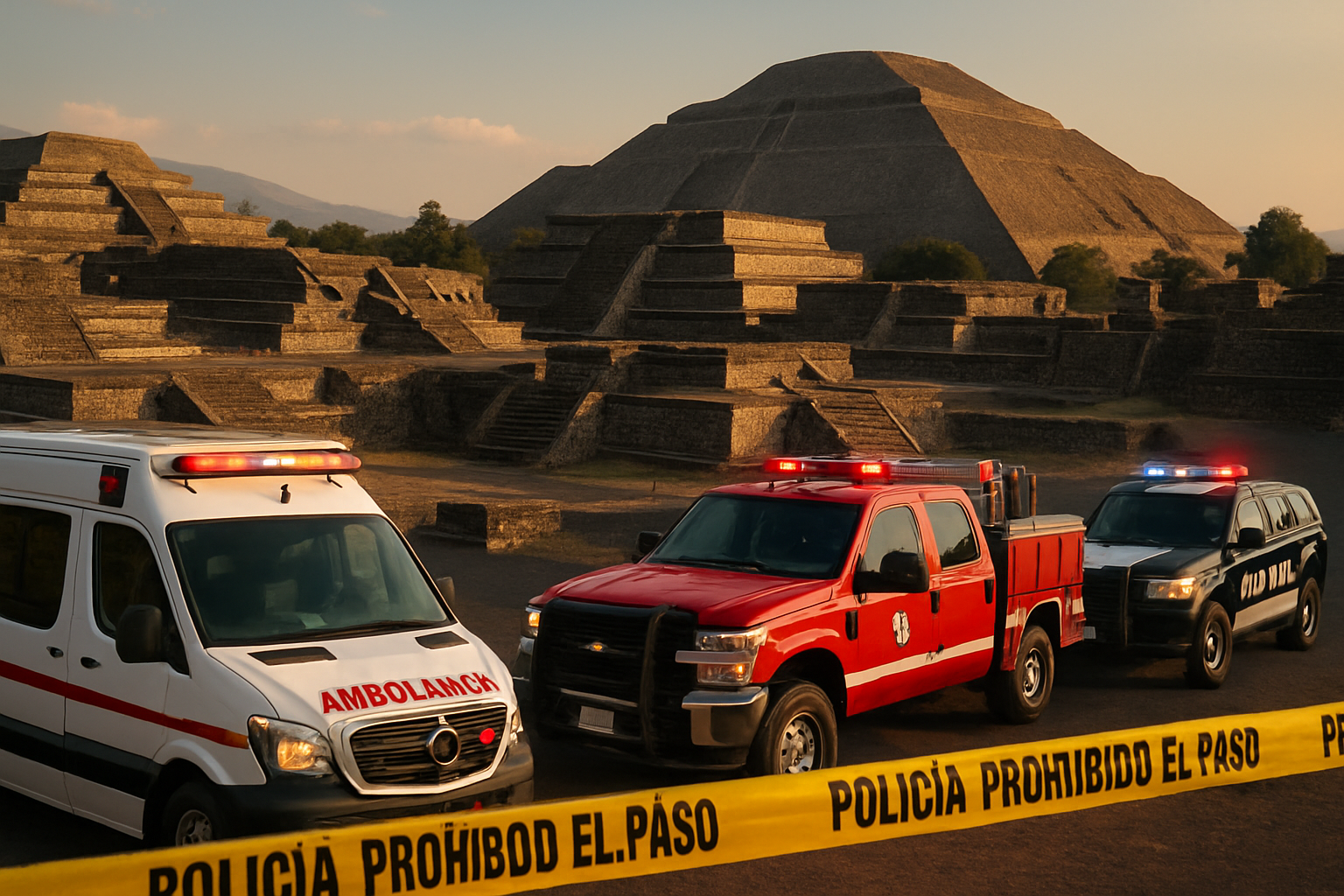
A gunman opened fire at Mexico's ancient Teotihuacan pyramids on Monday, killing a Canadian woman and injuring 13 tourists from multiple countries in an unprecedented attack at one of the world's most visited UNESCO World Heritage sites.
The shooting began at approximately 11 a.m. local time at the Pyramid of the Moon, one of the most prominent structures at the archaeological complex located 50 kilometers northeast of Mexico City. The gunman, identified by local prosecutors as 27-year-old Mexican national Julio Cesar Jasso Ramirez, opened fire on tourists before taking his own life.
International Victims and Emergency Response
Security authorities confirmed that 13 people were injured in the incident, with victims including tourists from Colombia, Canada, Russia, Brazil, and the United States. One witness, who requested anonymity, told Reuters that a young boy was shot in the leg during the chaos that ensued.
The attack occurred as visitors were descending from the temple's mezzanine level. Witnesses described hearing "pops" before seeing a stampede of panicked tourists fleeing the scene. The gunman remained positioned at the top of the mezzanine and appeared to fire most shots into the air rather than directly targeting individuals, according to eyewitness accounts.
"The bullets were flying from the top of the pyramid against the tourists," one witness told Spanish media outlet El País. "We got scared and I said, let's see where we go."
Security Response and Investigation
Mexico's Security Secretary Cristóbal Castañeda confirmed that forensic experts were working at the scene, with the site temporarily closed to visitors while authorities conducted their investigation. The archaeological complex, which normally welcomes over 4 million visitors annually, was evacuated as security forces established a perimeter.
Videos that emerged on social media showed tourists taking cover behind ancient stone structures, lying flat against the pyramid's surface as the shooting unfolded. The images highlighted the vulnerability of the open archaeological site, where the ancient layout designed for historical preservation presents unique security challenges.
Context of Mexico's Security Challenges
The Teotihuacan shooting occurs against a backdrop of escalating security concerns in Mexico, particularly following the February 2026 elimination of cartel leader Nemesio Oseguera "El Mencho" and subsequent violent retaliation that killed 25 National Guard members across western regions.
The attack is particularly significant as Mexico prepares to co-host the 2026 FIFA World Cup alongside the United States and Canada, with Guadalajara serving as one of the designated host cities. The government has deployed over 100,000 security personnel for the tournament, representing the largest security operation in the country's history.
Tourism industry officials have expressed concerns about the impact on international visitor confidence, especially given Mexico's crucial dependence on tourism revenue for economic recovery following the pandemic.
UNESCO World Heritage Site Vulnerability
The incident raises unprecedented questions about security protocols at archaeological sites that must balance cultural accessibility with modern safety requirements. Teotihuacan, designated a UNESCO World Heritage Site in 1987, represents one of Mexico's top three archaeological destinations alongside Chichen Itza and Tulum.
The open layout of ancient sites, designed centuries ago for ceremonial and residential purposes, presents unique challenges for comprehensive security coverage. Traditional security measures must be carefully implemented to preserve the historical integrity and educational mission of these culturally significant locations.
"This tragic incident highlights the global challenge of protecting cultural heritage sites from violence while maintaining their accessibility to the international community."
— Cultural Heritage Security Expert
International Implications and Response
The attack has prompted discussions about enhanced security measures at major tourist destinations worldwide. The Canadian government has provided consular assistance to affected families, while other nations are reviewing travel advisories for Mexico.
The incident demonstrates how violence can instantly transform beloved cultural spaces into sites of trauma, affecting not only immediate victims but entire communities that depend on cultural tourism for economic stability.
Ongoing Investigation
Mexican authorities are conducting a comprehensive investigation into the gunman's background and motivations. Preliminary reports indicate this was an isolated incident, but security officials are reviewing protocols across all major archaeological sites nationwide.
The Teotihuacan complex, known for its massive Pyramid of the Sun and Pyramid of the Moon, has been closed indefinitely while authorities complete their investigation and implement additional security measures. The site's reopening will depend on the completion of enhanced safety protocols designed to prevent similar incidents.
As Mexico grapples with this unprecedented attack on one of its most treasured cultural sites, the incident serves as a stark reminder of the complex security challenges facing nations as they work to protect both their citizens and the millions of international visitors who seek to experience the world's cultural heritage.