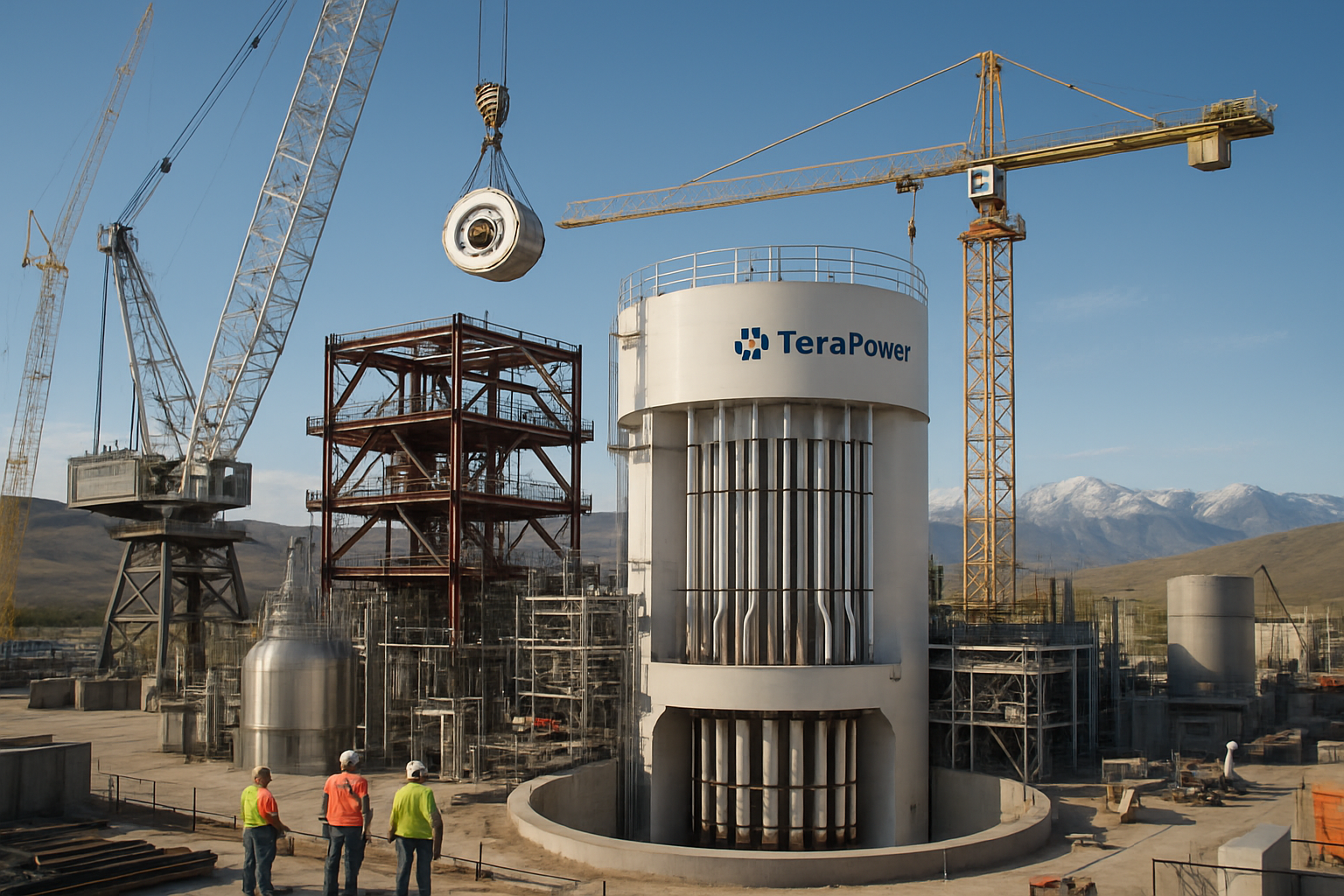
The US Nuclear Regulatory Commission has granted approval to Bill Gates' TerraPower company to construct the nation's first sodium-cooled "small" modular nuclear reactor in Wyoming, marking a historic milestone in America's nuclear energy renaissance and advanced reactor technology deployment.
The regulatory approval, announced March 5, 2026, represents a pivotal moment for next-generation nuclear technology in the United States. TerraPower's sodium-cooled reactor utilizes highly enriched uranium fuel and incorporates cutting-edge safety systems that distinguish it from traditional large-scale nuclear facilities. The project aligns with the Trump administration's aggressive push to expand nuclear energy capabilities as a cornerstone of national energy security.
Revolutionary Reactor Technology
TerraPower's Wyoming facility will feature an advanced sodium-cooled fast reactor design that offers significant advantages over conventional nuclear plants. The technology utilizes liquid sodium as a coolant instead of water, enabling higher operating temperatures and improved efficiency while maintaining enhanced safety protocols. Unlike traditional reactors, the sodium-cooled system operates at atmospheric pressure, dramatically reducing the risk of explosive failures.
The reactor incorporates passive safety features that automatically shut down operations without human intervention during emergency conditions. Digital monitoring systems provide real-time assessment of reactor conditions, while automated control mechanisms ensure optimal performance and safety standards. These innovations address longstanding public concerns about nuclear safety that have hindered industry expansion for decades.
Global Nuclear Renaissance Context
The TerraPower approval occurs amid a worldwide nuclear energy revival as nations seek reliable carbon-free electricity sources. Europe leads this renaissance, with Hungary's $39.1 billion Paks II nuclear construction project receiving full IAEA backing and positioning the country at the forefront of continental nuclear expansion. Japan has restarted the world's largest nuclear facility at Kashiwazaki-Kariwa, while France maintains nuclear energy as its baseload electricity cornerstone.
Romania emerged as a European leader in small modular reactor (SMR) technology through its innovative project in Deutschești, demonstrating the global shift toward advanced, safer, and more flexible nuclear infrastructure. These developments reflect growing international confidence in atomic energy for achieving carbon neutrality goals while ensuring energy security independence.
"This approval represents a fundamental transformation in how we approach nuclear energy production in America. TerraPower's technology offers the safety, efficiency, and scalability needed to power our carbon-neutral future."
— Nuclear Industry Expert, commenting on the regulatory approval
Strategic Energy Security Implications
The Wyoming reactor addresses critical energy security challenges facing the United States and its allies. Current supply chain vulnerabilities have become increasingly apparent, with China controlling 60% of global production and 90% of refining capacity for critical materials like lithium, cobalt, and rare earth elements essential for renewable energy infrastructure. Nuclear power provides a pathway to energy independence that reduces dependence on volatile supply chains while delivering reliable grid-stable electricity regardless of weather conditions.
The project creates thousands of specialized, high-paying jobs while establishing Wyoming as a hub for advanced nuclear technology. Economic benefits extend beyond construction, providing stable employment over the reactor's century-plus operational lifetime. This economic multiplier effect positions Wyoming strategically within America's emerging clean energy economy.
Advanced Safety and Environmental Benefits
TerraPower's reactor design incorporates multiple layers of safety systems that surpass traditional nuclear facilities. The sodium cooling system eliminates the risk of steam explosions, while the reactor's inherent physics prevent runaway reactions. Advanced fuel cycles minimize radioactive waste production while maximizing energy efficiency, addressing long-term environmental concerns associated with nuclear power.
The facility will generate virtually zero carbon emissions during operation, contributing significantly to climate goals while providing the baseload electricity capacity essential for grid stability. Unlike renewable sources that depend on weather conditions, nuclear power delivers consistent energy output that complements intermittent solar and wind generation.
International Technology Competition
The Wyoming approval positions America competitively within the global nuclear technology landscape. China's rapid nuclear expansion and Russia's international reactor export programs have challenged Western technological leadership in atomic energy. TerraPower's success could establish the United States as a preferred partner for nations seeking advanced nuclear capabilities without dependence on authoritarian regimes.
European nations increasingly recognize nuclear power as essential for energy security amid geopolitical tensions. The US-EU-Japan Critical Minerals Partnership, encompassing 55 countries, seeks to diversify supply chains away from Chinese dominance. American nuclear technology exports could strengthen these strategic alliances while advancing democratic values in global energy markets.
Regulatory and Political Momentum
The Trump administration's forceful advocacy for nuclear energy expansion provided crucial political backing for TerraPower's approval process. This bipartisan support reflects growing recognition that nuclear power is indispensable for achieving carbon neutrality without compromising energy security or economic growth. Congressional leaders from both parties have endorsed advanced reactor development as a national security priority.
Regulatory streamlining has accelerated approval timelines while maintaining rigorous safety standards. The Nuclear Regulatory Commission's updated framework for advanced reactors reduces bureaucratic delays that previously hindered innovative nuclear technologies. This regulatory modernization signals America's commitment to leading global nuclear innovation.
Industry and Investment Response
Financial markets have responded positively to nuclear energy developments, with major investment funds increasing exposure to atomic energy stocks. The Wyoming project attracts international attention from pension funds and sovereign wealth entities seeking long-term stable returns from essential infrastructure investments. TerraPower's success could trigger additional private sector investment in American nuclear capabilities.
Utility companies nationwide monitor the Wyoming project's progress as a potential model for future nuclear deployments. The smaller scale and enhanced safety features make TerraPower's design particularly attractive for regional utilities seeking carbon-free baseload capacity without the massive capital requirements of traditional nuclear plants.
Future Nuclear Deployment Prospects
Successful operation of the Wyoming facility could accelerate broader small modular reactor deployment across the United States. Multiple sites under consideration for future TerraPower installations reflect growing confidence in the technology's commercial viability. International licensing agreements could extend American nuclear technology influence globally while generating substantial export revenues.
The reactor's modular design enables factory manufacturing and standardized deployment, reducing construction costs and timelines compared to traditional nuclear facilities. This scalability positions TerraPower technology as a template for rapid nuclear expansion addressing urgent climate and energy security challenges.
Challenges and Considerations
Despite regulatory approval, the Wyoming project faces implementation challenges including specialized workforce development, supply chain establishment, and public acceptance building. Community engagement efforts emphasize economic benefits and enhanced safety features to address local concerns about nuclear facility proximity.
Technical challenges include establishing sodium handling capabilities and training personnel for advanced reactor operations. International cooperation through nuclear technology sharing agreements could accelerate expertise development while strengthening strategic partnerships with allied nations pursuing similar nuclear programs.
The TerraPower Wyoming approval represents more than a single project milestone—it signals America's renewed commitment to nuclear energy leadership in an era of intensifying energy security challenges and climate imperatives. Success could establish a new paradigm for safe, efficient, and economically viable nuclear power that reshapes global energy markets for decades to come.