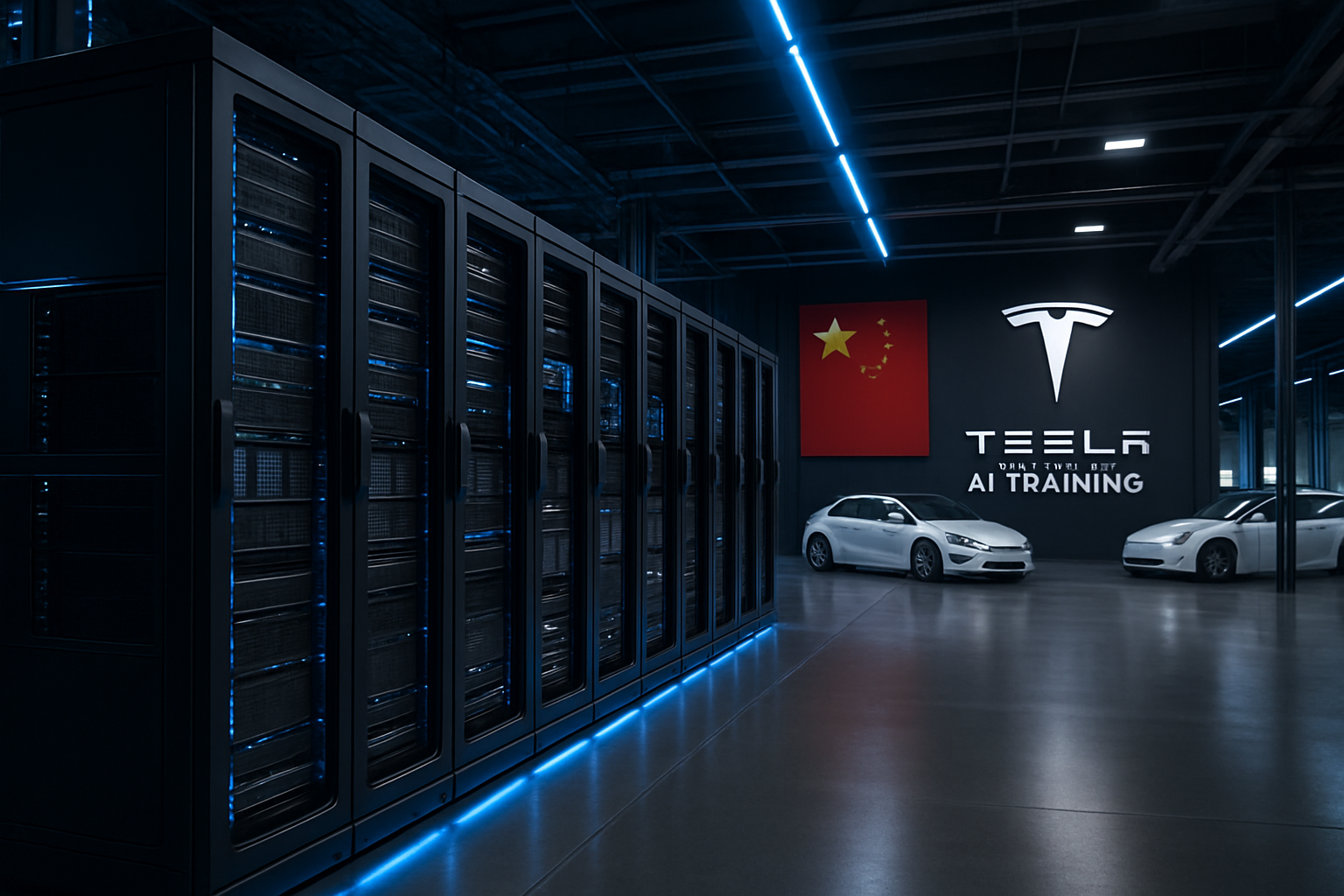
Tesla has launched a China-focused artificial intelligence training center to enhance its self-driving capabilities, marking a significant strategic shift as the global electric vehicle industry experiences unprecedented turbulence and transformation in early 2026.
The move comes as Tesla seeks to capitalize on Beijing's recent deregulation of autonomous driving technology in the world's largest electric vehicle market, while major European automakers struggle with massive losses and emerging Asian manufacturers express growing optimism for regional expansion.
Tesla's Strategic AI Investment in China
Grace Tao, Tesla's vice-president, confirmed to Shanghai-based financial outlet Cailian that the company's new China AI training center has begun operations with sufficient computing power to support the development of assisted-driving features. The announcement follows Beijing's strategic deregulation of autonomous driving technology, providing Tesla with unprecedented access to develop and test its Full Self-Driving capabilities in the Chinese market.
While Tao declined to disclose specific details about the facility's location or scale, the initiative represents Tesla's commitment to localizing AI development for Chinese road conditions and driving patterns. This development occurs against the backdrop of China's comprehensive regulatory reforms, including the recent announcement of a ban on hidden door handles in vehicles effective January 2027, forcing all automakers to prioritize safety over aesthetic design.
"The center has sufficient computing power to support development of assisted-driving features."
— Grace Tao, Tesla Vice-President
The timing of Tesla's AI center launch is particularly significant as it coincides with broader technological infrastructure challenges affecting the automotive industry. The global memory crisis, with semiconductor prices surging sixfold, has created supply chain pressures that are expected to persist until 2027 when new manufacturing facilities come online.
Stellantis Faces Major Crisis in European Market
In stark contrast to Tesla's expansion in Asia, European automotive giant Stellantis is experiencing severe financial distress. The company, Europe's second-largest automaker, has announced a dramatic reversal of its electric vehicle strategy, writing off billions in assets and cutting electric vehicle programs.
The company's stock price plummeted 28% following the announcement, reflecting investor concerns about Stellantis's ability to navigate the electric vehicle transition. The company's new leadership has implemented a comprehensive review of previous strategies, signaling a potential retreat from aggressive electrification targets that characterized the industry over the past five years.
This crisis at Stellantis reflects broader challenges facing traditional European automakers as they struggle to compete with Chinese manufacturers who have achieved cost advantages and technological leadership in electric vehicle production. The European automotive industry is increasingly calling for Brussels to provide financial incentives and subsidies for electric vehicles manufactured within Europe to maintain competitiveness.
Southeast Asian EV Optimism
Meanwhile, in Southeast Asia, VinFast Indonesia CEO Kariyanto Hardjosoemarto expressed high optimism for electric vehicle growth in 2026. The company's confidence is based on government incentives supporting the electric vehicle market and Indonesia's growing commitment to sustainable transportation infrastructure.
Indonesia's state electricity company PT PLN has committed to deploying 5,000 electric vehicle charging stations (SPKLU) nationally, supporting the development of Southeast Asia's largest economy's EV ecosystem. This infrastructure investment represents a critical foundation for the region's electric vehicle adoption and positions Indonesia as a key player in the global EV transition.
Regional Market Dynamics
The contrasting fortunes of different regional markets highlight the complex dynamics reshaping the global automotive industry in 2026. While European manufacturers face significant challenges from regulatory pressures and competitive disadvantages, Asian markets demonstrate robust growth potential supported by government policies and infrastructure investment.
China's continued dominance in critical materials production (60% global production, 90% refining capacity for lithium, cobalt, and rare earth elements) provides strategic advantages for companies operating within Chinese markets. Tesla's decision to establish AI training capabilities in China reflects recognition of this strategic reality and the importance of localizing technological development.
Industry-Wide Transformation Pressures
The electric vehicle industry in 2026 faces multiple simultaneous pressures that are reshaping competitive dynamics. The global memory crisis affecting semiconductor production has created supply chain bottlenecks that impact everything from infotainment systems to advanced driver assistance systems.
Simultaneously, regulatory frameworks are evolving rapidly across different markets. Canada's recent announcement of returning electric vehicle consumer incentives under Prime Minister Mark Carney's $9.7 billion national auto strategy demonstrates the continued importance of government support for EV adoption.
The convergence of artificial intelligence development with automotive manufacturing represents a critical inflection point for the industry. Companies that successfully integrate AI capabilities with manufacturing expertise and market access are positioning themselves advantageously for the next phase of automotive evolution.
Future Implications for Global Automotive Industry
Tesla's China AI center launch signals a broader trend toward regionalized technology development in the automotive sector. As regulatory frameworks diverge between markets and supply chain dependencies become strategic vulnerabilities, automakers are increasingly pursuing localized technology strategies.
The stark contrast between Tesla's expansion and Stellantis's retreat illustrates the industry's bifurcation between companies successfully navigating the electric vehicle transition and those struggling to adapt legacy operations. This divergence is likely to accelerate throughout 2026 as competitive pressures intensify and government support becomes increasingly selective.
For the broader electric vehicle industry, these developments suggest that success will depend on companies' ability to balance technological innovation, regulatory compliance, supply chain security, and market access across multiple regions simultaneously. The winners in this transformation will be those who can successfully navigate these complex, interconnected challenges while maintaining operational excellence and financial sustainability.