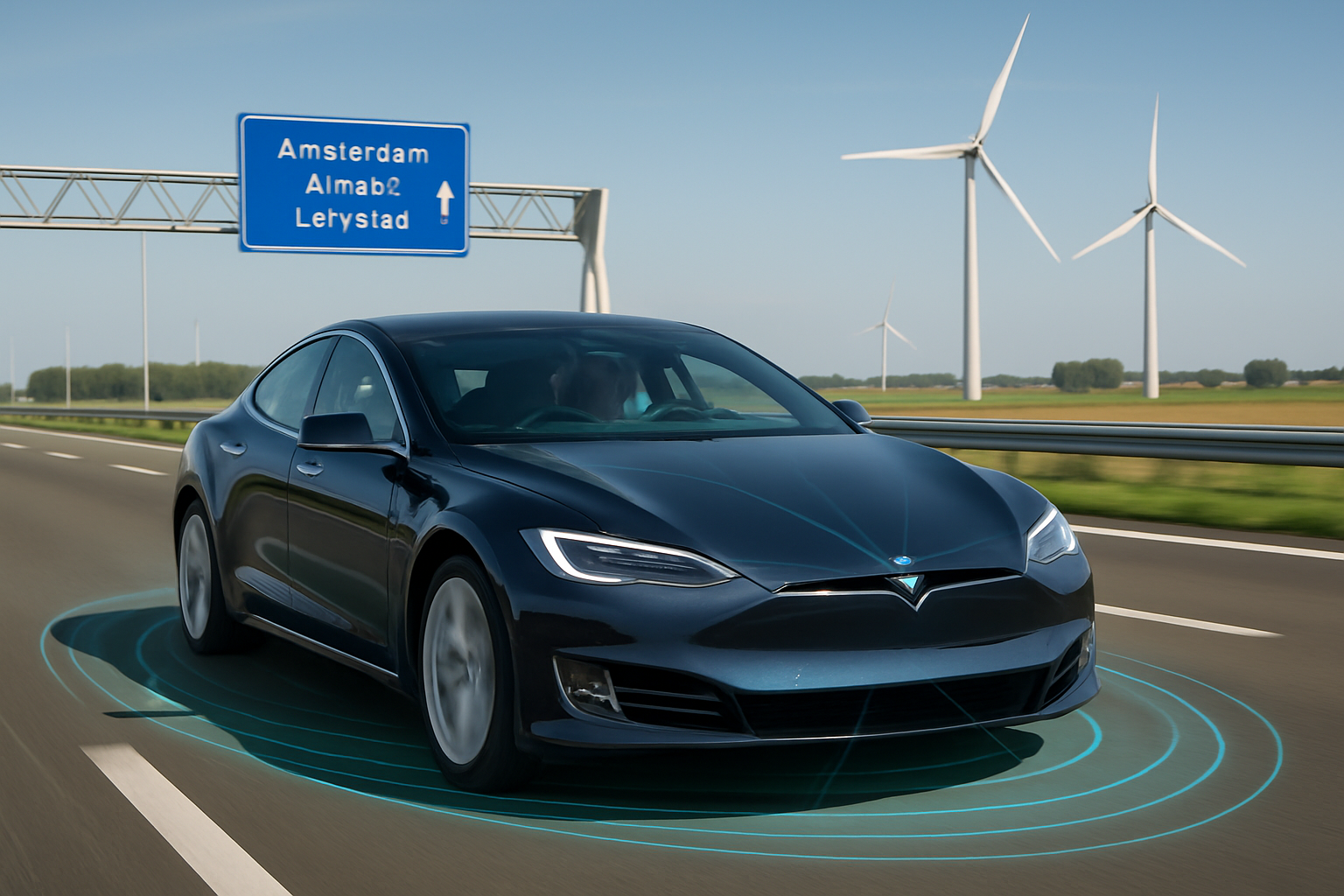
Tesla's self-driving software has received regulatory approval for deployment in the Netherlands, marking a pivotal milestone in the company's European autonomous vehicle expansion and representing the most significant advancement in AI-powered transportation infrastructure across the continent in 2026.
The approval, confirmed by Netherlands transport authorities in April 2026, positions Tesla's Autopilot technology for widespread deployment across Dutch highways and urban areas, making the Netherlands the first European Union member state to grant comprehensive operational approval for Tesla's advanced driver assistance systems.
Regulatory Breakthrough and Strategic Significance
The Netherlands approval represents a culmination of intensive testing and regulatory review that began in early 2025, when Tesla initiated pilot programs on selected Dutch highways. The decision comes amid broader European efforts to establish unified frameworks for autonomous vehicle deployment while maintaining the highest safety standards.
"This approval validates our commitment to safety-first autonomous driving technology," said a Tesla spokesperson. "The Netherlands has demonstrated exceptional leadership in embracing innovative transportation solutions while ensuring rigorous safety protocols."
The regulatory approval aligns with Tesla's broader European strategy, which has seen accelerated AI development through the company's China-focused training centers and enhanced computing capabilities. Tesla's Grace Tao previously confirmed the company possessed sufficient computing power for assisted-driving development, building on Beijing's autonomous driving deregulation initiatives.
Technology Infrastructure and Capabilities
Tesla's Autopilot system deployed in the Netherlands incorporates the company's latest fifth-generation autonomous driving technology, featuring advanced neural networks trained on billions of miles of real-world driving data. The system utilizes eight cameras, twelve ultrasonic sensors, and forward-facing radar to create a comprehensive 360-degree view of the vehicle's surroundings.
The Dutch deployment includes Tesla's Full Self-Driving (FSD) Beta capabilities, enabling advanced features such as Navigate on Autopilot for highway driving, Auto Lane Change, Autopark, and Summon functionality. The system processes visual data in real-time using Tesla's custom AI chips, allowing for split-second decision-making crucial for European traffic conditions.
"The Netherlands provides an ideal testing environment for autonomous vehicle technology, with its well-maintained road infrastructure, clear traffic markings, and sophisticated traffic management systems."
— Dr. Sarah van der Berg, Autonomous Vehicle Research Institute, Delft University
European Market Context and Competition
The Netherlands approval comes during a period of intense global competition in autonomous vehicle technology. China's Xpeng CEO He Xiaopeng has called for accelerated autonomous driving development, suggesting companies skip intermediate stages to achieve advanced self-driving capabilities. Meanwhile, European competitors including Volkswagen continue testing next-generation software in Sweden's challenging winter conditions.
Tesla's European expansion occurs amid significant infrastructure challenges, including the global semiconductor crisis that has driven memory chip prices sixfold higher, affecting automotive control systems across the industry. Despite these constraints, Tesla has maintained its technological leadership through strategic partnerships and continued investment in AI development.
The approval also coincides with broader discussions about digital sovereignty and technological independence within the European Union, as member states seek to balance innovation with regulatory oversight and safety requirements.
Safety Protocols and Monitoring Systems
Dutch transport authorities have established comprehensive monitoring protocols for Tesla's Autopilot deployment, including mandatory data sharing requirements and regular safety assessments. The system operates under strict guidelines requiring driver attention and readiness to take control when necessary.
Safety features include driver monitoring systems using in-cabin cameras to ensure driver engagement, automatic emergency braking, and fail-safe mechanisms that bring vehicles to controlled stops if driver response is not detected. The Netherlands has also implemented specific requirements for software updates and real-time performance monitoring.
Economic and Infrastructure Implications
The deployment is expected to generate significant economic benefits for the Netherlands, including job creation in technology sectors, enhanced transportation efficiency, and potential reductions in traffic accidents. Tesla has committed to establishing local service and support infrastructure to maintain the growing fleet of autonomous vehicles.
The approval supports the Netherlands' broader strategy to become a European leader in sustainable transportation and smart mobility solutions. The country has invested heavily in electric vehicle charging infrastructure, with over 90,000 public charging points nationwide, providing essential support for Tesla's expanding presence.
Industry analysts project that successful deployment in the Netherlands could accelerate similar approvals across the European Union, potentially opening markets representing over 400 million consumers. The standardization of autonomous vehicle regulations across EU member states remains a key objective for both manufacturers and regulators.
Global Autonomous Vehicle Landscape
Tesla's Netherlands approval occurs within a rapidly evolving global landscape for autonomous vehicle technology. Kazakhstan announced experimental self-driving car projects for Q2 2026, while various Asian markets continue advancing their own autonomous vehicle initiatives through international partnerships.
The development reflects broader trends toward AI integration in transportation systems, building on successful implementations in specialized applications such as airport shuttles, logistics vehicles, and controlled highway environments. Tesla's consumer-focused approach represents a significant step toward mainstream autonomous vehicle adoption.
Future Expansion Plans
Following the Netherlands approval, Tesla is expected to pursue similar regulatory approvals across other European Union member states, with Germany, France, and Scandinian countries representing priority markets. The company's European strategy emphasizes gradual expansion while maintaining safety leadership and regulatory compliance.
The Netherlands deployment will serve as a critical testing ground for broader European expansion, providing real-world operational data and performance metrics that will inform future regulatory decisions across the continent. Success in the Netherlands could establish Tesla as the dominant autonomous vehicle platform in Europe.
Tesla's achievement in securing Netherlands approval represents a watershed moment for autonomous vehicle technology in Europe, demonstrating that rigorous safety standards and innovative technology can coexist to create safer, more efficient transportation systems for the digital age.