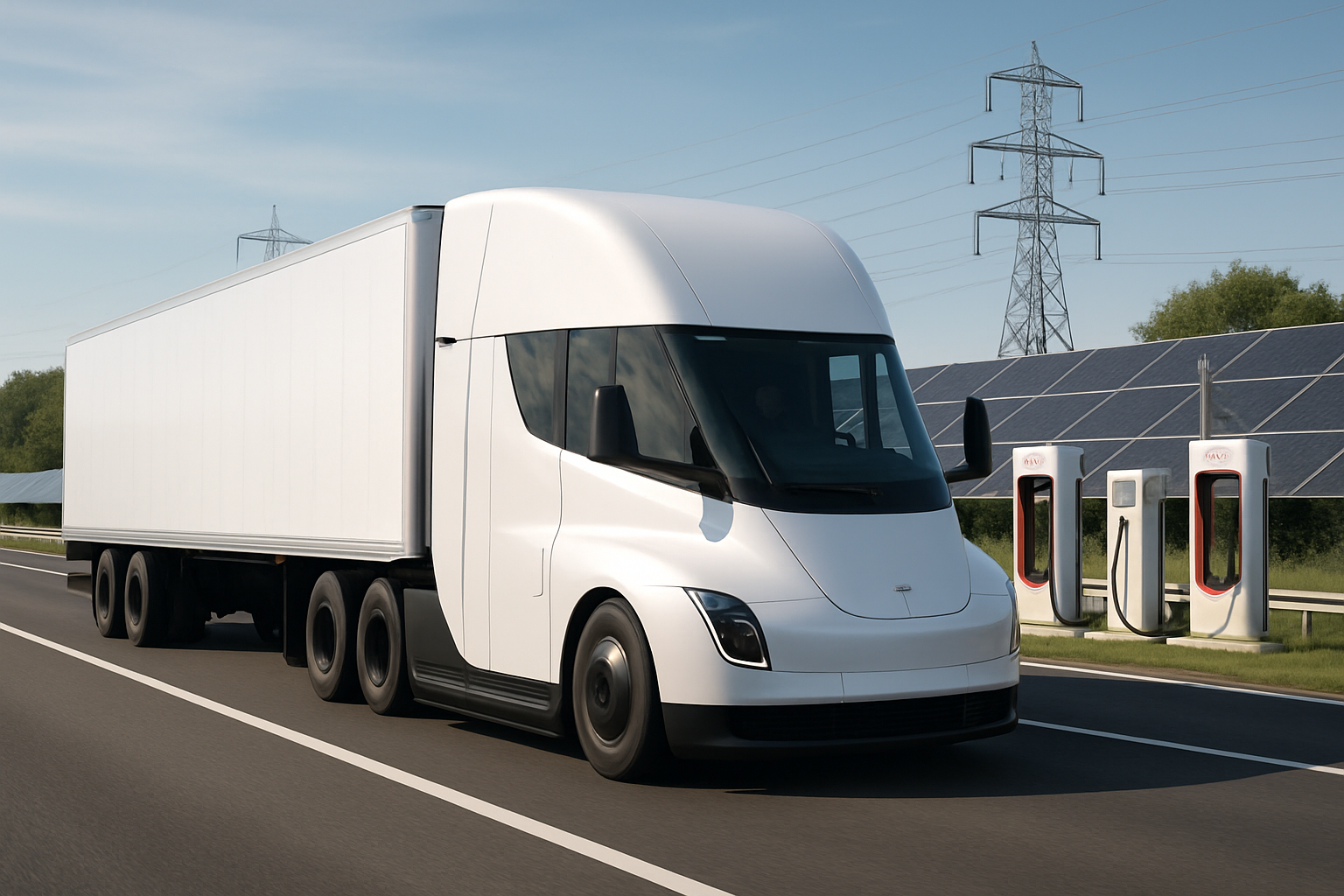
Tesla CEO Elon Musk announced the start of large-scale production of the Tesla Semi electric truck, marking a significant milestone for commercial electric vehicle adoption as the industry grapples with charging infrastructure challenges and explores innovative grid integration technologies for energy backup solutions.
The announcement comes at a pivotal moment for the electric vehicle industry, which faces complex challenges ranging from urban charging accessibility to emerging technologies that could transform how EVs interact with the power grid. While Tesla moves forward with commercial vehicle production, new research reveals stark disparities in EV adoption patterns and promising developments in bidirectional charging technology.
Tesla Semi Production Milestone
The Tesla Semi's transition to mass production represents a breakthrough for the commercial electric vehicle sector, which has long awaited viable alternatives to diesel-powered freight transport. The electric truck, first unveiled in 2017, has undergone extensive testing and refinement before reaching this production phase.
Commercial electric vehicles face unique challenges compared to passenger cars, including payload capacity requirements, range expectations, and charging infrastructure needs. The Tesla Semi's production ramp addresses these concerns while potentially catalyzing broader adoption of electric commercial vehicles across the freight industry.
Urban vs Rural EV Adoption Patterns
New research from Germany highlights significant disparities in electric vehicle adoption based on geographic and housing factors. The study reveals that homeowners and residents of small towns and rural areas currently have clear advantages in EV ownership, primarily due to access to private charging infrastructure.
Urban residents, particularly those living in apartments or lacking dedicated parking, face substantial barriers to EV adoption despite often expressing greater interest in electric vehicles. The "charging at home" advantage creates a fundamental inequality in the transition to electric mobility, with city dwellers often unable to conveniently charge their vehicles.
"Those who can charge electric cars at home are currently clearly at an advantage."
— German EV Study Findings
This disparity highlights the critical need for expanded public charging infrastructure and innovative solutions for urban EV adoption. Cities must develop comprehensive charging networks that serve residents without private garages or driveways.
Bidirectional Charging: The Future of Energy Independence
While current charging infrastructure presents challenges, emerging bidirectional charging technology offers promising solutions for energy independence. Electric vehicles equipped with this capability can function as mobile power sources, potentially eliminating the need for traditional backup generators.
German automotive manufacturers, including BMW with its new DC charging systems, are developing practical applications for bidirectional charging. This technology allows electric vehicles to supply power back to homes during outages or peak demand periods, transforming cars into essential components of household energy systems.
However, the technology faces implementation hurdles. Current solutions remain expensive and lack the cost-effectiveness needed for widespread adoption. The integration of electric vehicles into home energy systems requires sophisticated charging equipment and grid infrastructure modifications.
Infrastructure Challenges and Market Dynamics
The electric vehicle industry's growth trajectory depends heavily on resolving charging infrastructure limitations. Rural areas, despite having advantages for home charging, often lack public charging networks for long-distance travel. Urban areas require dense charging networks to serve apartment dwellers and those without private parking.
The commercial vehicle sector faces additional infrastructure demands. Electric trucks like the Tesla Semi require high-capacity charging stations capable of serving large battery systems quickly. Fleet operators need reliable charging infrastructure along major freight corridors to maintain delivery schedules and operational efficiency.
Energy Grid Integration
As EV adoption accelerates, power grid integration becomes increasingly critical. Bidirectional charging technology could help stabilize electrical grids by providing distributed energy storage during peak demand periods. Electric vehicles could charge during off-peak hours when renewable energy generation is high and discharge power when demand exceeds supply.
This vehicle-to-grid (V2G) capability transforms electric vehicles from energy consumers into grid assets, potentially reducing infrastructure costs and improving renewable energy utilization. However, implementing V2G systems requires coordination between automakers, utilities, and regulatory agencies.
Global Context and Supply Chain Considerations
The electric vehicle industry's expansion occurs amid broader supply chain challenges and geopolitical considerations. Recent developments in critical minerals partnerships between the US, EU, and Japan aim to reduce dependence on Chinese-dominated supply chains for lithium, cobalt, and rare earth elements essential for EV batteries.
China currently controls approximately 60% of global production and 90% of refining capacity for these critical materials. Western nations are developing alternative supply chains through partnerships with countries like Argentina, which has substantial lithium reserves, and African nations with significant mineral deposits.
Memory chip shortages, with prices increasing sixfold, also affect EV production by limiting availability of semiconductors needed for vehicle control systems and charging infrastructure. These supply constraints could slow EV adoption despite growing demand and supportive policies.
Market Outlook and Industry Transformation
The electric vehicle industry stands at a critical juncture as production capabilities expand while infrastructure and technology challenges require innovative solutions. Tesla's Semi production announcement demonstrates commercial viability for electric freight transport, potentially accelerating adoption across the logistics sector.
Government incentive programs, including renewed support from countries like Canada with Prime Minister Mark Carney's $9.7 billion automotive strategy, provide market stability for EV adoption. These policies shift from regulatory mandates toward consumer rebates and infrastructure investment.
The industry's success depends on coordinated development across multiple fronts: vehicle production, charging infrastructure, grid integration technology, and supply chain security. Bidirectional charging capabilities could revolutionize how consumers interact with electric vehicles, transforming them from transportation tools into comprehensive energy solutions.
Looking Ahead
As Tesla begins mass production of the Semi and bidirectional charging technology matures, the electric vehicle industry moves toward a more integrated energy ecosystem. Success requires addressing urban charging inequities, developing cost-effective bidirectional systems, and building resilient supply chains for critical components.
The convergence of commercial EV production, advanced grid integration technologies, and supportive policy frameworks creates unprecedented opportunities for transforming transportation and energy systems. However, realizing this potential requires sustained investment, international cooperation, and innovative solutions to complex technical and infrastructure challenges.
The coming year will likely determine whether the electric vehicle industry can overcome current limitations and achieve the scale necessary for mainstream adoption across all market segments and geographic regions.