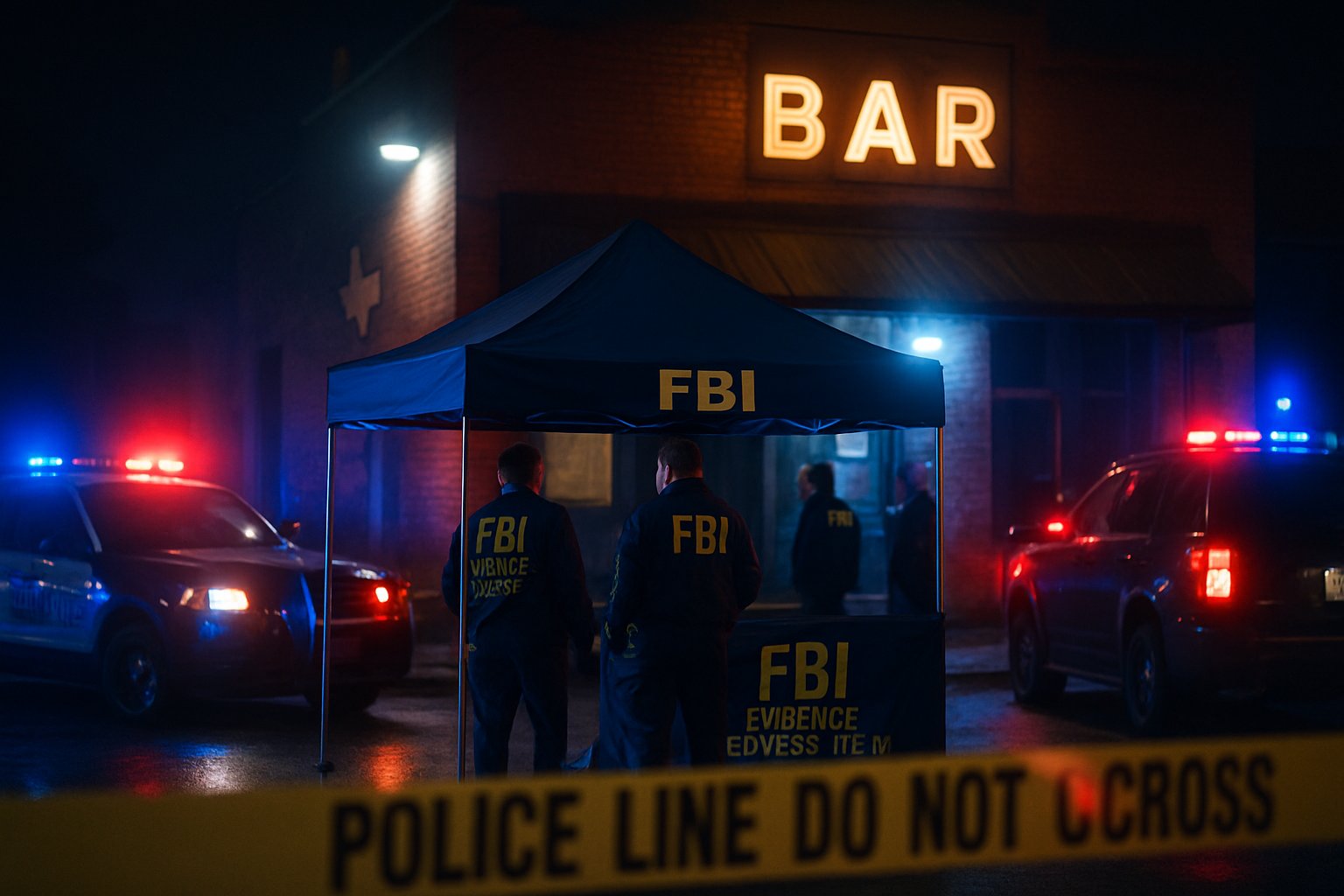
Federal authorities have launched a comprehensive terrorism investigation into a deadly Texas bar shooting that left three people dead and 14 wounded, after discovering evidence suggesting the gunman harbored sympathies for Iran and potential extremist ideologies.
The FBI announced Tuesday that investigators found materials linking the suspected shooter to Iranian regime sympathies and potential terrorist connections, marking a significant escalation in what was initially treated as a mass shooting incident. The attack occurred late Friday evening at a popular nightlife establishment in Austin, sending shockwaves through the local community and prompting federal intervention.
FBI Announces Terrorism Investigation
Special Agent Alex Doran of the FBI's Austin field office confirmed during a press conference that "evidence found on the suspect and in his vehicle indicates a potential nexus to terrorism." The announcement came after federal investigators spent the weekend analyzing materials recovered from the crime scene and the gunman's residence.
"We are treating this as a potential act of domestic terrorism with international connections," Doran stated, declining to provide specific details about the evidence due to the ongoing investigation. The FBI's Joint Terrorism Task Force has assumed primary responsibility for the case, working alongside local law enforcement agencies.
The suspect, identified as 32-year-old Ndiaga Diagne, a naturalized U.S. citizen originally from Senegal, was killed during the attack after opening fire on patrons outside and inside the establishment. Witnesses described a coordinated assault that began in the parking lot and continued inside the venue before the gunman was neutralized by responding officers.
Iranian Sympathies and Extremist Connections
According to federal sources, investigators discovered evidence that Diagne had expressed support for Iranian government positions and demonstrated sympathies with anti-American sentiments tied to Iran's Islamic Revolutionary Guard Corps (IRGC). The materials included social media posts, written statements, and potential communications with overseas contacts.
Intelligence analysts are examining whether the timing of the attack correlates with recent U.S.-Iran tensions, including ongoing nuclear negotiations and military deployments in the Middle East. The investigation has expanded to include federal counter-terrorism units specializing in Iranian influence operations.
Law enforcement sources indicate that Diagne may have been influenced by Iranian propaganda and extremist rhetoric, though investigators are still determining whether he received direct instruction or support from foreign operatives. The FBI has reached out to international partners to trace any potential overseas connections.
Attack Details and Law Enforcement Response
The shooting began at approximately 11:45 PM on Friday when Diagne arrived at the bar in a rented vehicle and immediately opened fire on patrons gathered outside. Security camera footage shows the gunman methodically targeting individuals before entering the establishment and continuing the assault.
"The response time was exceptional - our officers were on scene within 57 seconds of the first 911 call,"
— Austin Police Chief Lisa Davis
Austin Police officers arrived to find an active shooter situation with multiple casualties both inside and outside the venue. The gunman was engaged by responding officers and killed after a brief firefight that lasted approximately three minutes. No law enforcement personnel were injured during the incident.
Emergency medical services transported 14 wounded victims to area hospitals, with several individuals remaining in critical condition. The deceased victims have been identified as two patrons and the gunman himself, though authorities have not yet released the names of those killed pending family notification.
Evidence of Premeditation and Planning
Federal investigators have uncovered evidence suggesting extensive premeditation for the attack. Materials found in Diagne's apartment indicate he had been planning the assault for several weeks, including reconnaissance of the target location and preparation of weapons and equipment.
The gunman was reportedly wearing a shirt featuring Iranian flag imagery during the attack, and investigators discovered additional Iranian nationalist materials in his residence. Social media analysis revealed posts expressing hostility toward U.S. foreign policy in the Middle East and support for Iranian resistance against American influence.
Ballistics experts are analyzing weapons recovered from the scene, including handguns and rifle components that may have been specifically chosen for maximum casualties. The FBI is investigating how Diagne obtained the firearms and whether any federal laws were violated in their acquisition.
Community Impact and Security Response
The revelation of potential terrorism connections has heightened concerns within the Austin community and prompted increased security measures at entertainment venues across the city. Local business owners are implementing enhanced security protocols while community leaders call for unity and vigilance.
Austin Mayor Steve Adler addressed the community Tuesday evening, emphasizing that the city would not be intimidated by acts of violence while acknowledging the serious nature of the federal investigation. "We stand together as a community against all forms of extremism and terrorism," Adler stated.
Religious and cultural organizations representing Middle Eastern communities have condemned the attack and offered support to victims' families. Leaders emphasized that the actions of one individual do not represent any community or nationality, calling for continued cooperation with law enforcement.
National Security Implications
The case highlights ongoing concerns about domestic radicalization and foreign influence operations targeting individuals within the United States. Counter-terrorism experts note that Iran has increasingly focused on inspiring lone-wolf attacks by American citizens and residents who can be influenced through online propaganda and recruitment.
The Department of Homeland Security has issued advisories to law enforcement agencies nationwide regarding potential copycat attacks or related threats. Intelligence agencies are reviewing similar cases for patterns that might indicate broader Iranian influence operations targeting American communities.
Congressional oversight committees have requested briefings on the investigation, with lawmakers expressing concern about the potential for foreign terrorist organizations to inspire domestic attacks. The incident occurs amid heightened tensions between the United States and Iran over nuclear negotiations and regional security issues.
Ongoing Investigation and Legal Proceedings
Federal prosecutors are reviewing evidence to determine what charges might have been filed had the gunman survived the incident. The investigation continues to expand as authorities examine Diagne's financial records, travel history, and communications to identify any potential co-conspirators or support networks.
The FBI has established a dedicated tip line for community members who may have information about the suspect's activities or associates. Investigators are particularly interested in anyone who may have had contact with Diagne in the weeks leading up to the attack.
International cooperation efforts are underway to trace any foreign connections or communications that may have influenced the attack planning. Intelligence officials are working with counterparts in West Africa and the Middle East to develop a complete picture of the gunman's background and potential radicalization process.
The investigation represents a significant test of federal counter-terrorism capabilities in addressing domestic threats with international connections. As authorities continue their work, the Austin community begins the difficult process of healing while remaining vigilant against future threats to public safety.