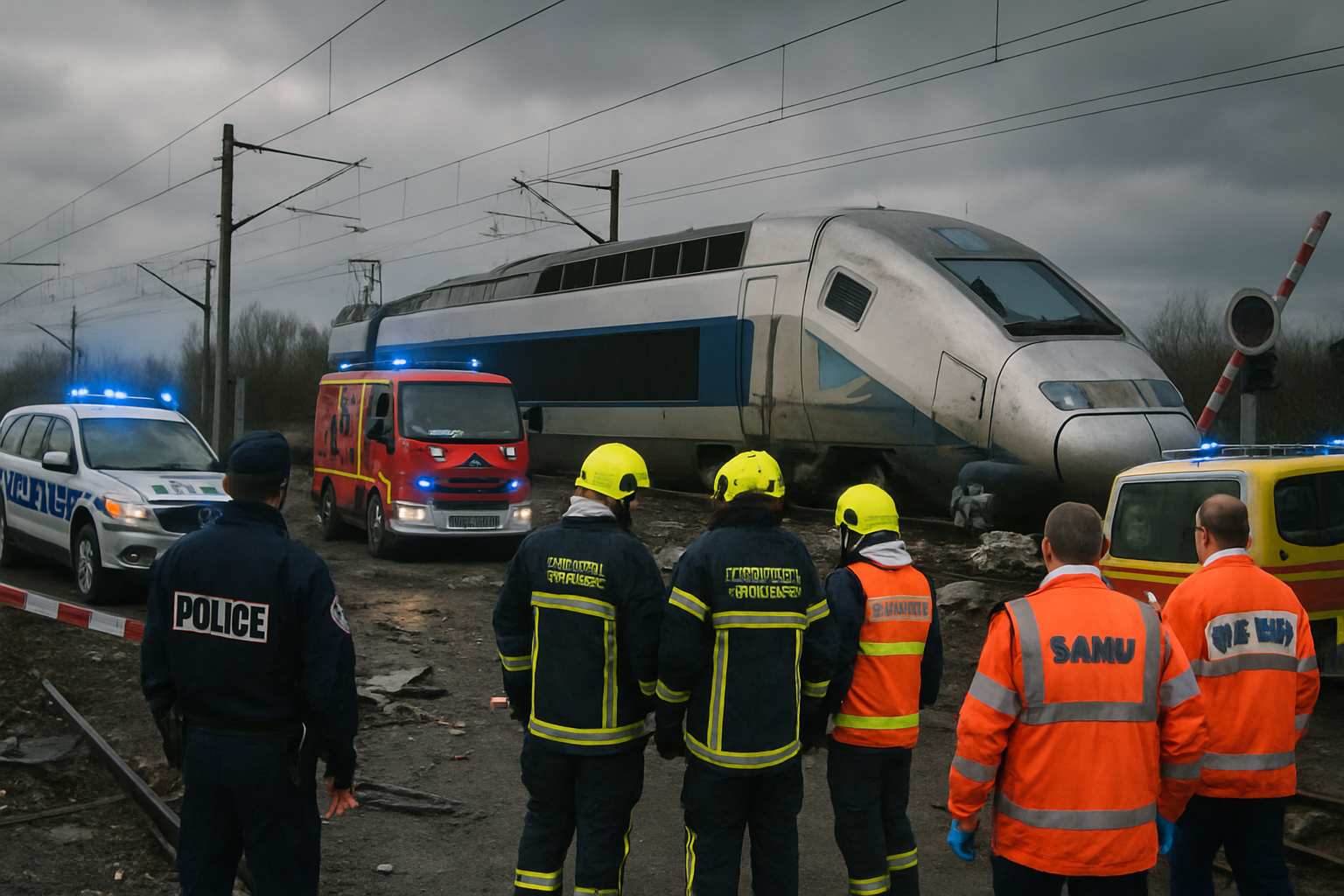
A French high-speed TGV train collided with a military truck at a level crossing in the town of Bully-les-Mines in northern France on Tuesday morning, killing the train driver and injuring dozens of passengers in a tragic accident that has renewed concerns about railway safety infrastructure.
The collision occurred at approximately 7:00 AM local time when the TGV, traveling from Dunkirk to Paris with 243 people on board, struck a truck carrying military equipment at the level crossing in the Pas-de-Calais region. The impact killed the train driver instantly and left multiple passengers requiring medical attention.
Casualty Reports and Emergency Response
French authorities reported varying casualty figures as emergency services responded to the scene. The prefecture confirmed that in addition to the train driver's death, two people were in critical condition while 11 others sustained less serious injuries. However, some international sources reported the total number of injured passengers could be as high as 27.
Emergency services, including police, firefighters, and medical personnel, were quickly deployed to the accident site. The critically injured passengers were transported to nearby hospitals for urgent treatment, while those with minor injuries received medical attention at the scene.
"The train driver was killed instantly in the collision. We have two people in critical condition and several others with less serious injuries."
— Prefecture spokesperson
Investigation Launched
The truck driver has been placed in police custody as authorities launch a comprehensive investigation into the circumstances surrounding the collision. French judicial sources confirmed that the driver is being questioned to determine whether any traffic violations or mechanical failures contributed to the accident.
The investigation will focus on several key areas, including the functionality of safety systems at the level crossing, adherence to traffic regulations by the truck driver, and whether proper protocols were followed for transporting military equipment on roads intersecting with high-speed rail lines.
Level Crossing Safety Concerns
The accident at Bully-les-Mines highlights ongoing safety concerns regarding level crossings on France's extensive railway network. While France has made significant investments in railway safety infrastructure over recent decades, level crossings remain vulnerable points where road and rail traffic intersect.
The collision occurred on a route used by TGV high-speed trains, which can travel at speeds exceeding 300 kilometers per hour, though trains typically reduce speed when approaching populated areas and level crossings. The involvement of a military vehicle adds another layer of complexity to the investigation, as such vehicles must follow specific protocols when crossing railway lines.
Recent Railway Safety Incidents
This incident comes amid broader concerns about transportation safety across Europe. While France's railway system maintains one of the world's best safety records, any collision involving high-speed trains raises questions about infrastructure adequacy and safety protocols.
European transportation networks have faced various challenges in recent months, including weather-related disruptions and infrastructure maintenance issues that have sometimes impacted safety systems and operational procedures.
Impact on Regional Transportation
The collision has caused significant disruptions to rail services on the Dunkirk-Paris route, one of northern France's key transportation corridors. SNCF, France's national railway company, has implemented alternative transportation arrangements for affected passengers while the investigation continues and the track is cleared.
Local authorities have coordinated with emergency services to ensure that rescue operations can proceed safely while minimizing further disruption to the regional transportation network. The accident site has been secured to allow investigators to examine the wreckage and gather evidence.
Military Equipment Transport Protocols
The involvement of a truck carrying military equipment raises specific questions about protocols for transporting such materials on roads that intersect with high-speed rail lines. Military vehicles typically must follow enhanced safety procedures when crossing railway infrastructure, particularly on routes used by high-speed trains.
Investigators will examine whether all required permits were obtained for the military transport and whether proper coordination occurred between military authorities and railway operators regarding the timing and route of the truck's journey.
Community Response and Support
Local authorities in Bully-les-Mines and the broader Pas-de-Calais region have expressed condolences to the family of the deceased train driver and support for the injured passengers. Community organizations and local government have mobilized to provide assistance to those affected by the tragedy.
The accident has deeply affected the local community, particularly given the loss of life and the involvement of multiple injured passengers. Support services have been made available for witnesses and emergency responders who participated in the rescue operations.
Looking Forward
As the investigation continues, French authorities will likely review safety protocols at level crossings throughout the country, particularly those on high-speed rail routes. The findings could lead to enhanced safety measures or modified procedures for military vehicle transports crossing railway lines.
The tragic collision serves as a reminder of the critical importance of maintaining rigorous safety standards at all points where different transportation systems intersect, especially when high-speed rail is involved.
French railway authorities and safety regulators will await the investigation's conclusions before determining whether systemic changes to safety protocols or infrastructure improvements are necessary to prevent similar accidents in the future.