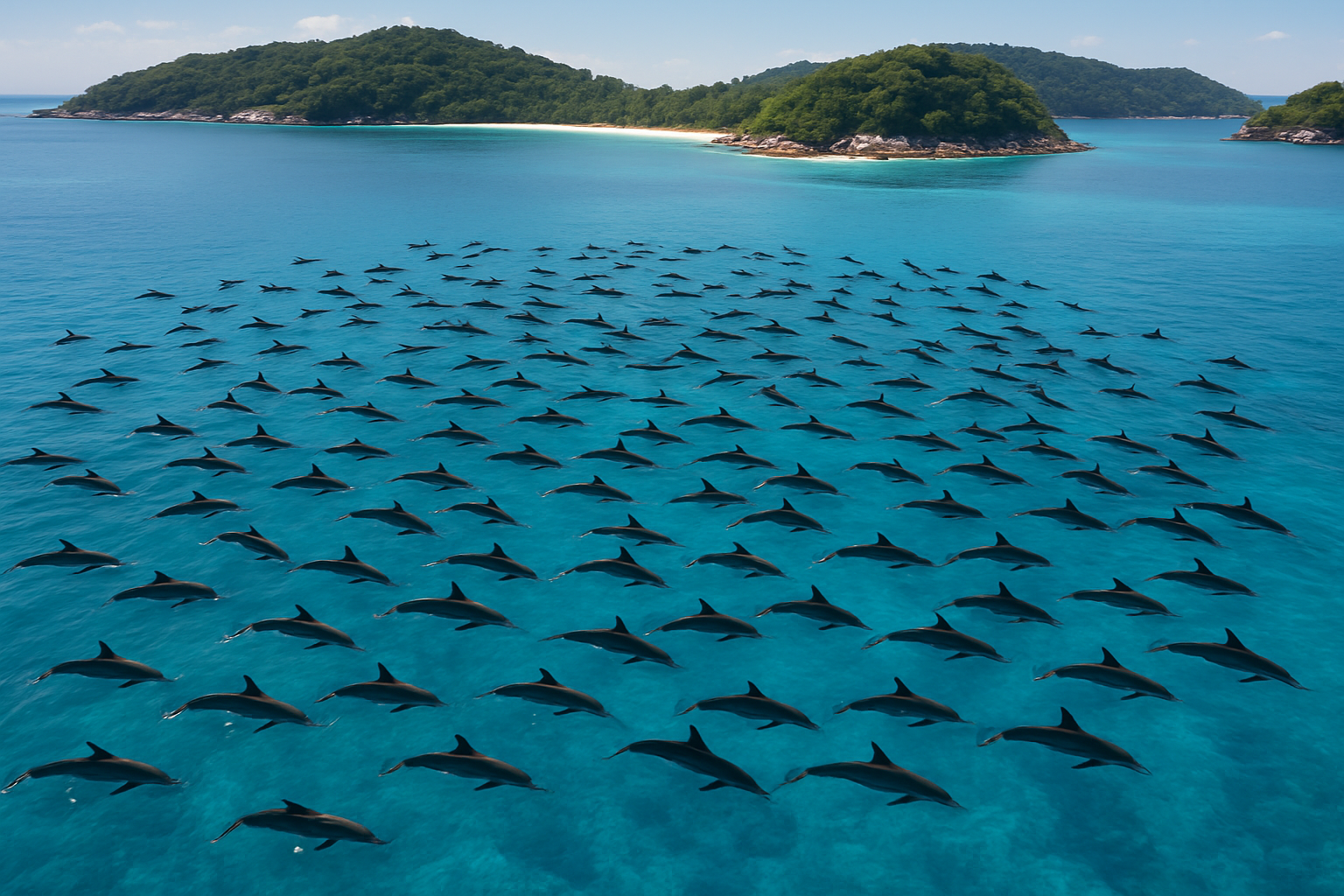
More than 120 Indo-Pacific bottlenose dolphins have been spotted swimming near Koh Tachai in Thailand's Similan Islands National Park, marking an extraordinary conservation triumph that highlights the region's robust marine ecosystem recovery amid global environmental challenges.
The remarkable sighting occurred at 10:00 AM on March 15, 2026, when a marine patrol unit conducting routine operations encountered an unusually large aggregation of dolphins—known as a "super pod"—a phenomenon rarely witnessed in Thai waters. Sirivat Suebsai, head of the Similan Islands National Park, confirmed the historic observation represents a significant indicator of ecological abundance in the pristine waters surrounding the archipelago.
Marine Biodiversity Breakthrough
Bottlenose dolphins typically congregate in smaller groups of 10 to 20 individuals, making this massive assemblage of over 120 animals particularly significant. The dolphins, measuring approximately 1 to 2.5 metres in length, displayed playful and friendly behavior as they spread across the sea surface, demonstrating the stress-free environment that healthy marine ecosystems provide.
This extraordinary gathering represents more than just a spectacular wildlife observation—it serves as a powerful testament to the effectiveness of Thailand's marine conservation efforts. The presence of such a large pod indicates abundant food sources, minimal human disturbance, and excellent water quality conditions that support complex marine food webs.
"The formation of super pods typically occurs when environmental conditions are optimal for marine life, with abundant prey and minimal threats."
— Marine Conservation International Research Team
Global Conservation Context
This marine conservation success emerges during what experts are calling a "global conservation renaissance" in March 2026, occurring during the 19th consecutive month of global temperatures exceeding 1.5°C above pre-industrial levels. Despite unprecedented climate challenges, coordinated international conservation efforts are yielding remarkable results across multiple continents.
The Thailand dolphin super pod joins a series of recent conservation victories, including Ecuador's historic reintroduction of 158 giant tortoises to Floreana Island after 150 years of absence, Zimbabwe's world-first DNA forensic prosecution of wildlife poachers using lion genetic evidence, and Croatia's record-breaking 173 pairs of griffon vultures nesting along northern Adriatic cliffs.
Technology-Tradition Conservation Integration
Thailand's marine conservation success demonstrates the sophisticated evolution of modern conservation methodology, combining cutting-edge technology with traditional ecological knowledge and community-based management. The Similan Islands protection program utilizes satellite monitoring, environmental DNA sampling, and advanced marine patrol systems while respecting traditional Thai fishing community practices and coastal stewardship wisdom.
This integrated approach represents a fundamental departure from purely technological or traditional conservation methods, creating comprehensive, culturally sensitive frameworks that achieve measurable results. The dolphin super pod observation itself was made possible through enhanced patrol capabilities and scientific monitoring protocols developed through years of international cooperation.
Economic and Tourism Implications
The remarkable dolphin sighting reinforces Thailand's position as a world leader in sustainable marine tourism, with the Similan Islands serving as a premier destination for eco-conscious travelers. Marine protected areas like the Similan archipelago support hundreds of millions of dollars in annual eco-tourism revenue while generating substantial employment for local communities through sustainable tourism services.
Countries implementing comprehensive marine protection consistently demonstrate greater economic resilience and attract sustainable investment across multiple sectors, including green technology manufacturing, environmental services, and nature-based tourism. The economic multiplier effects extend to improved public health outcomes, enhanced fisheries productivity through ecosystem services, and reduced coastal infrastructure costs through natural storm protection.
Climate Adaptation Success Model
Perhaps most significantly, this conservation triumph occurs during January 2026, which has been confirmed as the hottest recorded month in history, extending an unprecedented global temperature streak that has fundamentally altered Earth's atmospheric systems beyond natural recovery mechanisms. The success of marine conservation efforts under such extreme climate stress provides crucial templates for environmental protection during accelerating climate change.
The Thailand model demonstrates that proactive ecosystem service management can achieve remarkable results even during periods of unprecedented environmental pressure. The marine protected area approach creates climate-resilient ecosystems capable of supporting large marine mammal populations while adapting to changing ocean conditions.
International Cooperation Framework
The success of Thailand's marine conservation efforts highlights the critical importance of international cooperation in addressing transnational environmental challenges. Ocean currents carry pollutants across continents, marine species migrations connect ecosystems globally, and climate change affects marine food webs regardless of political boundaries, making coordinated international responses essential for conservation success.
Thailand's approach provides valuable knowledge-sharing opportunities for other nations developing marine protected area programs, particularly in Southeast Asia where similar ecosystems face mounting pressures from coastal development, pollution, and climate change impacts.
Conservation Medicine and Monitoring
The healthy behavior exhibited by the dolphin super pod reflects the absence of typical marine stressors that affect dolphin populations globally, including plastic pollution, chemical contamination, and acoustic disturbance from shipping traffic. Regular marine patrol monitoring enables early detection of environmental threats and rapid response to marine mammal emergencies.
Advanced conservation medicine capabilities allow for sophisticated health assessment of marine populations through non-invasive monitoring techniques, providing essential data for adaptive management strategies that respond to rapidly changing environmental conditions.
Future Implications and Scaling Potential
The Thailand dolphin super pod observation provides practical templates for scaling marine conservation globally through coordinated international approaches that address multiple challenges while building local capacity and fostering community engagement. The success factors consistently include community ownership and engagement, transparent governance frameworks, economic incentives that make protection financially viable, and integration of traditional knowledge with modern conservation science.
As environmental action windows continue narrowing with ecological systems approaching critical thresholds, the Thailand model demonstrates that tools, knowledge, and cooperation frameworks exist for comprehensive marine protection. Success depends on sustained international cooperation, enhanced multi-sector coordination, and increased financial commitments that recognize environmental protection as essential infrastructure for human prosperity and planetary sustainability.
Strategic Significance for Global Marine Conservation
March 2026 represents a critical juncture for global marine conservation, with the choice between reactive crisis management versus proactive ecosystem service management potentially determining whether protection efforts can keep pace with accelerating environmental change during the decisive climate action decade.
The remarkable gathering of over 120 dolphins in Thailand's protected waters serves as both a celebration of conservation success and an urgent reminder of what remains possible when human communities commit to protecting the natural systems that sustain all life on Earth. This extraordinary marine conservation milestone offers hope and practical blueprints for maintaining planetary habitability during Earth's most environmentally challenging period in recorded history.