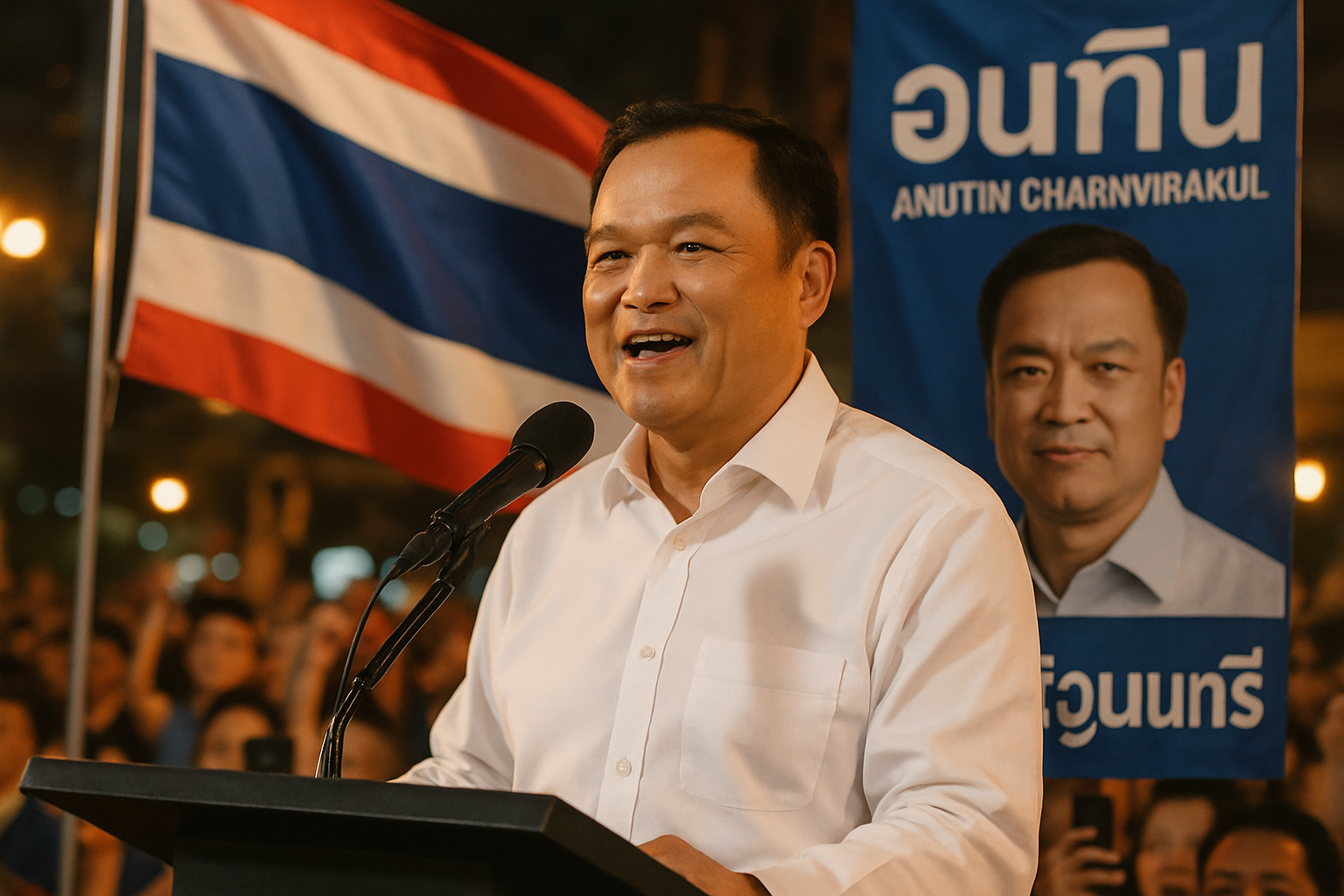
Thailand's ruling Bhumjaithai Party, led by Prime Minister Anutin Charnvirakul, achieved a stunning landslide victory in Sunday's snap general election, positioning the conservative party for continued governance and marking one of the country's most dramatic political upsets in recent years.
According to early unofficial results from multiple international sources, the Bhumjaithai Party secured close to 200 seats in the 500-member House of Representatives, a remarkable surge from their previous third-place finish. The victory represents a historic shift in Thailand's political landscape, delivering Anutin a decisive mandate to implement his conservative agenda.
The progressive People's Party, which had been expected to emerge as the largest party based on early polling, suffered a steep and unexpected decline, winning fewer than 100 seats despite previous strong support from young voters and urban constituencies. The result marked a stunning reversal from the previous election, where the People's Party finished first with 151 seats.
Campaign Dominated by Nationalist Sentiment
The election campaign was dominated by nationalist sentiment and Thailand's ongoing border dispute with Cambodia, which appeared to work in favor of Anutin's hardline approach. As Swedish media reported, the war against Cambodia increased nationalism and support for the Prime Minister's tough policy toward the neighboring country.
With 30 percent of polling stations reporting results early Sunday evening, Anutin's party had established a commanding lead that continued to grow throughout the night. The Prime Minister had called the snap election as a political gamble, promising to resign if his party failed to secure a majority.
"This victory belongs to the Thai people who have chosen stability and strength,"
— Prime Minister Anutin Charnvirakul, Victory Speech
The campaign effectively became a referendum on Anutin's leadership, with the conservative party successfully mobilizing support around security concerns and economic nationalism. International observers noted how the border tensions with Cambodia, which last year resulted in military clashes, became a central theme that resonated with voters seeking strong leadership.
Opposition Concedes Defeat
Leaders of the reformist opposition acknowledged their defeat early in the evening, with multiple sources confirming that the People's Party leadership recognized their failure to become the largest party. The progressive movement's decline represents a significant setback for Thailand's democratic reform agenda.
The election was conducted amid heightened tensions following reports of military activities along the Thai-Cambodia border. These security concerns appeared to strengthen public support for Anutin's conservative approach to foreign policy and national security.
German media sources reported that while the ruling conservatives won the parliamentary election ahead of the progressive People's Party, no party was expected to achieve an outright majority initially. However, the final tallies showed Bhumjaithai's performance exceeded all expectations.
Historical Context and Political Transformation
The victory marks a dramatic transformation for the Bhumjaithai Party, which had previously held only minor influence in Thailand's fragmented political landscape. The party's rise to dominance represents one of the most significant political realignments in recent Thai history.
Thailand has experienced considerable political instability in recent years, with three different prime ministers serving in the past three years. The decisive nature of Bhumjaithai's victory suggests voters opted for political stability over continued uncertainty.
According to historical context from previous coverage, Thailand has struggled with a "20-year political reform failure pattern" despite repeated elections promising change. Economic stagnation, rising debt, and widening inequality have dominated recent political discourse, with voters repeatedly choosing change that ultimately fails to materialize.
Regional and International Implications
The election results carry significant implications for Southeast Asian cooperation and regional stability. Thailand's relationship with its neighbors, particularly Cambodia, will likely influence broader ASEAN cooperation and regional security arrangements.
The victory also affects Thailand's position amid great power competition in the Indo-Pacific, particularly regarding relationships with China and the United States. Anutin's conservative approach may signal a shift in Thailand's foreign policy orientation toward more nationalist positions.
European observers monitored the election for lessons applicable to institutional reform challenges globally. The results demonstrate how external security threats can significantly influence electoral outcomes and strengthen support for established political forces.
Economic and Social Challenges Ahead
Despite the electoral triumph, Anutin's government inherits significant economic challenges. Thailand's tourism-dependent economy continues struggling with pandemic recovery and regional competition, while voters prioritize jobs, wages, and economic modernization.
The election was conducted with 53 million registered voters choosing between competing political visions amid prolonged institutional instability. The decisive result provides Anutin with the mandate needed to address these structural economic issues.
Bloomberg analysis revealed the persistent pattern of Thai voters supporting change candidates who ultimately struggle to overcome institutional barriers preventing dramatic reforms. Anutin's victory suggests voters chose continuity and stability over uncertain reform promises.
Democratic Institutions and Future Governance
The election proceeded smoothly despite concerns about 49 candidates disqualified by Supreme Court order, with votes for disqualified candidates counted as spoiled ballots. This represented a significant electoral complication but did not appear to affect the overall outcome.
International observers noted that the election tested Thailand's democratic resilience amid economic pressures and external security threats. The peaceful conduct and clear results demonstrate the continuing strength of Thai democratic institutions.
Looking forward, Anutin's strengthened position enables his government to pursue long-term policy implementation without the coalition negotiations that have historically complicated Thai governance. The mandate provides stability for addressing both domestic challenges and regional security concerns.
The election results represent a watershed moment for Thai politics, offering the potential for sustained governance and policy continuity after years of fragmentation and uncertainty. Whether Anutin can successfully address the economic and social challenges that have persistently frustrated Thai voters will determine the long-term significance of this historic electoral victory.