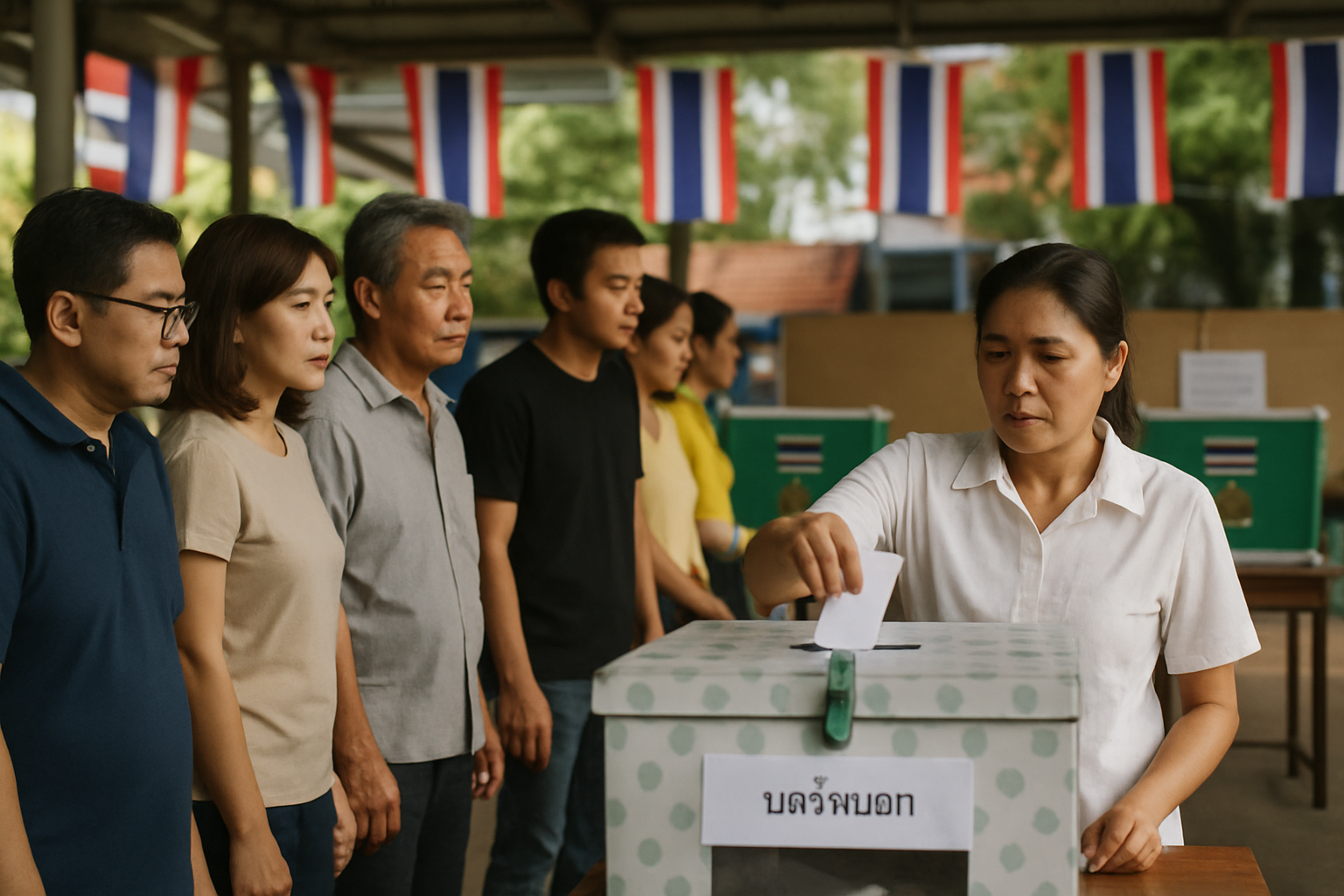
Vote counting was underway Sunday evening in Thailand's snap general election, marking a critical test of the kingdom's democratic institutions as 53 million registered voters chose between three competing visions for the nation's future amid prolonged political instability and economic challenges.
The election, called after repeated coalition collapses that produced three prime ministers in as many years, pitted reformist forces against entrenched conservative power in what analysts described as Thailand's most significant democratic moment in years. No party was forecast to secure an outright majority, setting the stage for complex coalition negotiations that could determine the country's trajectory for years to come.
The Three-Way Contest
At the heart of Sunday's contest was the opposition People's Party, a progressive movement advocating sweeping political and economic changes under leader Nattaphong Ruengpanyawut. The party, which emerged as successor to the dissolved Move Forward Party, entered the election leading opinion polls with promises to curb the influence of major conglomerates and the military while streamlining bureaucracy and overhauling the education system.
Competing against this reformist vision were conservative blocs led by Prime Minister Anutin Charnavirakul's Bhumjaithai (Thai Pride) Party, representing what observers characterized as "old-fashioned patronage politics." The third major force was the populist movement, reflecting a political landscape fractured between competing ideologies about Thailand's democratic future.
The election took place against a backdrop of voter frustration over prolonged political instability and a stagnating economy. Results were expected around 10 p.m. local time (1500 GMT), with early indicators suggesting the complex coalition mathematics that have defined Thai politics would once again determine the next government.
Economic Stagnation Drives Voter Concerns
Economic issues dominated the campaign, with voters expressing deep concern about Thailand's sluggish growth and widening inequality. Analysis revealed what experts described as a "20-year political reform failure pattern," where repeated elections promised change but delivered continued stagnation.
The tourism-dependent economy has struggled with pandemic recovery while facing increased regional competition. Rising debt levels and persistent inequality have created widespread dissatisfaction with the political establishment, contributing to the electoral momentum behind reformist movements.
"The battle for support from 53 million registered voters came against a backdrop of slow economic growth and heightened nationalist sentiment."
— Bill Hayton, Associate Fellow, Chatham House Asia Pacific Programme
Bloomberg's pre-election analysis highlighted Thailand's cyclical pattern of promising change through democratic means while institutional barriers prevent meaningful reform implementation. This dynamic has fueled voter cynicism while paradoxically increasing demand for more dramatic political transformation.
Historical Context and Democratic Stakes
Sunday's election represented the latest chapter in Thailand's turbulent democratic journey, marked by military interventions, constitutional changes, and party dissolutions. The kingdom has experienced significant political fragmentation in recent years, with the traditional Democrat Party polling below 40 seats despite being the country's oldest political organization.
The People's Party strategically moderated its positions on sensitive monarchy and military reform issues while maintaining its core reformist message. This tactical adjustment reflected lessons learned from predecessor parties that faced dissolution after challenging established power structures too directly.
Military oversight of the electoral process added another layer of complexity, with international observers monitoring for signs of interference. The election was conducted under the military establishment's observation, historically a significant factor in government formation and policy direction.
International Implications
The outcome carries significant implications for ASEAN cooperation and Southeast Asian democratic resilience. Thailand's role as a regional diplomatic hub means electoral results will influence broader patterns of democratic consolidation across the region.
Great power competition between China and the United States has added international dimensions to domestic Thai politics. The election results will affect Thailand's positioning in regional security arrangements and economic partnerships, particularly regarding infrastructure development and technology cooperation.
European observers noted the election's importance for understanding whether reformist movements can overcome institutional barriers through democratic means, providing potential lessons for other nations facing similar challenges between popular demands for change and entrenched interests.
Constitutional Referendum Adds Complexity
Complicating the electoral landscape was a simultaneous constitutional referendum, giving voters their first direct influence on constitutional matters since military intervention. The vote addressed replacing the 2014 coup-era constitution, adding another layer of democratic significance to Sunday's proceedings.
However, electoral complications emerged when 49 candidates were disqualified by Supreme Court order—18 in constituency races and 31 from party lists. Votes for disqualified candidates were counted as spoiled ballots, creating confusion and potentially affecting final tallies in close races.
Coalition Negotiations Ahead
With no party expected to achieve an outright majority, post-election negotiations were anticipated to begin immediately. The success of any coalition will depend on navigating relationships between elected politicians, traditional elites, military leadership, and civil society organizations.
Historical patterns suggest that even reformist electoral victories have struggled to translate into governing power due to institutional constraints and coalition dynamics. The People's Party's strategic moderation on sensitive issues was designed partly to facilitate potential coalition partnerships.
International partners, including major powers and ASEAN neighbors, were closely monitoring coalition formation processes for signs of stability that could affect Thailand's regional role and investment climate.
Broader Democratic Context
Thailand's election occurred during a period of democratic stress across Southeast Asia, with traditional establishments facing pressure for reform while institutional barriers resist change. The kingdom's experience provides insights into whether democratic processes can successfully address long-standing structural challenges.
Voter priorities extended beyond economics to include educational reform, healthcare access, environmental protection, and social welfare. Urban areas focused on air pollution and climate adaptation, while rural constituencies prioritized agricultural support and infrastructure development.
Younger voters particularly emphasized political modernization and institutional accountability, representing generational political movements that transcend traditional party lines. This demographic shift has contributed to the rise of reformist parties while challenging established political networks.
Looking Forward
The election represented a critical juncture testing whether Thailand can break its cycle of political instability and achieve democratic consolidation. Success in forming a stable, responsive government could provide a template for regional democratic development.
Conversely, continued fragmentation and institutional gridlock could deepen voter cynicism and potentially invite non-democratic alternatives. The stakes extend beyond Thailand's borders, influencing perceptions of democratic viability across Southeast Asia.
As vote counting continued into Sunday evening, the immediate focus remained on determining which party could best navigate the complex coalition mathematics required to form a government. The longer-term question was whether Thailand's democratic institutions could finally deliver the meaningful change that voters have repeatedly demanded through the ballot box.