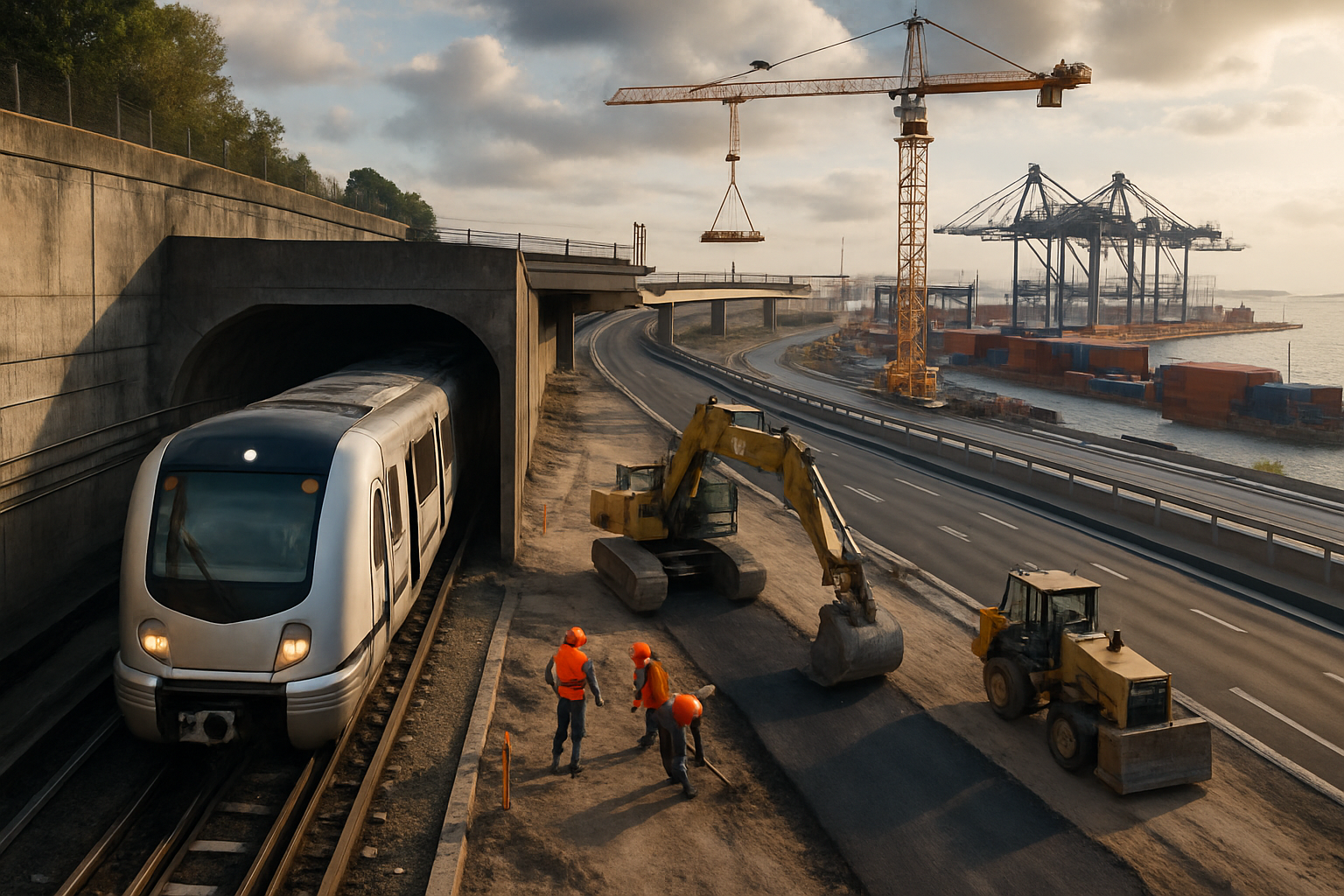
Major transportation infrastructure developments across Latin America and Northern Europe highlight the contrasting realities of the global $570+ billion infrastructure investment surge, as nations advance ambitious connectivity projects while grappling with severe weather-related disruptions and logistical challenges.
Three significant developments this week underscore the complex landscape of modern infrastructure development: the Dominican Republic's successful metro expansion, Colombia's massive landslide cleanup, and Estonia's climate-induced island isolation.
Dominican Republic Advances Urban Mobility
The Dominican Republic achieved a major transportation milestone with the inauguration of Line 2C extension of the Santo Domingo Metro, marking a significant improvement in urban mobility for the capital region. The 7.3-kilometer extension, which began operations Wednesday, represents a substantial investment in sustainable public transportation infrastructure.
President Luis Abinader emphasized the project's transformative impact during Tuesday's inauguration ceremony, stating that the new section will dramatically reduce travel times and transportation costs for thousands of residents commuting daily to the capital's center. The extension specifically targets mobility improvements in Santo Domingo Oeste, particularly benefiting the municipality of Los Alcarrizos.
"The opening of this new section will reduce travel times and transportation costs for thousands of residents who commute daily to the center of the capital."
— President Luis Abinader, Dominican Republic
The Line 2C extension features five strategically located stations: Pedro Martínez (Manoguayabo), Franklin Mieses Burgos (Monumental Avenue), 27 de Febrero (kilometer 13), Freddy Gatón Arce (kilometer 14), and Pablo Adón Guzmán at the entrance to Los Alcarrizos. This expansion integrates seamlessly with the city's broader public transport network, demonstrating sophisticated urban planning that prioritizes connectivity and accessibility.
The project exemplifies the modern approach to infrastructure development, incorporating climate-resilient design principles and smart technology integration from the planning phase. Real-time monitoring systems, automated operations, and integrated payment systems represent the evolution from traditional public transport toward comprehensive urban mobility solutions.
Colombia Confronts Massive Infrastructure Challenge
In stark contrast to the Dominican Republic's success, Colombia faces a monumental infrastructure crisis following a catastrophic landslide that has completely blocked the critical Medellín-Bogotá highway. The disaster, involving more than 60,000 cubic meters of material, presents one of the most significant logistical challenges in recent Colombian transportation history.
The scale of the cleanup operation is unprecedented, requiring more than 4,200 truck trips to remove the debris that has entirely blocked vehicular traffic on this vital commercial corridor. The highway serves as a crucial artery connecting Colombia's two largest economic centers, making its closure a significant disruption to national commerce and regional connectivity.
Authorities estimate that reopening the Medellín-Bogotá route will require between three and four days of intensive work, weather permitting. The massive scale of the debris removal operation demonstrates the vulnerability of transportation infrastructure to extreme weather events and natural disasters, highlighting the urgent need for climate-adaptive infrastructure design.
This crisis occurs within the broader context of increasing extreme weather events affecting transportation networks globally, from European storms to Latin American flooding. The Colombia incident underscores the critical importance of incorporating climate resilience into infrastructure planning and the need for robust emergency response protocols.
Estonia's Islands Face Isolation Crisis
Estonia confronts a different but equally challenging transportation crisis as two of its islands find themselves essentially cut off from the mainland following severe winter conditions. The official closure of the ice road has left the island of Vormsi isolated, while fuel reserves run dangerously low on Ruhnu island.
The situation represents a critical test of Estonia's commitment to maintaining connectivity for its remote island communities. Estonia's small islands are demanding more decisive government action to address their isolation, highlighting the unique challenges faced by nations with archipelago components in their territory.
This crisis demonstrates the vulnerability of alternative transportation routes that depend on seasonal conditions. The ice road closure, while necessary for safety reasons, leaves these communities dependent on more expensive and weather-dependent ferry or air services. The low fuel reserves on Ruhnu island compound the crisis, creating potential emergency conditions for residents.
Estonia's situation illustrates broader challenges facing island and remote communities worldwide as climate change affects traditional transportation methods. The warming temperatures that prevent reliable ice road formation represent a microcosm of how climate change is reshaping transportation infrastructure globally.
Global Infrastructure Investment Context
These three cases exemplify the broader global infrastructure development landscape, which has seen unprecedented investment levels exceeding $570 billion worldwide. This investment surge reflects international recognition of infrastructure as essential foundation for post-pandemic recovery, climate adaptation, and sustainable economic development.
The Dominican Republic's metro extension represents the positive potential of coordinated infrastructure investment, demonstrating how strategic public transportation development can enhance urban livability while supporting economic growth. The project incorporates modern sustainability principles, smart technology integration, and climate-resilient design standards that are becoming essential components of contemporary infrastructure projects.
Colombia's highway crisis highlights the growing challenges posed by climate change to existing infrastructure. The massive landslide demonstrates how extreme weather events can overwhelm traditional infrastructure design parameters, requiring new approaches to resilience and emergency response. The three-to-four-day closure timeline for such a critical commercial route underscores the economic implications of infrastructure vulnerabilities.
Estonia's island isolation crisis represents the unique challenges faced by nations with complex geographical features. The situation demonstrates how climate change can disrupt traditional transportation methods, requiring innovative solutions and greater investment in alternative connectivity options.
Technology and Climate Adaptation Integration
Modern infrastructure projects increasingly incorporate sophisticated technology integration from the design phase, including real-time monitoring, predictive maintenance systems, and integrated digital payment platforms. These technological advances enable more efficient operations and improved passenger experiences while reducing long-term maintenance costs.
Climate adaptation has become a central requirement for infrastructure development, with projects incorporating flood management systems, enhanced drainage capabilities, weather-resistant materials, and backup power systems. The February 2026 extreme weather events across Europe and the Americas have demonstrated the urgent need for infrastructure designed for future climate conditions rather than historical weather patterns.
Environmental sustainability considerations now influence infrastructure planning from initial design phases, reflecting evolved understanding of long-term environmental and economic impacts. Projects must demonstrate positive environmental outcomes and climate resilience to secure financing and regulatory approval from international development partners.
Economic and Social Implications
Transportation infrastructure investments create substantial economic multiplier effects beyond construction employment. The Dominican Republic's metro extension will provide permanent benefits through reduced transportation costs, enhanced market access, and improved quality of life for hundreds of thousands of residents. These improvements support broader economic development by making the capital region more accessible and efficient.
Colombia's highway crisis demonstrates the economic vulnerability created by infrastructure disruptions. The closure of the Medellín-Bogotá corridor affects not only immediate transportation needs but also supply chains, commercial relationships, and regional economic integration. The massive cleanup costs and economic losses during the closure highlight the critical importance of infrastructure resilience.
Estonia's island isolation crisis raises questions about the social contract between governments and remote communities. The situation highlights the balance between economic efficiency and social equity in transportation policy, particularly for communities that depend on government-supported transportation links for basic connectivity.
International Cooperation and Financing
Successful infrastructure development increasingly requires sophisticated international cooperation, combining public-private partnerships, multilateral development funding, and bilateral technical assistance. The Dominican Republic's metro project benefits from international expertise and financing mechanisms that enable developing nations to undertake previously impossible infrastructure improvements.
Modern infrastructure projects demonstrate the evolution of financing approaches, incorporating environmental and social governance standards that ensure long-term sustainability while meeting immediate development needs. These financing innovations enable countries to access international capital markets while maintaining national ownership of critical infrastructure assets.
Regional integration initiatives support large-scale infrastructure investments by creating shared benefits and cost-sharing mechanisms. Transportation infrastructure serves as physical foundation for economic integration agreements, supporting trade facilitation and competitive advantages through improved connectivity.
Future Infrastructure Challenges and Opportunities
The transportation infrastructure developments of February 2026 establish important precedents for balancing immediate development needs with long-term sustainability requirements. Success in these diverse contexts provides valuable lessons for different geographic, economic, and political circumstances worldwide.
Infrastructure evolution continues shifting from simple construction toward integrated systems supporting economic development, environmental protection, and social connectivity simultaneously. Modern projects must demonstrate capabilities for adaptive management in rapidly changing conditions while maintaining essential services and safety standards.
The global infrastructure renaissance represents a fundamental transformation in how societies approach connectivity challenges. The convergence of technological advancement, environmental awareness, and international cooperation creates unprecedented opportunities for creating transportation systems that serve 21st-century needs while preparing for future challenges including demographic shifts, economic evolution, and climate change.
These developments demonstrate that successful infrastructure requires strategic planning that integrates immediate mobility needs with long-term resilience planning. The choice between reactive crisis management and proactive adaptation planning will determine whether current infrastructure investments become prosperity foundations or climate-vulnerable assets in the decades ahead.