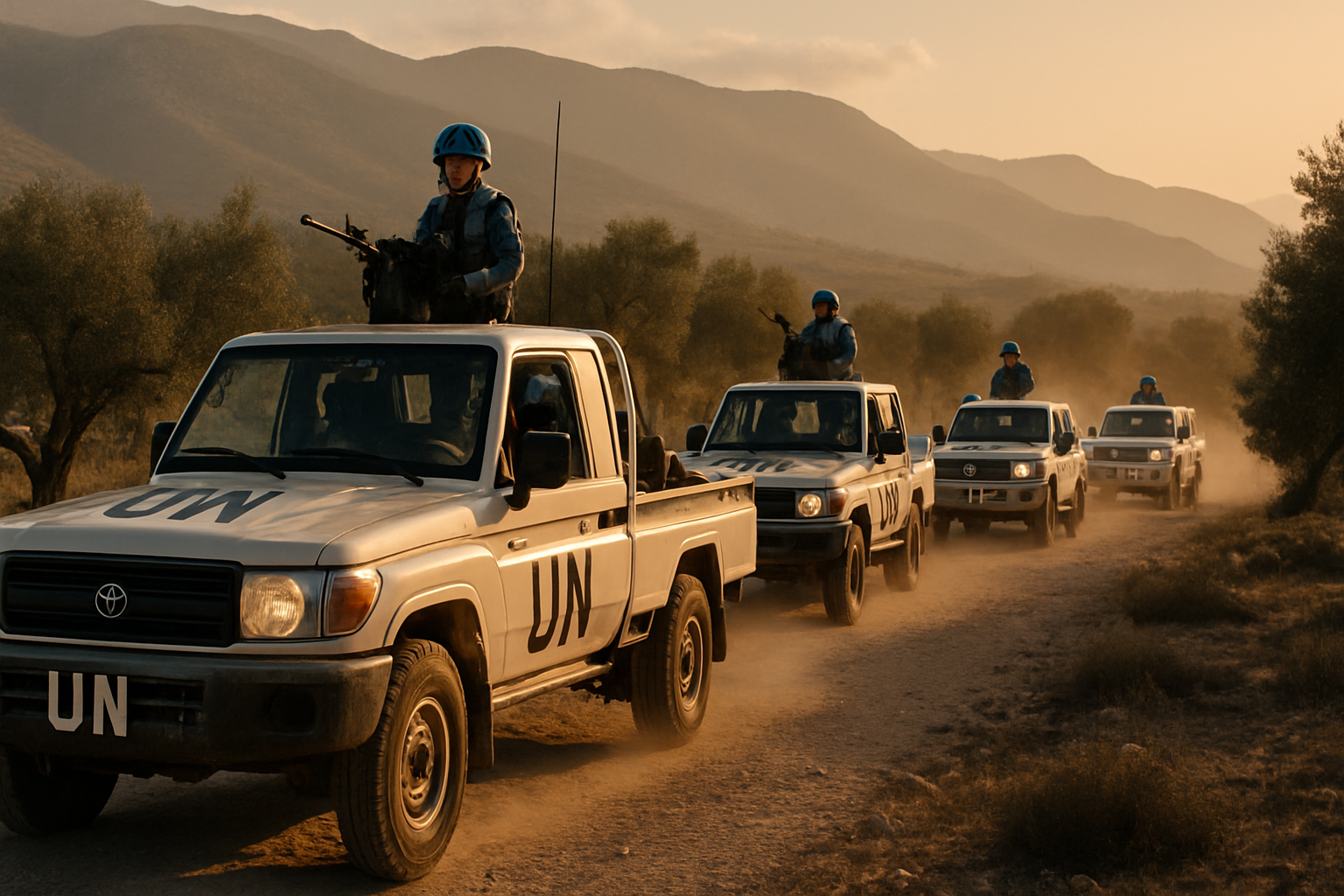
Three United Nations peacekeepers from Indonesia were killed in two separate incidents within 24 hours in southern Lebanon, marking the first UNIFIL casualties in the current escalation and highlighting the growing dangers facing international forces amid the expanding Israel-Hezbollah conflict.
Two peacekeepers died Monday when an explosion from an unknown origin destroyed their vehicle near Bani Hayyan in southern Lebanon, according to the UN Interim Force in Lebanon (UNIFIL). Two other soldiers were wounded in the blast. Earlier, another Indonesian peacekeeper was killed overnight Sunday into Monday when a projectile exploded near one of the group's positions by the southern Lebanese village of Adchit al-Qusayr, with another peacekeeper critically injured.
International Response and Security Council Action
France immediately called for an urgent meeting of the UN Security Council regarding the peacekeeping force following the deaths, according to French Foreign Minister Jean-Noël Barrot. "Paris condemns in the strongest terms" the incidents, the minister announced on social media platform X.
The killings represent the most serious breach of UNIFIL operations since the November 2024 ceasefire agreement, which had held for over a year before completely collapsing when Hezbollah joined the broader Iran-Israel conflict in March 2026.
"These are two separate incidents and we are investigating them as two separate incidents,"
— UNIFIL Spokeswoman, describing the attacks
Broader Context of Regional Escalation
The peacekeepers' deaths occurred during a weekend of intense violence that saw Lebanese journalists and medical personnel killed in Israeli strikes. The escalation represents the collapse of diplomatic efforts that had maintained relative stability along the Israel-Lebanon border since late 2024.
According to my analysis of historical context, UNIFIL has faced increasingly precarious conditions since Hezbollah made the strategic decision to join Iran's confrontation with Israel following the death of Iranian Supreme Leader Ali Khamenei on March 1, 2026. The Lebanese organization faced what sources describe as an "impossible choice" between maintaining the ceasefire versus responding to Iranian pressure for regional solidarity.
Humanitarian Crisis Deepens
The UN peacekeepers' deaths come amid a broader humanitarian catastrophe in Lebanon. Over 800,000 Lebanese civilians have been displaced according to official counts, with more than 1,000 killed since the conflict began. Emergency shelters have been overwhelmed, forcing thousands to sleep on the streets of Beirut.
Particularly concerning is the systematic targeting of medical personnel. According to Lebanese Health Ministry data, 26 paramedics have been killed and 51 wounded since March 2, raising serious questions about compliance with international humanitarian law. The deadliest single attack occurred at the Burj Qalaouiyah healthcare center, where 12 medical workers including doctors, nurses, and paramedics were killed.
UNIFIL's Dangerous Mission
The United Nations Interim Force in Lebanon was established in 1978 to confirm Israeli withdrawal from southern Lebanon and restore international peace and security. The force, which includes approximately 10,000 peacekeepers from various countries, has operated under increasingly dangerous conditions as regional tensions have escalated.
UNIFIL spokeswoman Kandice Ardiel previously described the situation as "precarious and volatile," noting the challenges facing both peacekeepers and civilians who have been forced to evacuate areas of southern Lebanon. The force has documented what it describes as systematic violations of the ceasefire arrangements that were supposed to provide a buffer zone between Israeli and Hezbollah forces.
International Peacekeeping Under Threat
The Indonesian casualties represent a broader crisis facing international peacekeeping operations worldwide. The deaths occur within the context of what UN Secretary-General António Guterres has called the "greatest test of multilateral cooperation in the modern era," referring to the cascading regional crisis that has affected global aviation, energy markets, and diplomatic relations.
Italy, which contributes significant forces to UNIFIL, has been pressing for changes to the rules of engagement for peacekeepers, reflecting growing concerns about their ability to operate safely in an increasingly hostile environment. The deaths underscore the challenges facing international intervention mechanisms designed for a different era of conflict.
Regional Implications
The escalation in southern Lebanon is part of a broader Middle Eastern crisis that has seen unprecedented global disruption. Over 18,000 flights have been cancelled worldwide, oil prices have surged past $100 per barrel, and the Strait of Hormuz—through which 40% of global oil transits—has been effectively closed due to Iranian mining operations.
French President Emmanuel Macron has offered to host direct Israel-Lebanon talks in Paris, representing the first such negotiations since the ceasefire collapse. However, with the November 2024 agreement now completely defunct, diplomatic solutions appear increasingly elusive as both sides have chosen military escalation over negotiation.
Historical Context and Precedent
The current crisis represents a template-setting moment for 21st-century conflict resolution. The rapid transition from what had been a relatively stable ceasefire to full-scale regional warfare demonstrates what experts describe as the "fragility of crisis management in the multipolar era."
The killing of UN peacekeepers adds another layer of complexity to international law enforcement, as it directly challenges the neutrality and protection that international agreements are supposed to provide humanitarian workers and peacekeeping forces. The incidents may constitute violations of the Geneva Conventions, which provide specific protections for UN personnel operating in conflict zones.
Looking Forward
The deaths of the three Indonesian peacekeepers represent more than isolated incidents—they symbolize the breakdown of international mechanisms designed to prevent regional wars and protect civilian populations. As the UN Security Council convenes to address the crisis, the international community faces fundamental questions about the viability of peacekeeping operations in an era of increasingly complex, multi-front conflicts.
With Lebanon caught between Israeli military operations and Iranian proxy obligations, and with over 800,000 people displaced, the humanitarian crisis continues to deepen. The coming days will be critical in determining whether diplomatic intervention can restore some measure of stability or whether the region continues its trajectory toward broader warfare with implications extending far beyond the Middle East.
The template being set in Lebanon—where ceasefire agreements collapse rapidly, international peacekeepers come under direct attack, and humanitarian law is systematically violated—may well determine how similar conflicts are approached for decades to come. The international community's response to these peacekeepers' deaths will signal whether multilateral cooperation can adapt to the challenges of modern warfare or whether diplomatic solutions will continue to give way to military escalation.