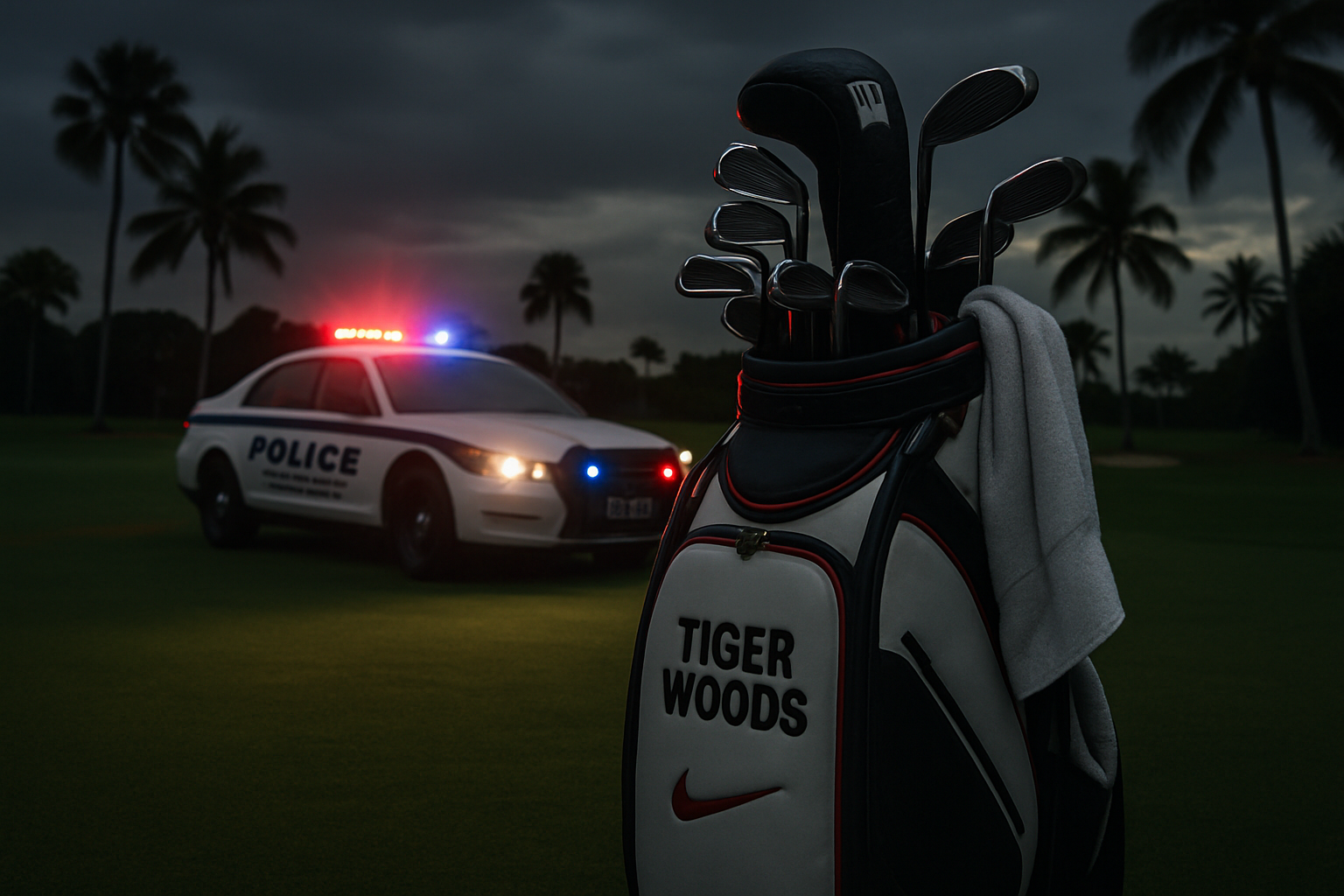
Golf legend Tiger Woods pleaded not guilty to driving under the influence charges Tuesday following a March 27, 2026 car crash in Jupiter, Florida, while simultaneously announcing his decision to seek treatment and step away from professional golf indefinitely.
The 50-year-old Woods told authorities he was "looking down at his phone" at the time of the incident that saw his Land Rover roll over while attempting to pass a pressure cleaner truck on a narrow Jupiter Island road around 2:00 PM. The plea was entered just days after Woods was arrested on suspicion of DUI, with police reports revealing concerning details about his condition at the time of the crash.
Details of the March 27 Incident
According to police reports, Woods exhibited clear signs of impairment at the crash scene, including bloodshot and glassy eyes, dilated pupils, slow and lethargic movements, and profuse sweating. Officers discovered two white hydrocodone pills in his pocket, and while Woods passed a breathalyzer test, he refused to provide a urine sample, triggering automatic license suspension and enhanced penalties under Florida law.
Woods admitted to police that he had taken prescription medication the morning of the crash. The incident marks his second DUI-related arrest in the same Jupiter area, following a 2017 incident involving his Mercedes that resulted in similar charges.
"The seriousness of the situation is clear to me, and I am committed to doing whatever is necessary to address these issues and focus on what truly matters—my health, my family, and my recovery."
— Tiger Woods, Statement
Legal Implications and Repeat Offender Status
As a repeat offender in Florida, Woods faces enhanced penalties including potential fines, extended license suspension, mandatory DUI education programs, and possible jail time. The State Attorney's Office is currently reviewing the case for formal charges, with toxicology results still pending despite his refusal to provide a urine sample.
Woods' legal team has not disclosed their defense strategy, though the combination of prescription drug evidence and his admission of taking medication creates significant challenges for his case. The refusal to provide biological samples for testing adds complexity to the prosecution's case while simultaneously triggering automatic administrative penalties.
Impact on Woods' Career and Legacy
Woods' announcement that he is stepping away indefinitely effectively ends his comeback attempt at age 50. The golf icon has not competed since July 2024 and missed the entire 2025 season due to a March 2025 Achilles rupture and subsequent October 2025 back surgery. His absence from the upcoming Masters Tournament marks the second consecutive year he will miss the major championship.
The indefinite break comes at what was intended to be Woods' final opportunity to compete for major championships. With 15 major titles and 82 PGA Tour victories to his name, Woods holds the record for 683 weeks ranked as the world's number one golfer, but his career has been increasingly overshadowed by personal struggles and prescription drug dependency issues.
Treatment and Recovery Focus
In his statement, Woods indicated his voluntary decision to seek treatment, though he did not specify the type of program or duration. Medical experts note that prescription drug dependency among athletes dealing with chronic pain has become increasingly common, requiring specialized treatment approaches that address both physical pain management and potential dependency issues.
Treatment specialists view Woods' voluntary approach positively, as programs entered willingly rather than court-mandated typically show better long-term outcomes. The golfer's statement suggests recognition that the recovery process cannot be rushed and that long-term well-being must take priority over competitive ambitions.
Industry and Sponsor Impact
Woods' indefinite absence sends shockwaves through professional golf, where he has long been the sport's biggest television draw and tournament attendance driver. The PGA Tour must now navigate its future without its most significant star, with television ratings, sponsor interest, and tournament prestige all likely to be affected.
Corporate sponsors including Nike and TaylorMade face relationship decisions as they evaluate their associations with Woods. The golf icon's previous scandals have shown that while his on-course achievements remain undisputed, the pattern of personal struggles creates complicated narratives for brand partnerships.
Community and Prescription Drug Issues
The repeated incidents in the Jupiter area raise questions about support systems and the challenges of managing high-pressure environments. The Jupiter Island community has dealt with the impact of repeated high-profile incidents involving Woods, highlighting broader issues about prescription drug accountability and the pressures faced by elite athletes.
Medical professionals point to prescription drug dependence among athletes with chronic pain as a systematic issue requiring comprehensive intervention. The intersection of pain management, performance pressure, and potential dependency creates complex challenges that traditional approaches may not adequately address.
Legal Proceedings Moving Forward
Formal charges remain pending while the State Attorney's Office reviews all evidence and toxicology results. A bond hearing is expected within the coming weeks that will determine the scope of charges Woods ultimately faces. The case draws attention to questions of prescription drug accountability for high-profile individuals and the equal application of Florida's DUI laws regardless of fame or status.
The legal proceedings will likely receive significant media attention given Woods' high profile and the complexity of his legal history spanning nearly two decades. Defense attorneys will face the challenge of addressing both the immediate charges and the pattern of similar incidents that prosecutors may attempt to establish.
Broader Implications for Elite Athletes
Woods' case highlights the broader challenges facing elite athletes dealing with chronic pain, aging, and the pressures of sustained excellence. The golf world is forced to confront the complex legacy of its greatest athlete—his undisputed on-course achievements against a pattern of personal struggles that have created a cautionary tale about the pressures of fame and competition.
The voluntary treatment approach suggests a recognition that addressing these issues requires more than traditional disciplinary measures. Success in Woods' recovery could provide a template for other athletes facing similar challenges, while failure might reinforce concerns about the adequacy of current support systems for elite performers.
Looking Ahead
As Woods begins this most serious personal and legal crisis of his career, the golf world awaits whether the champion known for dramatic comebacks can overcome what may be his most significant challenge yet. The indefinite timeline creates uncertainty about any potential return to professional golf, legal resolution, and the future of corporate relationships.
The pattern of Jupiter-area prescription incidents indicates systematic issues that require comprehensive intervention beyond quick fixes. Whether Woods can successfully navigate this crisis may determine not only his personal future but also serve as an important case study in athlete recovery and the balance between competitive ambitions and long-term health and well-being.