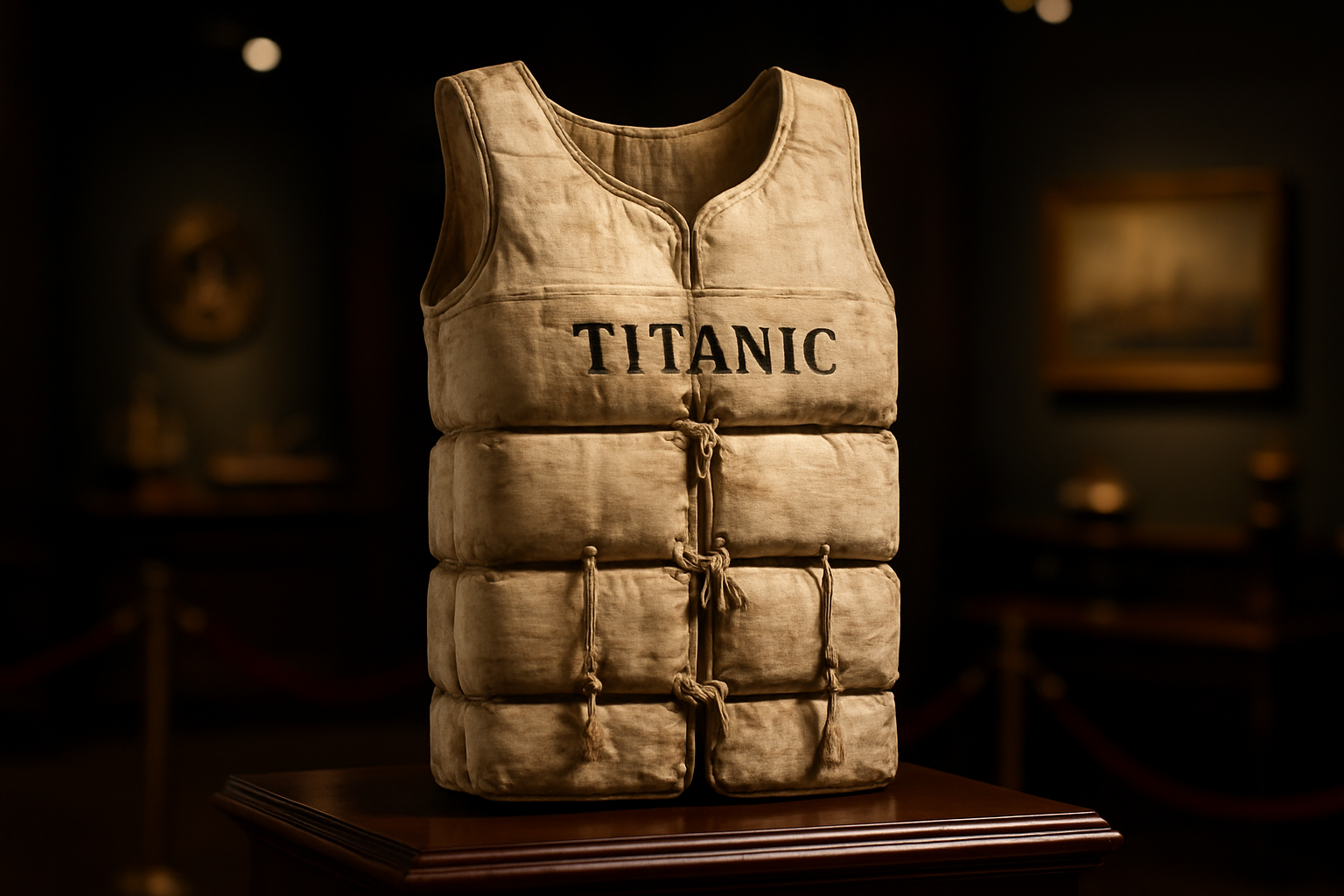
A life jacket worn by a first-class passenger aboard the RMS Titanic has achieved a record-breaking sale price of £670,000 ($906,000) at auction, becoming the most expensive piece of Titanic memorabilia ever sold and marking the first time such an artifact has entered the public market in 114 years.
The historic life jacket, worn by Laura Mabel Francatelli during the ship's tragic sinking in 1912, was sold at Henry Aldridge & Son auction house on Saturday, April 18, 2026. The extraordinary sale price reflects both the rarity of authentic Titanic artifacts and the growing maturation of maritime memorabilia as a legitimate collecting category.
A Unique Piece of History
What makes this particular life jacket extraordinary is not just its connection to the world's most famous maritime disaster, but its impeccable provenance and preservation. Francatelli, a first-class passenger and secretary to fashion designer Lady Duff-Gordon, wore the life jacket before boarding Lifeboat No. 1, one of the few lifeboats to survive the sinking with relatively few passengers aboard.
The life jacket has remained in private collections for over a century, with clear documentation tracing its ownership from the night of the disaster through multiple generations of collectors. This unbroken chain of custody has been crucial in establishing its authenticity—a critical factor in a market where replicas and reproductions are common.
"This is the only life jacket from the Titanic to be sold at auction in 114 years."
— Henry Aldridge & Son Auction House
International Bidding Frenzy
The auction attracted international attention, with bidders participating from across Europe, North America, and Asia. Danish media reported the sale with particular interest, noting the "dizzying amount" achieved for what they described as a "historic life jacket." The final hammer price of £670,000 exceeded all pre-sale estimates and demonstrated the premium that collectors are willing to pay for authenticated artifacts with clear historical connections.
The sale occurred during what cultural experts are calling the "2026 Cultural Renaissance"—a period of unprecedented international coordination in heritage preservation and cultural appreciation. This broader context of heightened interest in authentic historical artifacts has created a perfect storm for record-breaking auction results.
The Human Story Behind the Artifact
Laura Mabel Francatelli was among approximately 700 survivors of the Titanic disaster that claimed around 1,500 lives. As a first-class passenger, she had access to the ship's limited supply of lifeboats—a privilege that ultimately saved her life. The life jacket she wore represents not just maritime history, but the stark class divisions that determined who lived and who died on that fateful April night in 1912.
Francatelli's survival story adds another layer of poignancy to the artifact. After the disaster, she continued working as a secretary and maintained the life jacket as a personal memento of her brush with death. The item's preservation through more than a century speaks to the profound impact the disaster had on those who survived it.
Maritime Memorabilia as Investment
The record-breaking sale validates maritime memorabilia as an alternative investment category with both emotional and financial value. Unlike stocks or bonds, these historical artifacts offer tangible connections to pivotal moments in human history while demonstrating remarkable appreciation potential.
Cultural preservation experts note that the market now distinguishes rigorously between authentic artifacts and replicas through sophisticated provenance research. This evolution has protected both collectors and cultural heritage by ensuring that only genuinely historical items achieve premium valuations.
The success of the Francatelli life jacket auction establishes new precedents for future maritime artifact valuations and may influence museum acquisition policies. Institutions worldwide are now recognizing that private collectors can play crucial roles in preserving maritime heritage when proper documentation and care standards are maintained.
Broader Cultural Impact
The auction's success reflects a broader trend toward tangible historical connections in our increasingly digital age. As virtual experiences become commonplace, physical artifacts that allow direct connection to historical events have become increasingly precious. The Titanic life jacket represents the ultimate historical touchstone—an object that was physically present during one of the most significant maritime disasters in human history.
This phenomenon is part of what cultural observers are calling a renaissance in heritage preservation, where authentic artifacts are valued not just for their rarity but for their power to educate future generations about historical events. The Titanic tragedy continues to resonate as a cautionary tale about maritime safety, human resilience, and the importance of learning from past disasters.
Preservation and Legacy
The successful auction also highlights the critical importance of proper preservation techniques. The Francatelli life jacket survived 114 years in remarkable condition due to careful conservation by successive owners. This preservation effort represents a private contribution to cultural heritage that complements the work of museums and official institutions.
Modern conservation techniques now allow for detailed documentation and analysis of such artifacts without damaging them. Advanced imaging and chemical analysis can reveal manufacturing details, material composition, and even traces of the seawater from that terrible night, providing researchers with unprecedented insights into both the disaster itself and early 20th-century maritime safety equipment.
"This represents a maturation of maritime memorabilia as a legitimate collecting category with institutional recognition."
— Maritime Heritage Expert
Future Implications
The £670,000 sale price sets a new benchmark for Titanic memorabilia and maritime artifacts generally. This precedent is likely to influence valuations of similar items and may encourage more private collectors to bring historically significant pieces to market. The success also validates the approach of treating cultural artifacts as shared heritage deserving of both financial and scholarly respect.
Museums and cultural institutions are watching the maritime memorabilia market closely, as private collectors often serve as crucial partners in preservation efforts. The clear documentation and careful preservation demonstrated in the Francatelli life jacket sale provides a model for how private ownership can contribute to cultural stewardship while generating legitimate economic value.
As we approach the 115th anniversary of the Titanic disaster, this record-breaking auction serves as a powerful reminder that the human stories behind historical events continue to resonate across generations. The life jacket that once protected Laura Mabel Francatelli on a cold April night in 1912 has now found new purpose as a bridge connecting contemporary collectors with one of history's most profound maritime tragedies.
The extraordinary price achieved reflects not just the rarity of authentic Titanic artifacts, but society's enduring fascination with stories of human survival, technological hubris, and the thin line between tragedy and salvation that defined that fateful voyage more than a century ago.