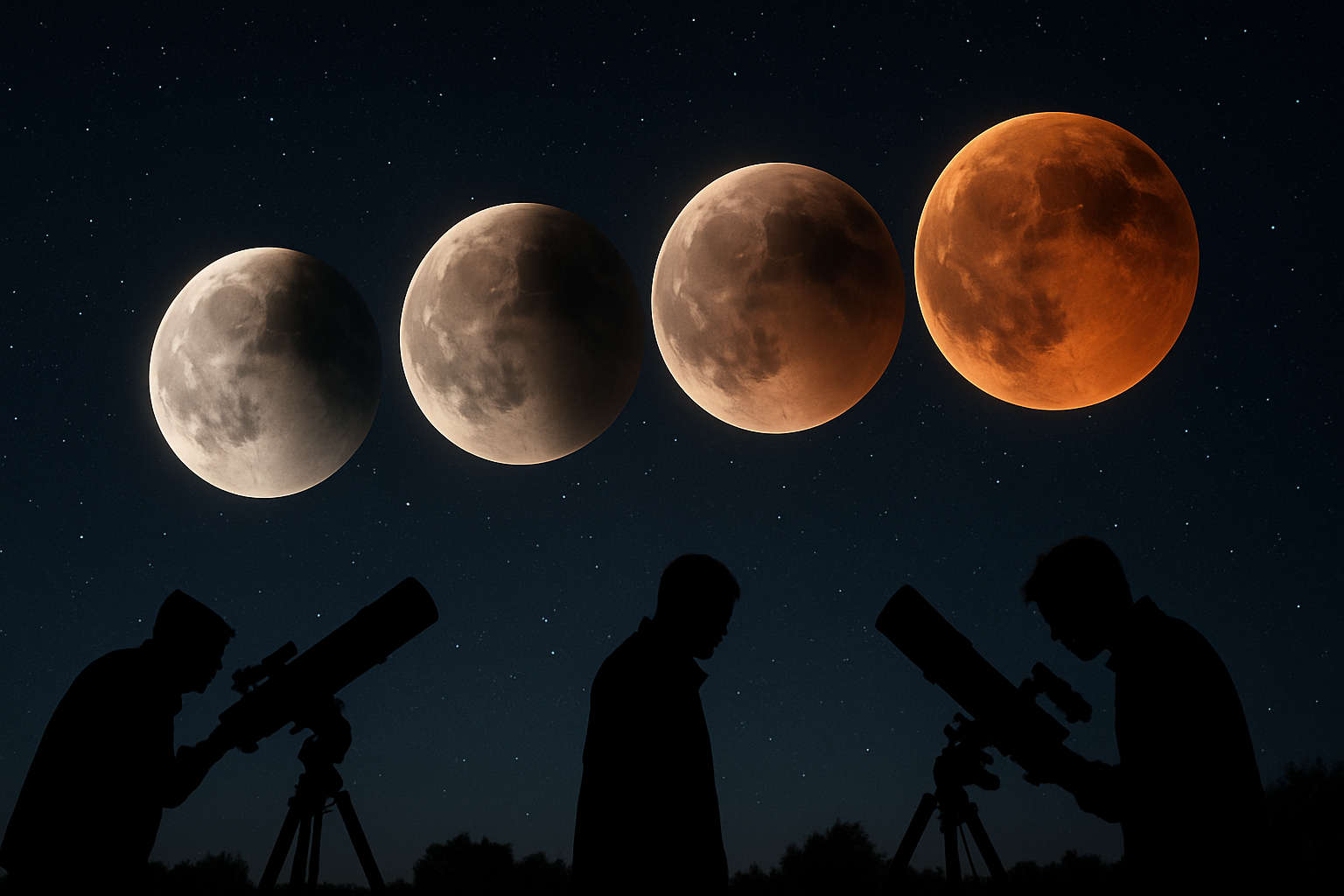
In the early morning hours of March 3, 2026, the Moon will glide through Earth's shadow, producing a total lunar eclipse that promises to be one of the most spectacular celestial events of the year, offering sky watchers across Canada and other regions an extraordinary astronomical experience.
This remarkable celestial phenomenon occurs during what astronomers are calling the "golden age of astronomical observation," coinciding with unprecedented technological capabilities and international cooperation in space science. The eclipse represents not just a stunning visual spectacle, but also a valuable opportunity for scientific research and public engagement with astronomy.
Understanding the Eclipse Phenomenon
A total lunar eclipse occurs when Earth passes directly between the Sun and Moon, casting our planet's shadow across the lunar surface. Unlike solar eclipses, which are visible only from narrow paths on Earth's surface, lunar eclipses can be observed from anywhere on the night side of Earth where the Moon is above the horizon.
The March 3 eclipse will display the classic progression of lunar eclipse phases, beginning with the subtle penumbral phase before moving into the more dramatic partial eclipse. The highlight will be totality, when the Moon takes on its characteristic reddish-copper hue – often called a "blood moon" – caused by Earth's atmosphere bending and filtering sunlight.
Geographic Visibility and Timing
According to Canadian astronomical sources, the total lunar eclipse will be visible across most of Canada, with timing varying by location. The eclipse will begin during the early morning hours, making it particularly accessible for dedicated sky watchers willing to rise early or stay up late.
While specific timing details vary by longitude, observers across Canada can expect to witness different phases of the eclipse depending on their geographic location. Eastern regions may see different portions of the eclipse compared to western areas, highlighting the importance of checking local astronomical predictions.
International observations suggest the eclipse will also be visible from parts of North and South America, as well as regions of East Asia and Australia, making this a truly global astronomical event that connects observers across continents.
Optimal Viewing Conditions
March weather conditions across Canada present both opportunities and challenges for eclipse viewing. While spring weather can be unpredictable, the early morning timing may offer clearer skies in many regions before typical daytime cloud formation begins.
For the best viewing experience, astronomers recommend finding a location with minimal light pollution and an unobstructed view of the western sky, where the Moon will be positioned during the eclipse. Urban observers can still enjoy the spectacle, though rural locations will provide more dramatic viewing conditions.
No special equipment is required to observe a lunar eclipse safely, unlike solar eclipuses which require protective eyewear. The eclipse can be appreciated with the naked eye, though binoculars or small telescopes will enhance the experience by revealing surface details and color variations during totality.
Scientific Research Opportunities
This eclipse occurs during a period of remarkable space science advancement, including ongoing missions to the International Space Station and preparations for NASA's Artemis lunar exploration program. The March 3 eclipse provides valuable research opportunities for atmospheric and lunar studies.
Scientists will use the eclipse to study Earth's atmospheric properties by analyzing how our planet's atmosphere affects sunlight passing through it during totality. The reddish color of the eclipsed Moon results from Earth's atmosphere acting as a lens, bending red light around our planet while filtering out blue wavelengths.
Professional observatories and citizen scientists worldwide will coordinate observations, contributing to our understanding of lunar surface properties and Earth's atmospheric dynamics. This collaboration represents the kind of international cooperation that has made 2026 a watershed year for astronomical discovery.
Photography and Documentation
The eclipse offers exceptional opportunities for photography, from smartphones to professional cameras with telephoto lenses. Photographers should prepare for changing light conditions throughout the eclipse, with exposures ranging from normal daylight settings during partial phases to longer exposures during totality.
Modern smartphone cameras, recently approved by NASA for space photography applications, can capture remarkable eclipse images when used with tripods for stability. The key is experimenting with different exposure settings as the eclipse progresses and the Moon's brightness changes dramatically.
Time-lapse photography can create stunning sequences showing the complete eclipse progression, documenting the Moon's journey through Earth's shadow from first contact through the end of totality.
Historical and Cultural Context
Lunar eclipses have fascinated humanity throughout history, often inspiring both scientific inquiry and cultural interpretations. Ancient civilizations developed sophisticated understanding of eclipse cycles, while modern astronomy has refined our ability to predict these events with extraordinary precision.
The March 3 eclipse occurs during a period of renewed interest in lunar exploration, with multiple nations planning return missions to the Moon. This celestial event serves as a natural reminder of our cosmic neighborhood and the ongoing human quest to understand and explore space.
Indigenous astronomical traditions across Canada have long recognized lunar eclipses as significant celestial events, often incorporating them into seasonal calendars and cultural practices that connected communities to cosmic rhythms.
Technological Integration
Modern eclipse observation benefits from sophisticated forecasting tools, mobile applications providing precise timing for specific locations, and digital platforms enabling global sharing of observations. These technologies democratize astronomical observation, making professional-quality eclipse prediction accessible to amateur observers.
Live streaming capabilities allow the eclipse experience to be shared globally, connecting observers across different time zones and weather conditions. This technological integration exemplifies how contemporary astronomy combines traditional observation with digital innovation.
The eclipse also occurs during the "space economy golden age," when commercial space activities and scientific research converge to create unprecedented opportunities for public engagement with astronomy and space science.
Preparation Recommendations
Successful eclipse observation requires advance planning, particularly regarding location selection and weather monitoring. Observers should identify suitable viewing locations well before March 3, considering factors such as horizon visibility, light pollution levels, and accessibility during early morning hours.
Essential equipment includes comfortable seating or blankets for extended observation periods, warm clothing appropriate for March weather conditions, red flashlights to preserve night vision, and backup power for cameras or mobile devices used for timing and photography.
Weather contingency planning is crucial, as cloud cover can obscure the eclipse entirely. Having multiple potential viewing locations identified increases the chances of clear skies, and monitoring weather forecasts in the days leading up to the eclipse helps optimize location selection.
Safety and Comfort Considerations
Unlike solar eclipses, lunar eclipses pose no direct viewing hazards and can be observed safely with the naked eye throughout all phases. However, March weather conditions require appropriate preparation for extended outdoor observation periods during early morning hours when temperatures are typically at their lowest.
Proper clothing, warm beverages, and shelter from wind can make the difference between an enjoyable astronomical experience and an uncomfortable ordeal. Planning for comfort ensures observers can fully appreciate the eclipse's progression without distraction from cold or discomfort.
Group viewing events organized by local astronomy clubs or educational institutions often provide additional resources, expertise, and shared enthusiasm that enhance the eclipse experience while building community connections through astronomical observation.
Future Eclipse Opportunities
The March 3, 2026 eclipse represents part of an ongoing cycle of lunar eclipses visible from different global locations. While this particular eclipse offers excellent visibility for North American observers, future eclipses will provide opportunities for observers in different regions to experience these remarkable celestial events.
Understanding eclipse cycles helps observers plan for future astronomical events and appreciate the predictable nature of celestial mechanics. The Saros cycle, approximately 18 years long, governs eclipse repetition patterns and allows astronomers to forecast eclipses centuries in advance.
This eclipse occurs during a particularly active period for space exploration and astronomical discovery, making it a symbolic connection between ancient cosmic patterns and humanity's expanding presence in space through missions to the Moon, Mars, and beyond.
Community and Educational Impact
The March 3 eclipse provides exceptional opportunities for educational outreach, inspiring public interest in astronomy and space science. Schools, libraries, and science museums across Canada are preparing special programs to help observers understand and appreciate this celestial spectacle.
Community viewing events foster shared experiences that connect people to the cosmos and to each other, demonstrating how astronomical events can build social connections while advancing scientific literacy. These gatherings often include expert presentations explaining eclipse mechanics and broader astronomical concepts.
The eclipse's timing during the current "space economy golden age" makes it particularly relevant for inspiring the next generation of scientists, engineers, and space explorers who will participate in humanity's expanding cosmic presence through lunar bases, Mars missions, and deep space exploration.
As the Moon enters Earth's shadow on March 3, 2026, observers across Canada and worldwide will witness a cosmic dance that has captivated humanity for millennia, now enhanced by modern understanding and technology that makes this ancient celestial phenomenon more accessible and meaningful than ever before.