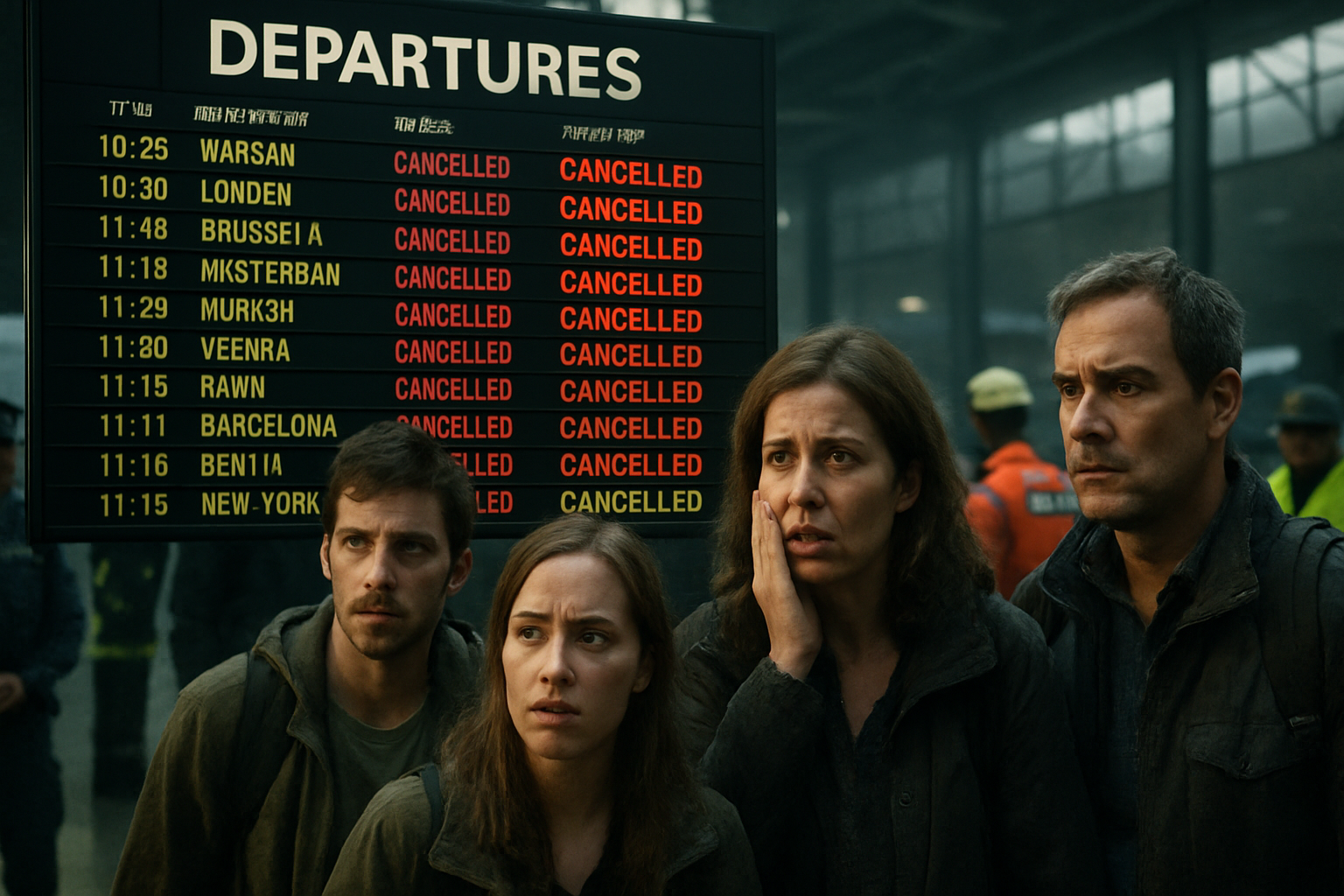
The global tourism industry confronts its most severe operational crisis since the COVID-19 pandemic as widespread regional conflicts, aviation disruptions, and security concerns fundamentally reshape international travel patterns while destinations struggle to maintain visitor confidence and promote safety.
Recent developments across multiple continents reveal a tourism sector under unprecedented strain. Azerbaijan's Deputy Tourism Chief participated in the UN Tourism Ministers' Summit in Berlin, emphasizing international cooperation amid growing regional tensions. Meanwhile, Sierra Leone secured hosting rights for the 3rd UN Tourism Regional Forum on Gastronomy Tourism for Africa, marking a significant milestone for West African tourism development despite broader security concerns affecting global travel.
European Tourism Growth Amid Regional Instability
The European Union achieved record tourism performance in 2025, with nearly 3.1 billion nights spent in tourist accommodation establishments representing a 2.2% increase from 2024. Cyprus demonstrated robust performance in both overnight stays and revenues, according to Eurostat data. The growth occurred despite emerging threats of regional instability that now cast shadows over the industry's future prospects.
Spain led EU tourism with 513.6 million nights, followed by Italy (476.9 million), France (471.7 million), and Germany (442.1 million), representing 61.7% of total EU overnight stays. However, these achievements are increasingly overshadowed by mounting security concerns and aviation disruptions affecting global connectivity.
Aviation Crisis Creates Widespread Disruptions
The tourism industry faces its most comprehensive aviation crisis since the pandemic, with over 18,000 flights cancelled worldwide due to Middle East conflicts. Eight countries—Iran, Iraq, Israel, UAE, Qatar, Syria, Kuwait, and Bahrain—simultaneously closed civilian airspace, creating the most extensive regional disruption in modern aviation history.
Dubai International Airport, the world's busiest with over 86 million passengers annually, remains completely shut down following missile damage. Emirates and Etihad Airways face operational collapse, while major carriers including Air France-KLM, Wizz Air, and Bulgaria Air have suspended Middle East operations indefinitely, affecting hundreds of thousands of passengers globally.
"Global tourism flows are facing fresh uncertainty as tensions in the Middle East escalate. Flight prices between Asia and Europe have surged significantly."
— Croatia Week Tourism Analysis
Regional Adaptation Strategies
Croatia's tourism sector demonstrates resilience amid global disruptions, with industry analysts noting that the country's tourism advantages remain strong despite Middle East conflicts affecting global flight routes and pricing. Croatian destinations are benefiting from travelers seeking safer European alternatives as traditional Middle Eastern hub connections become unreliable.
The crisis has accelerated route diversification strategies, with airlines implementing Caribbean stopovers for trans-Pacific routes, enhanced fuel loading to avoid refueling in affected zones, and complex rerouting around closed airspace. These adaptations come with dramatically increased operational costs and reduced passenger capacity.
Energy Security Impacts on Tourism
Tourism sectors face additional pressures from energy market volatility, with oil prices surging 10% to over $80 per barrel as Iran effectively closed the Strait of Hormuz, affecting 40% of global seaborne oil transit. Natural gas prices have exploded by 24% in Europe and 78% in the US, directly impacting tourism operational costs and traveler confidence.
Major shipping companies Maersk and MSC have suspended Persian Gulf operations, with over 150 oil and LNG tankers stranded, representing billions in cargo value. These disruptions extend far beyond energy markets, affecting supply chains critical to tourism infrastructure and consumer goods.
Gastronomy Tourism Emerges as Growth Sector
Despite broader challenges, specialized tourism sectors show resilience. Sierra Leone's successful bid to host the 3rd UN Tourism Regional Forum on Gastronomy Tourism for Africa, scheduled for December 2-4, 2026, in Freetown, represents a significant milestone for West African tourism development. The event is expected to draw international chefs, policymakers, tourism ministers, and global media.
The announcement came during ITB Berlin, the world's leading travel trade show, following high-level meetings between the Sierra Leonean delegation and UN Tourism leadership. This gastronomy tourism focus reflects broader industry trends toward authentic cultural experiences and specialized travel segments that can withstand general security concerns.
Government Response and Evacuation Protocols
The crisis has triggered the largest coordinated international evacuation since the Arab Spring in 2011, with governments extracting hundreds of thousands of citizens from conflict zones. Cyprus activated its ESTIA evacuation plan for the first time, while multiple European nations have implemented emergency evacuation procedures and issued comprehensive travel warnings.
Australia faces evacuating 115,000 nationals, Germany is managing 30,000 stranded tourists, and Cyprus is coordinating evacuation of over 2,000 registered nationals in the UAE. These massive evacuation operations highlight the tourism industry's vulnerability to rapid geopolitical changes and the inadequacy of existing crisis management frameworks.
Economic Impact on Tourism Economies
Stock markets have crashed globally in response to the crisis, with Pakistan's KSE-100 suffering its largest single-day decline in history (-8.97%). European markets have dropped over 4%, while energy-dependent tourism economies face particular challenges as operational costs surge and visitor confidence plummets.
Sweden predicts electricity increases of 10-20 öre and gasoline rises of 1-2 kronor, directly impacting tourism costs. The interconnected nature of modern travel systems means regional conflicts create instant global civilian impact, affecting hundreds of thousands of passengers far from actual conflict zones.
Industry Transformation and Future Outlook
The crisis represents a template-setting moment for 21st-century tourism crisis management, forcing fundamental reconsideration of route planning, risk assessment, and international cooperation frameworks. Aviation industry leaders are accelerating discussions about enhanced resilience planning and route diversification to reduce dependency on single regional hubs.
Recovery timelines remain uncertain, unlike weather disruptions that follow predictable patterns. The tourism industry's recovery depends entirely on military operations resolution and diplomatic tensions normalization, making long-term planning impossible and forcing daily operational reviews across the sector.
Looking Forward: Building Resilient Tourism
The current crisis exposes the fragility of modern transportation networks and tourism's vulnerability to geopolitical instability in strategic regions. Success in containing the current escalation could provide a framework for future crisis management, while failure may fundamentally reshape international tourism for decades.
Tourism industry stakeholders are implementing emergency protocols including alternative routing strategies, enhanced fuel planning, and complex passenger management systems. However, these adaptations come at significant cost and reduced efficiency, challenging the industry's traditional operational models.
The stakes extend beyond immediate operational challenges to fundamental questions about tourism's role in an increasingly volatile world. The industry's ability to adapt while maintaining safety standards and visitor confidence will determine whether current disruptions represent a temporary crisis or the beginning of a permanent transformation in global travel patterns.
As the situation continues to evolve, tourism professionals worldwide monitor developments closely, recognizing that the coming weeks will be decisive in determining whether this crisis represents a contained regional disruption or the beginning of broader changes that could reshape international tourism for generations to come.