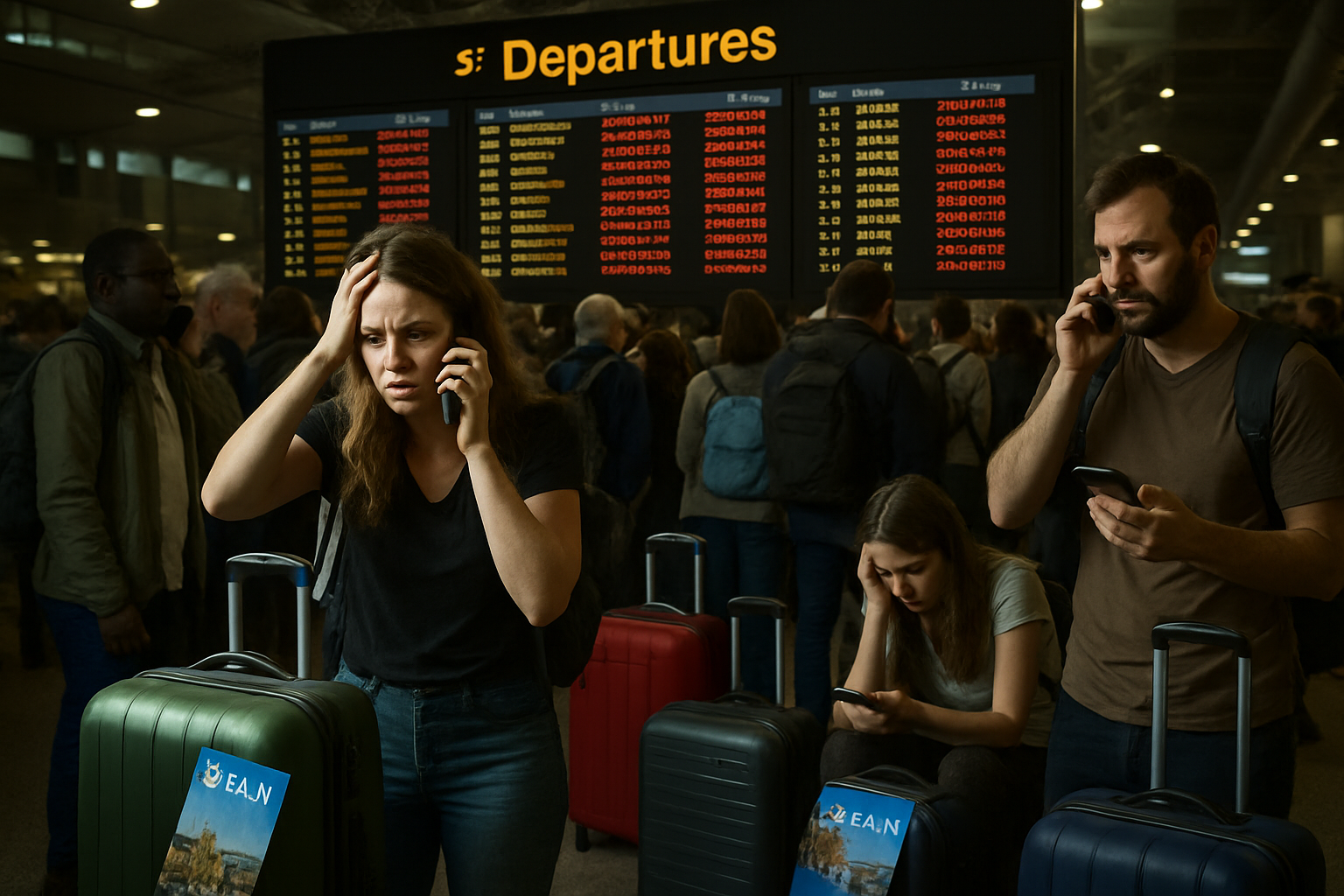
The global tourism industry faces its most severe operational crisis since the COVID-19 pandemic, as ongoing Middle East conflicts and aviation disruptions fundamentally reshape international travel patterns, with Spain positioned to benefit from travelers' reluctance to visit traditionally popular destinations.
TUI, Europe's largest tour operator, has announced expectations that Spain will experience increased visitor numbers as travelers seek alternatives to destinations like Egypt and Turkey due to regional instability. This shift comes amid unprecedented aviation disruptions that have seen over 18,000 flights cancelled worldwide since March 1, 2026, affecting hundreds of thousands of passengers globally.
Aviation Crisis Creates Global Ripple Effects
The crisis stems from simultaneous airspace closures across eight Middle Eastern countries—Iran, Iraq, Israel, UAE, Qatar, Syria, Kuwait, and Bahrain—following the escalation of conflicts in the region. Dubai International Airport, the world's busiest with over 86 million passengers annually, remains completely shut down after sustaining missile damage, eliminating a critical Europe-Asia hub connection.
Major carriers including Emirates, Etihad, Air France-KLM, Wizz Air, and Bulgaria Air have suspended Middle East operations indefinitely, creating cascading effects throughout global aviation networks. The disruption represents the most comprehensive regional airspace closure in modern history, exceeding even the 1991 Gulf War's impact on international travel.
"This is the most extensive aviation disruption we've seen since COVID-19, but unlike a pandemic, the recovery timeline is entirely dependent on military and diplomatic resolution rather than health measures."
— Aviation Industry Analyst
Tourism Patterns Shift Toward European Destinations
The ongoing crisis has accelerated a significant shift in global tourism patterns, with European destinations like Spain emerging as primary beneficiaries. Croatia's tourism industry has also reported advantages, as travelers increasingly seek safer European alternatives to traditional Middle Eastern and North African destinations.
According to TUI's analysis, traveler reluctance toward destinations perceived as unstable is driving demand toward established European markets. Spain, which already leads Europe with 513.6 million tourist nights annually, is positioned to capture additional market share from redirected travel demand.
Meanwhile, Finland is launching an international marketing campaign to transform Finnish cottage holidays into a new tourism brand, targeting visitors seeking peaceful, secure destinations. Visit Finland's initiative, funded by economic recovery packages, focuses specifically on Eastern Finland's summer cottage experiences.
Economic Impact Beyond Aviation
The tourism crisis extends far beyond flight cancellations, affecting global energy markets and supply chains. Oil prices have surged 10% past $80 per barrel as Iran declared the Strait of Hormuz—through which 40% of global oil transits—"unsafe." Natural gas prices have spiked 24% in Europe and 78% in the United States.
Major shipping companies Maersk and MSC have suspended operations, with over 150 oil and LNG tankers stranded in the Persian Gulf, representing billions in cargo value. This has created severe supply chain disruptions affecting tourism-dependent regions worldwide.
The crisis has also triggered the largest coordinated international evacuation since the Arab Spring of 2011, with European nations activating emergency protocols. Cyprus implemented its ESTIA evacuation plan for the first time, while countries like Sweden and Serbia ordered immediate evacuations from Iran citing "extremely uncertain" security conditions.
Individual Travel Stories Highlight Human Cost
Beyond statistics, the crisis has generated countless individual stories of travel disruption. Swedish traveler Emily Grosser paid 6,000 SEK (approximately $560) for alternative routing from Paris to Australia after her Dubai connection was cancelled. Such stories have become commonplace as travel agencies report their busiest crisis period since COVID-19.
Tourism agencies in Sweden describe "every phone call as an emergency," working around the clock to find alternative routes for stranded travelers. The crisis has exposed the vulnerability of modern transportation networks that rely heavily on Middle Eastern hubs for global connectivity.
Industry Adaptation and Long-term Implications
Airlines are implementing emergency protocols including enhanced fuel loading to avoid refueling in affected zones, complex rerouting through Caribbean stopovers for trans-Pacific routes, and dramatically increased operational costs. The crisis has accelerated discussions about route diversification to reduce dependency on single regional hubs.
The tourism industry's adaptation strategies include flexible booking policies, security consultancy partnerships, and technology-based mobile applications for instant updates. The cruise industry has demonstrated particular adaptability through rapid itinerary modifications, potentially serving as a model for other tourism sectors.
Regional Winners and Losers Emerge
While Spain and other European destinations benefit from redirected demand, traditional tourism powerhouses face significant challenges. Egypt and Turkey, previously popular with European travelers, are experiencing booking declines as operators advise caution.
The crisis has also highlighted the vulnerability of tourism-dependent economies to geopolitical instability. Caribbean destinations face a "perfect storm" with Cuba experiencing complete aviation isolation through March 11 (zero jet fuel at all airports) combined with Middle East disruptions affecting connecting flights.
New Zealand's tourism recovery, still trailing pre-pandemic levels with visitor spending at NZ$18.1 billion compared to NZ$23.1 billion for dairy exports, faces further delays as one-third of European travelers typically use Middle Eastern hubs to reach the Pacific nation.
Insurance and Legal Frameworks Under Stress
The crisis has revealed critical gaps in travel insurance coverage, with Austrian consumer centers confirming that standard policies exclude war-related cancellations. This has created protection gaps for individual travelers, while package tour operators are developing more comprehensive frameworks to address modern conflict scenarios.
The distinction between war, civil unrest, and terrorism in determining coverage has become increasingly complex as these categories shift rapidly in modern conflicts, driving consumers toward organized travel packages over independent tourism.
Looking Forward: A Template-Setting Crisis
Industry experts describe the March 2026 crisis as "template-setting" for 21st-century tourism crisis management. Unlike weather disruptions with predictable timelines, geopolitical crises depend entirely on military and diplomatic resolution, making recovery planning extremely challenging.
The crisis has exposed the fragility of international tourism in an interconnected but volatile world, forcing the industry to choose between concentrating operations in safe enclaves or developing robust systems that enable continued global mobility despite persistent security challenges.
"This crisis represents a watershed moment for the global tourism industry. We're seeing the rapid transformation from a regional conflict to a global humanitarian and economic challenge affecting hundreds of thousands of travelers far from the actual conflict zones."
— Tourism Crisis Management Expert
As the situation continues to evolve, the tourism industry faces fundamental questions about its future structure. Enhanced security screening, mandatory conflict-coverage insurance, and pre-approval systems for high-risk destinations are likely to become standard practices, while consumer preferences shift toward last-minute bookings and flexible arrangements, forcing operators to adopt more agile business models.
The ultimate resolution of this crisis will determine whether the global tourism industry can maintain its role as a connector of cultures and economies, or whether we're witnessing the beginning of a more fragmented, security-conscious era of international travel.